Disodium tetracarbonylferrate dioxane complex
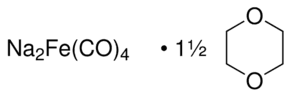
Disodium tetracarbonylferrate dioxane complex (CAS 59733-73-2, Na2Fe(CO)4 · 1.5C4H8O2) is a versatile organometallic compound. With a molecular weight of 346.02, it is primarily employed as a potent carbonylating agent in organic synthesis. This complex facilitates the conversion of halides to aldehydes and ketones and participates in hydroacylation reactions. It also functions as a reducing agent and a catalyst for specific organic transformations, notably the dismutation of aromatic aldehydes.
- IUPAC
- Collman’s Reagent
Carbonylating Agent
Used for the introduction of carbonyl groups, converting halides into aldehydes and ketones. This reaction is fundamental in the synthesis of various organic compounds.
Hydroacylation Reactions
Facilitates the addition of acyl groups to activated alkenes (Michael acceptors), enabling the construction of more complex molecular frameworks.
Reducing Agent
Its reducing properties are utilised in specific synthetic pathways where electron transfer is required for the desired transformation.
Catalyst for Aldehyde Dismutation
Catalyses the dismutation of aromatic aldehydes, yielding corresponding esters and alcohols, a useful reaction for functional group manipulation.
| Molecular weight | 346.02 |
|---|---|
| Linear formula | Na2Fe(CO)4 · 1.5C4H8O2 |
| Application | Carbonylating agent for halides to form aldehydes andketones; hydroacylates Michael acceptors; also used as reducing agent; catalyst for dismutation of aromatic aldehydesto esters |


Hazard statements
- H250Catches fire spontaneously if exposed to air
- H261In contact with water releases flammable gas
- H331Toxic if inhaled
- H351Suspected of causing cancer
Precautionary statements
- P222Do not allow contact with air
- P231Handle under inert gas
- P261Avoid breathing dust, fume, gas or vapours
- P281Use personal protective equipment as required
- P311Call a POISON CENTER or doctor
- P422
| Protective equipment | Eyeshields, Faceshields, full-face particle respirator type N100 (US), Gloves, respirator cartridge type N100 (US), type P1 (EN143) respirator filter, type P2 (EN 143) respirator cartridges, type P3 (EN 143) respirator cartridges |
|---|---|
| Transport (UN / ADR) | UN 3393 4.2(4.3) |
| Water hazard class (WGK, DE) | 3 |
| Hazard codes (EU) | F,T |
| Risk statements (R) | 17-23-40 |
| Safety statements (S) | 36/37/39-45 |
Hazard information is provided for guidance. Always consult the product Safety Data Sheet (SDS), available on request, before handling.
Documentation
Every batch ships with a Certificate of Analysis covering assay, identity and purity; the grade is confirmed against your enquiry. Safety Data Sheets and technical data sheets are available on request.
Supply & logistics
Samples for technical evaluation; bulk MOQ by grade and packaging. In-stock material ships in 7–10 working days, worldwide, with full export documentation.
What is Disodium tetracarbonylferrate dioxane complex used for?
+
Disodium tetracarbonylferrate dioxane complex (CAS 59733-73-2) is primarily used as a carbonylating agent for halides, a reducing agent, and a catalyst for the dismutation of aromatic aldehydes.
What are the CAS number and formula for Disodium tetracarbonylferrate dioxane complex?
+
The CAS number is 59733-73-2 and the formula is Na2Fe(CO)4 · 1.5C4H8O2.
What grade and purity does Tech Serve Solutions supply?
+
Tech Serve Solutions supplies this chemical for research and development purposes. We do not guarantee specific purity levels beyond standard technical grades and do not represent this product as meeting pharmacopoeia standards such as USP, BP, or EP.
How should Disodium tetracarbonylferrate dioxane complex be handled?
+
This compound is pyrophoric (H250) and reacts with water (H261), releasing flammable gases. It is also toxic if inhaled (H331) and suspected of causing cancer (H351). Handle under an inert atmosphere, wear appropriate personal protective equipment including eyeshields, face shields, gloves, and a full-face particle respirator (type N100 US).
How is Disodium tetracarbonylferrate dioxane complex packed and shipped?
+
This material is shipped as a UN 3393 classified substance under hazard class 4.2 (spontaneously combustible) and 4.3 (dangerous when wet). It is packed and exported in compliance with international regulations for hazardous materials.
How can I request a sample or quote?
+
To request a sample or a quotation, please contact our sales department with your specific requirements and shipping details.
▶ Related products
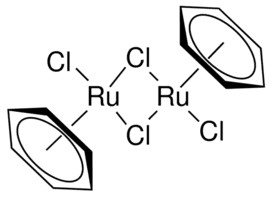
Benzeneruthenium(II) chloride dimer
Ru2(C6H6)2Cl4
Catalysis & Inorganic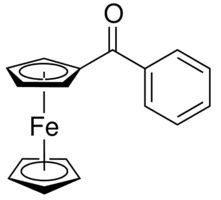
Benzoylferrocene
C17H14FeO
Catalysis & Inorganic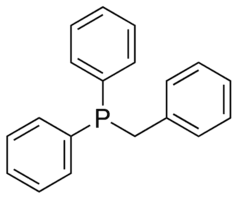
Benzyldiphenylphosphine
C6H5CH2P(C6H5)2
Catalysis & Inorganic
Beryllium
Be
Catalysis & Inorganic
Beryllium oxide
BeO
Catalysis & Inorganic![Bicyclo[2.2.1]hepta-2,5-diene-rhodium(I) chloride dimer — chemical structure, CAS 12257-42-0; Catalysis & Inorganic, fine chemical supplied by Tech Serve Solutions](/_next/image?url=https%3A%2F%2Fpub-f4d920c906024441a773a96f7098e551.r2.dev%2Fimages%2Fproducts%2F12257-42-0.png&w=3840&q=75)
Bicyclo[2.2.1]hepta-2,5-diene-rhodium(I) chloride dimer
Catalysis & Inorganic
![Bis[(10,11-η)-5-[(11bS)-dinaphtho[2,1-d:1′,2′-f][1,3,2]dioxaphosphepin-4-yl- κP4]-5H-dibenz[b,f]azepine]rhodium(I) tetrafluorobo — chemical structure, CAS 1228149-03-8; Catalysis & Inorganic, fine chemical supplied by Tech Serve Solutions](/_next/image?url=https%3A%2F%2Fpub-f4d920c906024441a773a96f7098e551.r2.dev%2Fimages%2Fproducts%2F1228149-03-8.png&w=3840&q=75)
Bis[(10,11-η)-5-[(11bS)-dinaphtho[2,1-d:1′,2′-f][1,3,2]dioxaphosphepin-4-yl- κP4]-5H-dibenz[b,f]azepine]rhodium(I) tetrafluorobo
1-d:1′
Catalysis & Inorganic![Bis[(2-dimethylamino)phenyl]amine nickel(II) chloride (C16H20ClN3Ni) — chemical structure, CAS 1033772-47-2; Catalysis & Inorganic, fine chemical supplied by Tech Serve Solutions](/_next/image?url=https%3A%2F%2Fpub-f4d920c906024441a773a96f7098e551.r2.dev%2Fimages%2Fproducts%2F1033772-47-2.png&w=3840&q=75)
Bis[(2-dimethylamino)phenyl]amine nickel(II) chloride
C16H20ClN3Ni
Catalysis & Inorganic