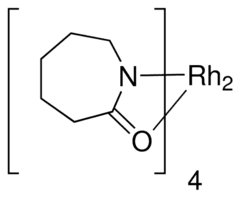
Dirhodium tetracaprolactamate
Dirhodium tetracaprolactamate (CAS: 138984-26-6; Formula: C24H40N4O4Rh2; MW: 654.41) is a dirhodium complex utilised as a catalyst. It is particularly effective in promoting selective carbenoid reactions involving diazo compounds. This rhodium-based catalyst plays a crucial role in various chemical synthesis pathways, offering precise control over reaction outcomes for advanced organic chemistry applications.
- IUPAC
- Rh2(cap)4,Tetrakis[μ-(hexahydro-2H-azepin-2-onato-κN1,κO2)]dirhodium
Selective Carbenoid Reactions
This compound functions as a highly selective catalyst for carbenoid reactions of diazo compounds. Its unique structure enables precise control over the formation and transfer of carbenoid intermediates, leading to efficient cyclopropanation and C-H insertion reactions.
Catalysis in Organic Synthesis
Dirhodium tetracaprolactamate is employed in advanced organic synthesis for its catalytic properties. It facilitates complex transformations, contributing to the efficient construction of intricate molecular architectures relevant to pharmaceutical and materials science.
Rhodium-Catalyzed Transformations
As a dirhodium complex, it serves as a valuable reagent in rhodium-catalyzed reactions. Its application extends to areas requiring specific organometallic catalysis, driving innovation in synthetic methodologies.
| Molecular weight | 654.41 |
|---|---|
| Empirical formula | C24H40N4O4Rh2 |
| Assay | 97% |
| Application | Catalyst for selective carbenoid reactions of diazo compounds |
| Melting point | 269-274 °C(lit.) |
Documentation
Every batch ships with a Certificate of Analysis covering assay, identity and purity; the grade is confirmed against your enquiry. Safety Data Sheets and technical data sheets are available on request.
Supply & logistics
Samples for technical evaluation; bulk MOQ by grade and packaging. In-stock material ships in 7–10 working days, worldwide, with full export documentation.
What is Dirhodium tetracaprolactamate primarily used for?
+
Dirhodium tetracaprolactamate is primarily used as a catalyst for selective carbenoid reactions of diazo compounds in chemical synthesis.
What is the CAS number and chemical formula for Dirhodium tetracaprolactamate?
+
The CAS number is 138984-26-6, and the chemical formula is C24H40N4O4Rh2.
What grade and purity does Tech Serve Solutions supply?
+
Tech Serve Solutions supplies Dirhodium tetracaprolactamate with an assay of 97%. We do not represent this product as USP, BP, or EP grade.
What are the safety and handling considerations for Dirhodium tetracaprolactamate?
+
Dirhodium tetracaprolactamate is classified under WGK Germany 3, indicating a high hazard to water. Appropriate safety precautions must be taken during handling and storage to prevent environmental contamination and ensure user safety.
How is Dirhodium tetracaprolactamate packed, shipped, and exported?
+
Tech Serve Solutions professionally packs, ships, and exports fine chemicals globally, adhering to all relevant regulations for safe transport and international trade.
How can I request a sample or a quote for Dirhodium tetracaprolactamate?
+
You can request a sample or a quote by contacting our sales team through the provided channels on the Tech Serve Solutions website.
▶ Related products
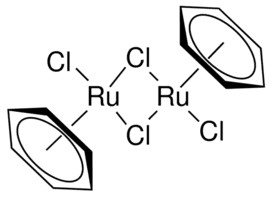
Benzeneruthenium(II) chloride dimer
Ru2(C6H6)2Cl4
Catalysis & Inorganic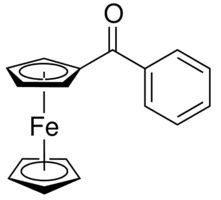
Benzoylferrocene
C17H14FeO
Catalysis & Inorganic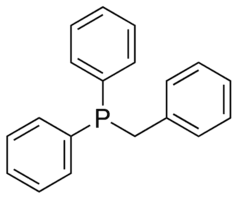
Benzyldiphenylphosphine
C6H5CH2P(C6H5)2
Catalysis & Inorganic
Beryllium
Be
Catalysis & Inorganic
Beryllium oxide
BeO
Catalysis & Inorganic![Bicyclo[2.2.1]hepta-2,5-diene-rhodium(I) chloride dimer — chemical structure, CAS 12257-42-0; Catalysis & Inorganic, fine chemical supplied by Tech Serve Solutions](/_next/image?url=https%3A%2F%2Fpub-f4d920c906024441a773a96f7098e551.r2.dev%2Fimages%2Fproducts%2F12257-42-0.png&w=3840&q=75)
Bicyclo[2.2.1]hepta-2,5-diene-rhodium(I) chloride dimer
Catalysis & Inorganic
![Bis[(10,11-η)-5-[(11bS)-dinaphtho[2,1-d:1′,2′-f][1,3,2]dioxaphosphepin-4-yl- κP4]-5H-dibenz[b,f]azepine]rhodium(I) tetrafluorobo — chemical structure, CAS 1228149-03-8; Catalysis & Inorganic, fine chemical supplied by Tech Serve Solutions](/_next/image?url=https%3A%2F%2Fpub-f4d920c906024441a773a96f7098e551.r2.dev%2Fimages%2Fproducts%2F1228149-03-8.png&w=3840&q=75)
Bis[(10,11-η)-5-[(11bS)-dinaphtho[2,1-d:1′,2′-f][1,3,2]dioxaphosphepin-4-yl- κP4]-5H-dibenz[b,f]azepine]rhodium(I) tetrafluorobo
1-d:1′
Catalysis & Inorganic![Bis[(2-dimethylamino)phenyl]amine nickel(II) chloride (C16H20ClN3Ni) — chemical structure, CAS 1033772-47-2; Catalysis & Inorganic, fine chemical supplied by Tech Serve Solutions](/_next/image?url=https%3A%2F%2Fpub-f4d920c906024441a773a96f7098e551.r2.dev%2Fimages%2Fproducts%2F1033772-47-2.png&w=3840&q=75)
Bis[(2-dimethylamino)phenyl]amine nickel(II) chloride
C16H20ClN3Ni
Catalysis & Inorganic