
Dilithium tetrabromonickelate(II) solution
Dilithium tetrabromonickelate(II) solution (CAS: 13826-95-4) is a chemical compound with the formula Li 2NiBr 4. Supplied as a 0.5 M solution in THF, this nickel-based salt has a molecular weight of 392.19 g/mol. It serves as a valuable reagent and catalyst in various chemical syntheses, including the regioselective preparation of important organic molecules and magnetic resonance contrast agents.
- IUPAC
- Lithium tetrabromonickelate(II) solution,di-Lithium tetrabromonickelate(II)
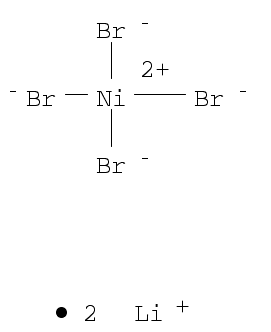
Catalysis in Organic Synthesis
This solution acts as a catalyst for the regioselective preparation of magnetic resonance contrast agents. Its specific reactivity allows for controlled synthesis pathways in complex molecular architectures.
Synthesis of Natural Products
It is employed as a reagent in the regioselective synthesis of compounds like (-)-gallocatechin. This application highlights its utility in constructing specific stereoisomers and complex natural product frameworks.
Development of ATP Mimics
Dilithium tetrabromonickelate(II) solution is utilized in the synthesis of ATP mimics. These analogues are crucial for biochemical research, aiding in the study of energy transfer mechanisms and enzyme inhibition.
Epoxide Chemistry
The compound reacts with unsaturated epoxides, making it a useful reagent for modifying epoxide structures in organic synthesis. This reaction can lead to novel cyclic and acyclic compounds with varied functionalities.
| Molecular weight | 392.19 |
|---|---|
| Linear formula | Li2NiBr4 |
| Form | liquid |
| Boiling point | 67 °C |
| Density | 1.065 g/mL at 25 °C |
| Concentration | 0.5 M in THF |
| Application | Catalyst for the regioselective preparation of magnetic resonance contrast agents1Reagent for: • Regioselective synthesis of (-)-gallocatechin2• Synthesis of ATP mimics3• Reaction with unsaturated epoxides4 |


Hazard statements
- H225Highly flammable liquid and vapour
- H319Causes serious eye irritation
- H335May cause respiratory irritation
- H350May cause cancer
Precautionary statements
- P201Obtain special instructions before use
- P210Keep away from heat, sparks and open flames. No smoking
- P261Avoid breathing dust, fume, gas or vapours
- P305IF IN EYES
- P308IF exposed or concerned
| Protective equipment | Eyeshields, Faceshields, full-face respirator (US), Gloves, multi-purpose combination respirator cartridge (US), type ABEK (EN14387) respirator filter |
|---|---|
| Flash point | -18 °C / -.4 °F |
| Transport (UN / ADR) | UN 1993BF 3 / PGII |
| Water hazard class (WGK, DE) | 3 |
| Hazard codes (EU) | F,T |
| Risk statements (R) | 45-11-19-36/37 |
| Safety statements (S) | 53-16-26-45 |
| Supplemental hazards | May form explosive peroxides. |
Hazard information is provided for guidance. Always consult the product Safety Data Sheet (SDS), available on request, before handling.
Documentation
Every batch ships with a Certificate of Analysis covering assay, identity and purity; the grade is confirmed against your enquiry. Safety Data Sheets and technical data sheets are available on request.
Supply & logistics
Samples for technical evaluation; bulk MOQ by grade and packaging. In-stock material ships in 7–10 working days, worldwide, with full export documentation.
What is Dilithium tetrabromonickelate(II) solution used for?
+
Dilithium tetrabromonickelate(II) solution is used as a catalyst for the regioselective preparation of magnetic resonance contrast agents, and as a reagent in the synthesis of natural products like (-)-gallocatechin, ATP mimics, and in reactions with unsaturated epoxides.
What are the CAS number and formula for Dilithium tetrabromonickelate(II) solution?
+
The CAS number is 13826-95-4, and the linear formula is Li 2NiBr 4.
What grade and purity does Tech Serve Solutions supply?
+
Tech Serve Solutions supplies Dilithium tetrabromonickelate(II) solution at a concentration of 0.5 M in THF. TSS does not represent this product as USP, BP, EP, or any other pharmacopoeia grade; it is intended for research and laboratory use.
How should Dilithium tetrabromonickelate(II) solution be handled safely?
+
This solution is highly flammable and may form explosive peroxides. It is a strong irritant to eyes and respiratory system and is suspected of causing cancer. Handle with appropriate personal protective equipment, including eyeshields, gloves, and a suitable respirator, in a well-ventilated area. Store away from heat and ignition sources.
How is this chemical shipped?
+
Dilithium tetrabromonickelate(II) solution is classified as a flammable liquid (UN 1993, Class 3, Packing Group II) and is shipped according to strict international regulations for hazardous materials.
How can I request a quote or sample?
+
To request a quote or a sample of Dilithium tetrabromonickelate(II) solution, please contact the Tech Serve Solutions sales department through our website or by phone.
▶ Related products
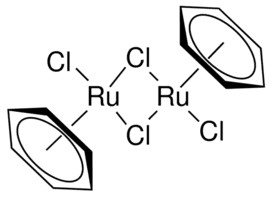
Benzeneruthenium(II) chloride dimer
Ru2(C6H6)2Cl4
Catalysis & Inorganic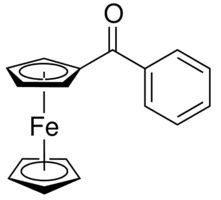
Benzoylferrocene
C17H14FeO
Catalysis & Inorganic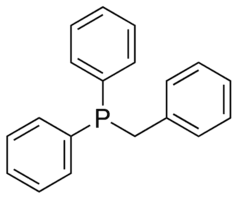
Benzyldiphenylphosphine
C6H5CH2P(C6H5)2
Catalysis & Inorganic
Beryllium
Be
Catalysis & Inorganic
Beryllium oxide
BeO
Catalysis & Inorganic![Bicyclo[2.2.1]hepta-2,5-diene-rhodium(I) chloride dimer — chemical structure, CAS 12257-42-0; Catalysis & Inorganic, fine chemical supplied by Tech Serve Solutions](/_next/image?url=https%3A%2F%2Fpub-f4d920c906024441a773a96f7098e551.r2.dev%2Fimages%2Fproducts%2F12257-42-0.png&w=3840&q=75)
Bicyclo[2.2.1]hepta-2,5-diene-rhodium(I) chloride dimer
Catalysis & Inorganic
![Bis[(10,11-η)-5-[(11bS)-dinaphtho[2,1-d:1′,2′-f][1,3,2]dioxaphosphepin-4-yl- κP4]-5H-dibenz[b,f]azepine]rhodium(I) tetrafluorobo — chemical structure, CAS 1228149-03-8; Catalysis & Inorganic, fine chemical supplied by Tech Serve Solutions](/_next/image?url=https%3A%2F%2Fpub-f4d920c906024441a773a96f7098e551.r2.dev%2Fimages%2Fproducts%2F1228149-03-8.png&w=3840&q=75)
Bis[(10,11-η)-5-[(11bS)-dinaphtho[2,1-d:1′,2′-f][1,3,2]dioxaphosphepin-4-yl- κP4]-5H-dibenz[b,f]azepine]rhodium(I) tetrafluorobo
1-d:1′
Catalysis & Inorganic![Bis[(2-dimethylamino)phenyl]amine nickel(II) chloride (C16H20ClN3Ni) — chemical structure, CAS 1033772-47-2; Catalysis & Inorganic, fine chemical supplied by Tech Serve Solutions](/_next/image?url=https%3A%2F%2Fpub-f4d920c906024441a773a96f7098e551.r2.dev%2Fimages%2Fproducts%2F1033772-47-2.png&w=3840&q=75)
Bis[(2-dimethylamino)phenyl]amine nickel(II) chloride
C16H20ClN3Ni
Catalysis & Inorganic▶ Explore more

Bis(cyclopentadienyl)cobalt(III) hexafluorophosphate
C10H10CoF6P
Catalysis & Inorganic
1-(4-Chlorophenyl)biguanide hydrochloride
ClC6H4NHC(NH)NHC(NH)NH2 · HCl
Chemical Synthesis
Bis(cyclopentadienyl)dimethylzirconium(IV)
Catalysis & Inorganic

1-(4-Chlorophenyl)ethanol
ClC6H4CH(CH3)OH
Chemical Synthesis