
Dichloroethylphosphine
Dichloroethylphosphine (CAS: 1498-40-4), with the molecular formula C2H5PCl2 and a molecular weight of 130.94 g/mol, is a reactive organophosphorus compound. It is primarily utilised as a catalyst in palladium-catalyzed Suzuki-Miyaura cross-coupling reactions. This compound is supplied by Tech Serve Solutions for laboratory and industrial chemical synthesis applications.
- IUPAC
- Ethyldichlorophosphine,Ethylphosphorous dichloride
- Synonyms
- EthyldichlorophosphineEthylphosphorous dichloride
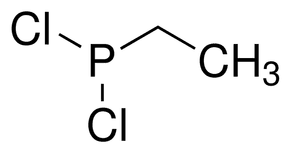
Catalyst in Suzuki-Miyaura Cross-Coupling
Dichloroethylphosphine serves as an effective catalyst component in palladium-catalyzed Suzuki-Miyaura cross-coupling reactions. This important organic transformation allows for the formation of carbon-carbon bonds, crucial in the synthesis of complex organic molecules.
Chemical Synthesis Reagent
As a phosphorus-containing building block, dichloroethylphosphine is employed in various chemical synthesis pathways. Its reactivity allows for its incorporation into diverse organic structures, contributing to the development of novel compounds.
Precursor for Phosphorus Compounds
This compound functions as a precursor for the synthesis of other organophosphorus compounds. Its dichlorophosphine moiety can undergo various substitution reactions to yield functionalised phosphorus derivatives for advanced research and development.
| Molecular weight | 130.94 |
|---|---|
| Linear formula | C2H5PCl2 |
| Assay | 95% |
| Boiling point | 112 °C(lit.) |
| Density | 1.26 g/mL at 25 °C(lit.) |
| Refractive index | n20/D 1.495(lit.) |
| Application | Catalyst in palladium-catalyzed Suzuki-Miyaura cross-coupling1 |


Hazard statements
- H226Flammable liquid and vapour
- H250Catches fire spontaneously if exposed to air
- H314Causes severe skin burns and eye damage
Precautionary statements
- P222Do not allow contact with air
- P231Handle under inert gas
- P280Wear protective gloves, clothing and eye/face protection
- P305IF IN EYES
- P310Immediately call a POISON CENTER or doctor
- P422
| Protective equipment | Faceshields, full-face respirator (US), Gloves, Goggles, multi-purpose combination respirator cartridge (US), type ABEK (EN14387) respirator filter |
|---|---|
| Flash point | 33 °C / 91.4 °F |
| Transport (UN / ADR) | UN 2845 4.2 |
| Water hazard class (WGK, DE) | 3 |
| Hazard codes (EU) | F,C |
| Risk statements (R) | 14-17-34 |
| Safety statements (S) | 6-26-36/37/39-43-45 |
| Supplemental hazards | Reacts violently with water. |
Hazard information is provided for guidance. Always consult the product Safety Data Sheet (SDS), available on request, before handling.
Documentation
Every batch ships with a Certificate of Analysis covering assay, identity and purity; the grade is confirmed against your enquiry. Safety Data Sheets and technical data sheets are available on request.
Supply & logistics
Samples for technical evaluation; bulk MOQ by grade and packaging. In-stock material ships in 7–10 working days, worldwide, with full export documentation.
What is Dichloroethylphosphine used for?
+
Dichloroethylphosphine is used as a catalyst in palladium-catalyzed Suzuki-Miyaura cross-coupling reactions and as a reagent in chemical synthesis and as a precursor for other phosphorus compounds.
What are the CAS number and formula for Dichloroethylphosphine?
+
The CAS number for Dichloroethylphosphine is 1498-40-4, and its molecular formula is C2H5PCl2.
What grade and purity does Tech Serve Solutions supply?
+
Tech Serve Solutions supplies Dichloroethylphosphine with an assay of 95%. TSS does not represent this product as USP, BP, or EP grade.
How should Dichloroethylphosphine be handled safely?
+
Dichloroethylphosphine is a highly reactive and dangerous substance. It is flammable (flash point 33 °C) and reacts violently with water, releasing heat and potentially flammable or toxic gases. It is corrosive and causes severe skin burns and eye damage. Handle with extreme caution in a well-ventilated area, wearing appropriate personal protective equipment including face shields, gloves, and respiratory protection. Store away from water and ignition sources.
How is Dichloroethylphosphine packed, shipped, and exported?
+
Dichloroethylphosphine is packed and shipped according to stringent safety regulations for hazardous materials, ensuring safe transport internationally. Please contact us for specific export inquiries.
How can I request a sample or quote for Dichloroethylphosphine?
+
To request a sample or obtain a quote for Dichloroethylphosphine, please contact our sales team through the website or by phone, providing your specific requirements.
▶ Related products
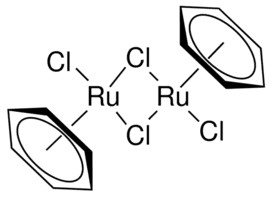
Benzeneruthenium(II) chloride dimer
Ru2(C6H6)2Cl4
Catalysis & Inorganic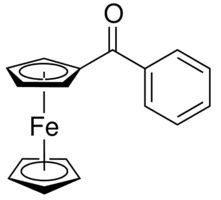
Benzoylferrocene
C17H14FeO
Catalysis & Inorganic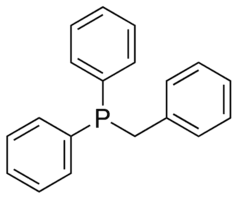
Benzyldiphenylphosphine
C6H5CH2P(C6H5)2
Catalysis & Inorganic
Beryllium
Be
Catalysis & Inorganic
Beryllium oxide
BeO
Catalysis & Inorganic![Bicyclo[2.2.1]hepta-2,5-diene-rhodium(I) chloride dimer — chemical structure, CAS 12257-42-0; Catalysis & Inorganic, fine chemical supplied by Tech Serve Solutions](/_next/image?url=https%3A%2F%2Fpub-f4d920c906024441a773a96f7098e551.r2.dev%2Fimages%2Fproducts%2F12257-42-0.png&w=3840&q=75)
Bicyclo[2.2.1]hepta-2,5-diene-rhodium(I) chloride dimer
Catalysis & Inorganic
![Bis[(10,11-η)-5-[(11bS)-dinaphtho[2,1-d:1′,2′-f][1,3,2]dioxaphosphepin-4-yl- κP4]-5H-dibenz[b,f]azepine]rhodium(I) tetrafluorobo — chemical structure, CAS 1228149-03-8; Catalysis & Inorganic, fine chemical supplied by Tech Serve Solutions](/_next/image?url=https%3A%2F%2Fpub-f4d920c906024441a773a96f7098e551.r2.dev%2Fimages%2Fproducts%2F1228149-03-8.png&w=3840&q=75)
Bis[(10,11-η)-5-[(11bS)-dinaphtho[2,1-d:1′,2′-f][1,3,2]dioxaphosphepin-4-yl- κP4]-5H-dibenz[b,f]azepine]rhodium(I) tetrafluorobo
1-d:1′
Catalysis & Inorganic![Bis[(2-dimethylamino)phenyl]amine nickel(II) chloride (C16H20ClN3Ni) — chemical structure, CAS 1033772-47-2; Catalysis & Inorganic, fine chemical supplied by Tech Serve Solutions](/_next/image?url=https%3A%2F%2Fpub-f4d920c906024441a773a96f7098e551.r2.dev%2Fimages%2Fproducts%2F1033772-47-2.png&w=3840&q=75)
Bis[(2-dimethylamino)phenyl]amine nickel(II) chloride
C16H20ClN3Ni
Catalysis & Inorganic▶ Explore more

Bis(cyclopentadienyl)cobalt(III) hexafluorophosphate
C10H10CoF6P
Catalysis & Inorganic
1-(4-Chlorophenyl)biguanide hydrochloride
ClC6H4NHC(NH)NHC(NH)NH2 · HCl
Chemical Synthesis
Bis(cyclopentadienyl)dimethylzirconium(IV)
Catalysis & Inorganic

1-(4-Chlorophenyl)ethanol
ClC6H4CH(CH3)OH
Chemical Synthesis