Dichloro(pentamethylcyclopentadienyl)ruthenium(III) polymer
Dichloro(pentamethylcyclopentadienyl)ruthenium(III) polymer, identified by CAS number 96503-27-4, is a ruthenium-based organometallic compound. Its linear formula is [(C<sub>10</sub>H<sub>15</sub>)RuCl<sub>2</sub>]n. This polymer functions as a catalyst in various chemical synthesis applications, particularly in organometallic chemistry and catalysis research. It is typically stored under refrigeration at 2-8°C to maintain its stability and reactivity.
![Dichloro(pentamethylcyclopentadienyl)ruthenium(III) polymer ([(C10H15)RuCl2]n) — chemical structure, CAS 96503-27-4; Chemistry, fine chemical supplied by Tech Serve Solutions](/_next/image?url=https%3A%2F%2Fpub-f4d920c906024441a773a96f7098e551.r2.dev%2Fimages%2Fproducts%2F96503-27-4.png&w=3840&q=75)
Catalysis in Organic Synthesis
This ruthenium-based polymer serves as a catalyst in a range of organic transformations. Its structure facilitates its use in reactions requiring transition metal catalysis, contributing to efficient chemical synthesis.
Organometallic Chemistry Research
As a complex organometallic compound, it is valuable for researchers exploring new catalytic systems and reaction mechanisms. Its specific coordination chemistry allows for diverse synthetic pathways.
Precursor for Ruthenium Complexes
The polymer can potentially be used as a starting material or precursor for the synthesis of other ruthenium complexes with tailored properties for specific catalytic or material science applications.
| Linear formula | [(C10H15)RuCl2]n |
|---|---|
| Storage temperature | 2-8°C |
| Melting point | 45-47 °C |
Documentation
Every batch ships with a Certificate of Analysis covering assay, identity and purity; the grade is confirmed against your enquiry. Safety Data Sheets and technical data sheets are available on request.
Supply & logistics
Samples for technical evaluation; bulk MOQ by grade and packaging. In-stock material ships in 7–10 working days, worldwide, with full export documentation.
What is Dichloro(pentamethylcyclopentadienyl)ruthenium(III) polymer used for?
+
Dichloro(pentamethylcyclopentadienyl)ruthenium(III) polymer is primarily used as a catalyst in organic synthesis and for research in organometallic chemistry.
What is the CAS number and formula for this compound?
+
The CAS number is 96503-27-4 and the linear formula is [(C<sub>10</sub>H<sub>15</sub>)RuCl<sub>2</sub>]n.
What grade and purity does Tech Serve Solutions supply?
+
Tech Serve Solutions supplies this product for research and development purposes. The specific assay and purity are detailed in the product's Certificate of Analysis. TSS does not represent this product as USP, BP, EP, or other pharmacopoeial grades.
What are the safety and handling precautions?
+
This compound is classified under WGK 2 in Germany, indicating it is hazardous to water. Handle with appropriate personal protective equipment in a well-ventilated area. Refer to the Safety Data Sheet for comprehensive handling information.
How is this chemical shipped or exported?
+
This product is carefully packed and exported by Tech Serve Solutions in compliance with all relevant international shipping regulations for chemical substances.
How can I request a sample or quote?
+
To request a sample or a quotation for Dichloro(pentamethylcyclopentadienyl)ruthenium(III) polymer, please contact the Tech Serve Solutions sales team through our website or by phone.
▶ Related products
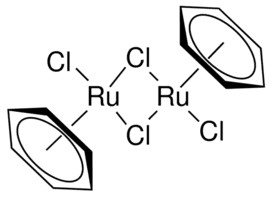
Benzeneruthenium(II) chloride dimer
Ru2(C6H6)2Cl4
Catalysis & Inorganic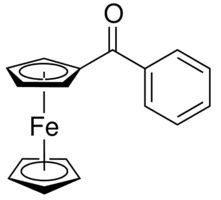
Benzoylferrocene
C17H14FeO
Catalysis & Inorganic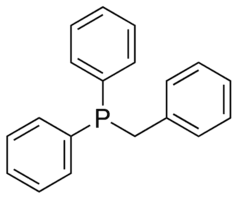
Benzyldiphenylphosphine
C6H5CH2P(C6H5)2
Catalysis & Inorganic
Beryllium
Be
Catalysis & Inorganic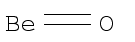
Beryllium oxide
BeO
Catalysis & Inorganic![Bicyclo[2.2.1]hepta-2,5-diene-rhodium(I) chloride dimer — chemical structure, CAS 12257-42-0; Catalysis & Inorganic, fine chemical supplied by Tech Serve Solutions](/_next/image?url=https%3A%2F%2Fpub-f4d920c906024441a773a96f7098e551.r2.dev%2Fimages%2Fproducts%2F12257-42-0.png&w=3840&q=75)
Bicyclo[2.2.1]hepta-2,5-diene-rhodium(I) chloride dimer
Catalysis & Inorganic
![Bis[(10,11-η)-5-[(11bS)-dinaphtho[2,1-d:1′,2′-f][1,3,2]dioxaphosphepin-4-yl- κP4]-5H-dibenz[b,f]azepine]rhodium(I) tetrafluorobo — chemical structure, CAS 1228149-03-8; Catalysis & Inorganic, fine chemical supplied by Tech Serve Solutions](/_next/image?url=https%3A%2F%2Fpub-f4d920c906024441a773a96f7098e551.r2.dev%2Fimages%2Fproducts%2F1228149-03-8.png&w=3840&q=75)
Bis[(10,11-η)-5-[(11bS)-dinaphtho[2,1-d:1′,2′-f][1,3,2]dioxaphosphepin-4-yl- κP4]-5H-dibenz[b,f]azepine]rhodium(I) tetrafluorobo
1-d:1′
Catalysis & Inorganic![Bis[(2-dimethylamino)phenyl]amine nickel(II) chloride (C16H20ClN3Ni) — chemical structure, CAS 1033772-47-2; Catalysis & Inorganic, fine chemical supplied by Tech Serve Solutions](/_next/image?url=https%3A%2F%2Fpub-f4d920c906024441a773a96f7098e551.r2.dev%2Fimages%2Fproducts%2F1033772-47-2.png&w=3840&q=75)
Bis[(2-dimethylamino)phenyl]amine nickel(II) chloride
C16H20ClN3Ni
Catalysis & Inorganic