Dichloro(3-methyl-2-butenylidene)bis(tricyclohexylphosphine)ruthenium(II)
Dichloro(3-methyl-2-butenylidene)bis(tricyclohexylphosphine)ruthenium(II), CAS 194659-03-5, is a ruthenium-based catalyst with the molecular formula C41H74Cl2P2Ru and a molecular weight of 800.95 g/mol. This compound is primarily recognised for its efficacy in various olefin metathesis reactions, including cross metathesis and ring-closing metathesis. It also finds application in polymerization processes and dehydration reactions, making it a versatile tool in organic synthesis and materials science.
- IUPAC
- Bis(tricyclohexylphosphine)isopentenylidene ruthenium dichloride,Grubbs Catalyst 801
- Synonyms
- Grubbs Catalyst 801Bis(tricyclohexylphosphine)isopentenylidene ruthenium dichloride

Olefin Metathesis
This ruthenium catalyst is highly effective for various olefin metathesis reactions. It is employed in cross metathesis for creating new carbon-carbon double bonds and in ring-closing metathesis for forming cyclic olefins.
Polymerization Reactions
The compound serves as a catalyst in polymerization processes. Specifically, it can facilitate the solventless ring-opening metathesis polymerization of norbornene derivatives, enabling the formation of polymeric thin films.
Dehydration Reactions
Dichloro(3-methyl-2-butenylidene)bis(tricyclohexylphosphine)ruthenium(II) can catalyse dehydration reactions. This application is valuable in organic synthesis for the removal of water molecules from substrates.
Preparation of Grubbs Catalysts
This ruthenium complex is used in the preparation of second-generation Grubbs catalysts. These advanced catalysts are widely employed in olefin metathesis due to their enhanced activity and stability.
| Molecular weight | 800.95 |
|---|---|
| Empirical formula | C41H74Cl2P2Ru |
| Storage temperature | 2-8°C |
| Application | Metathesis: Ruthenium-Based Metathesis CatalystsCatalyst for:• Olefin metathesis (Schiff base catalyst)1• polymerization reactions2• Cross metathesis reactions3• Ring-closing metathesis4• Dehydration reactions5• Solventless ring-opening metathesis polymerization of norbornene derivatives to form polymeric thin films6• Used for preparation of second generation Grubbs catalysts7 |
| Melting point | 160-165 °C(lit.) |

Hazard statements
- H228Flammable solid
Precautionary statements
- P210Keep away from heat, sparks and open flames. No smoking
| Protective equipment | Eyeshields, Gloves, type N95 (US), type P1 (EN143) respirator filter |
|---|---|
| Transport (UN / ADR) | UN 1325 4.1 / PGII |
| Water hazard class (WGK, DE) | 3 |
Hazard information is provided for guidance. Always consult the product Safety Data Sheet (SDS), available on request, before handling.
Documentation
Every batch ships with a Certificate of Analysis covering assay, identity and purity; the grade is confirmed against your enquiry. Safety Data Sheets and technical data sheets are available on request.
Supply & logistics
Samples for technical evaluation; bulk MOQ by grade and packaging. In-stock material ships in 7–10 working days, worldwide, with full export documentation.
What is Dichloro(3-methyl-2-butenylidene)bis(tricyclohexylphosphine)ruthenium(II) used for?
+
This compound is used for olefin metathesis (including cross and ring-closing metathesis), polymerization reactions, dehydration reactions, and the preparation of second-generation Grubbs catalysts.
What is the CAS number and chemical formula?
+
The CAS number is 194659-03-5 and the chemical formula is C41H74Cl2P2Ru.
What grade and purity does Tech Serve Solutions supply?
+
Tech Serve Solutions supplies this chemical for research and laboratory use. The specific assay and purity details are available on the product's Certificate of Analysis. TSS does not represent this product as USP, BP, or EP grade.
How should Dichloro(3-methyl-2-butenylidene)bis(tricyclohexylphosphine)ruthenium(II) be handled safely?
+
This compound is flammable (H228) and requires careful handling. It is recommended to use safety measures including eyeshields, gloves, and a type N95 (US) or type P1 (EN143) respirator filter. Keep away from heat, hot surfaces, sparks, open flames and other ignition sources. No smoking.
How is this chemical shipped and exported?
+
This chemical is shipped and exported according to international regulations for hazardous materials, classified under UN 1325, Class 4.1, Packing Group II.
How can I request a sample or quote?
+
To request a sample or a quotation, please contact the Tech Serve Solutions sales team via our website or direct email, providing the product name and CAS number.
▶ Related products
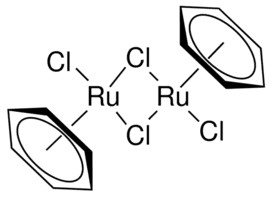
Benzeneruthenium(II) chloride dimer
Ru2(C6H6)2Cl4
Catalysis & Inorganic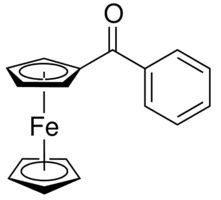
Benzoylferrocene
C17H14FeO
Catalysis & Inorganic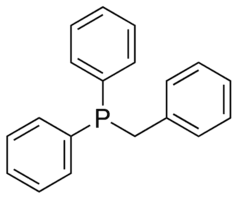
Benzyldiphenylphosphine
C6H5CH2P(C6H5)2
Catalysis & Inorganic
Beryllium
Be
Catalysis & Inorganic
Beryllium oxide
BeO
Catalysis & Inorganic![Bicyclo[2.2.1]hepta-2,5-diene-rhodium(I) chloride dimer — chemical structure, CAS 12257-42-0; Catalysis & Inorganic, fine chemical supplied by Tech Serve Solutions](/_next/image?url=https%3A%2F%2Fpub-f4d920c906024441a773a96f7098e551.r2.dev%2Fimages%2Fproducts%2F12257-42-0.png&w=3840&q=75)
Bicyclo[2.2.1]hepta-2,5-diene-rhodium(I) chloride dimer
Catalysis & Inorganic
![Bis[(10,11-η)-5-[(11bS)-dinaphtho[2,1-d:1′,2′-f][1,3,2]dioxaphosphepin-4-yl- κP4]-5H-dibenz[b,f]azepine]rhodium(I) tetrafluorobo — chemical structure, CAS 1228149-03-8; Catalysis & Inorganic, fine chemical supplied by Tech Serve Solutions](/_next/image?url=https%3A%2F%2Fpub-f4d920c906024441a773a96f7098e551.r2.dev%2Fimages%2Fproducts%2F1228149-03-8.png&w=3840&q=75)
Bis[(10,11-η)-5-[(11bS)-dinaphtho[2,1-d:1′,2′-f][1,3,2]dioxaphosphepin-4-yl- κP4]-5H-dibenz[b,f]azepine]rhodium(I) tetrafluorobo
1-d:1′
Catalysis & Inorganic![Bis[(2-dimethylamino)phenyl]amine nickel(II) chloride (C16H20ClN3Ni) — chemical structure, CAS 1033772-47-2; Catalysis & Inorganic, fine chemical supplied by Tech Serve Solutions](/_next/image?url=https%3A%2F%2Fpub-f4d920c906024441a773a96f7098e551.r2.dev%2Fimages%2Fproducts%2F1033772-47-2.png&w=3840&q=75)
Bis[(2-dimethylamino)phenyl]amine nickel(II) chloride
C16H20ClN3Ni
Catalysis & Inorganic