
Dichloro(1,5-cyclooctadiene)ruthenium(II), polymer
Dichloro(1,5-cyclooctadiene)ruthenium(II), polymer (CAS: 50982-12-2) is a versatile ruthenium catalyst precursor with the linear formula [Ru(COD)Cl2]n. As a monomer, it has a molecular weight of 280.16. This compound is principally utilised in chemical synthesis, specifically as a catalyst in the formation of amide bonds through the dehydrogenative coupling of alcohols and amines, often in conjunction with IMes ligands. TSS supplies this reagent at 95% purity.
- IUPAC
- (1,5-Cyclooctadiene)ruthenium(II) chloride,Ruthenium(II) chloride 1,5-cyclooctadiene complex
- Synonyms
- 50982-12-2, [Ru(COD)Cl2]n, (1,5-Cyclooctadiene)ruthenium(II) chloride,Ruthenium(II) chloride 1,5-cyclooctadiene complex
![Dichloro(1,5-cyclooctadiene)ruthenium(II), polymer ([Ru(COD)Cl2]n) — chemical structure, CAS 50982-12-2; Chemistry, fine chemical supplied by Tech Serve Solutions](/_next/image?url=https%3A%2F%2Fpub-f4d920c906024441a773a96f7098e551.r2.dev%2Fimages%2Fproducts%2F50982-12-2.png&w=3840&q=75)
Amide Bond Formation
This polymer acts as a crucial ruthenium catalyst precursor. It facilitates the dehydrogenative coupling of alcohols and amines, a key transformation for constructing amide bonds. Its efficacy is often enhanced when used with IMes ligands.
Catalysis
As a ruthenium-based catalyst, [Ru(COD)Cl2]n is employed in various catalytic processes within organic synthesis. Its structure makes it suitable for a range of transformations, particularly those involving C-N bond formation.
Chemical Synthesis Reagent
This compound serves as a valuable reagent in chemical synthesis laboratories. Its application as a catalyst precursor aids researchers in developing new synthetic routes and methodologies, particularly in organometallic chemistry.
| Molecular weight | 280.16 (as monomer) |
|---|---|
| Linear formula | [Ru(COD)Cl2]n |
| Assay | 95% |
| Application | Versatile Ru catalyst precursor. Used with IMes to catalyze the dehydrogenative coupling of alcohols and amines to form amide bonds. |
Hazard statements
- H412Harmful to aquatic life with long-lasting effects
Precautionary statements
- P273Avoid release to the environment
| Protective equipment | Eyeshields, Gloves |
|---|---|
| Water hazard class (WGK, DE) | 1 |
| Risk statements (R) | 52/53 |
| Safety statements (S) | 61 |
Hazard information is provided for guidance. Always consult the product Safety Data Sheet (SDS), available on request, before handling.
| Greener Alternative Product Characteristics | Catalysis |
|---|
Documentation
Every batch ships with a Certificate of Analysis covering assay, identity and purity; the grade is confirmed against your enquiry. Safety Data Sheets and technical data sheets are available on request.
Supply & logistics
Samples for technical evaluation; bulk MOQ by grade and packaging. In-stock material ships in 7–10 working days, worldwide, with full export documentation.
What is Dichloro(1,5-cyclooctadiene)ruthenium(II), polymer used for?
+
This compound is primarily used as a versatile ruthenium catalyst precursor. It is notably employed to catalyse the dehydrogenative coupling of alcohols and amines to form amide bonds, often in combination with IMes ligands.
What are the CAS number and formula for this product?
+
The CAS number is 50982-12-2, and its linear formula is [Ru(COD)Cl2]n.
What grade and purity does Tech Serve Solutions supply?
+
Tech Serve Solutions supplies Dichloro(1,5-cyclooctadiene)ruthenium(II), polymer with an assay of 95%. We do not represent this product as meeting any pharmacopoeia standards such as USP, BP, or EP.
How should this chemical be handled?
+
This product is harmful to aquatic life with long lasting effects (H412). When handling, it is essential to wear eyeshields and gloves. Avoid release to the environment (P273).
How is this product typically packed and shipped?
+
Tech Serve Solutions exports chemicals globally. Specific packing and shipping details will be provided based on order requirements and destination, adhering to all relevant transport regulations.
How can I request a quote or sample?
+
To request a quote or sample, please use the contact form on our website or reach out to our sales team directly. Please reference the product name and CAS number (50982-12-2) in your inquiry.
▶ Related products
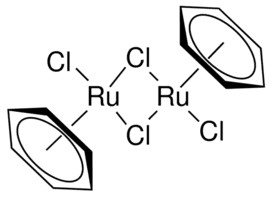
Benzeneruthenium(II) chloride dimer
Ru2(C6H6)2Cl4
Catalysis & Inorganic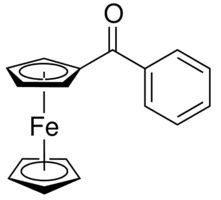
Benzoylferrocene
C17H14FeO
Catalysis & Inorganic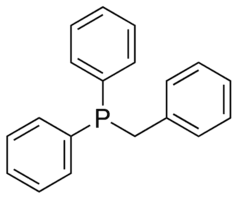
Benzyldiphenylphosphine
C6H5CH2P(C6H5)2
Catalysis & Inorganic
Beryllium
Be
Catalysis & Inorganic
Beryllium oxide
BeO
Catalysis & Inorganic![Bicyclo[2.2.1]hepta-2,5-diene-rhodium(I) chloride dimer — chemical structure, CAS 12257-42-0; Catalysis & Inorganic, fine chemical supplied by Tech Serve Solutions](/_next/image?url=https%3A%2F%2Fpub-f4d920c906024441a773a96f7098e551.r2.dev%2Fimages%2Fproducts%2F12257-42-0.png&w=3840&q=75)
Bicyclo[2.2.1]hepta-2,5-diene-rhodium(I) chloride dimer
Catalysis & Inorganic
![Bis[(10,11-η)-5-[(11bS)-dinaphtho[2,1-d:1′,2′-f][1,3,2]dioxaphosphepin-4-yl- κP4]-5H-dibenz[b,f]azepine]rhodium(I) tetrafluorobo — chemical structure, CAS 1228149-03-8; Catalysis & Inorganic, fine chemical supplied by Tech Serve Solutions](/_next/image?url=https%3A%2F%2Fpub-f4d920c906024441a773a96f7098e551.r2.dev%2Fimages%2Fproducts%2F1228149-03-8.png&w=3840&q=75)
Bis[(10,11-η)-5-[(11bS)-dinaphtho[2,1-d:1′,2′-f][1,3,2]dioxaphosphepin-4-yl- κP4]-5H-dibenz[b,f]azepine]rhodium(I) tetrafluorobo
1-d:1′
Catalysis & Inorganic![Bis[(2-dimethylamino)phenyl]amine nickel(II) chloride (C16H20ClN3Ni) — chemical structure, CAS 1033772-47-2; Catalysis & Inorganic, fine chemical supplied by Tech Serve Solutions](/_next/image?url=https%3A%2F%2Fpub-f4d920c906024441a773a96f7098e551.r2.dev%2Fimages%2Fproducts%2F1033772-47-2.png&w=3840&q=75)
Bis[(2-dimethylamino)phenyl]amine nickel(II) chloride
C16H20ClN3Ni
Catalysis & Inorganic▶ Explore more

Bis(cyclopentadienyl)cobalt(III) hexafluorophosphate
C10H10CoF6P
Catalysis & Inorganic
1-(4-Chlorophenyl)biguanide hydrochloride
ClC6H4NHC(NH)NHC(NH)NH2 · HCl
Chemical Synthesis
Bis(cyclopentadienyl)dimethylzirconium(IV)
Catalysis & Inorganic

1-(4-Chlorophenyl)ethanol
ClC6H4CH(CH3)OH
Chemical Synthesis