
Dichloro[1,3-bis(2,4,6-trimethylphenyl)-2-imidazolidinylidene](3-methyl-2-butenylidene) (tricyclohexylphosphine)ruthenium(II)
Dichloro[1,3-bis(2,4,6-trimethylphenyl)-2-imidazolidinylidene](3-methyl-2-butenylidene)(tricyclohexylphosphine)ruthenium(II) (CAS 253688-91-4) is a sophisticated organometallic compound with the molecular formula C44H67Cl2N2PRu and a molecular weight of 826.97 g/mol. It serves as a potent catalyst in various organic synthesis applications, particularly in olefin metathesis reactions. This ruthenium complex is valued for its role in forming carbon-carbon double bonds, facilitating ring-closing, ring-opening, and cross-metathesis transformations.
- IUPAC
- Isopentenylidene(1,3-dimesitylimidazolidin-2-ylidene) (tricyclohexylphosphine)ruthenium(II) dichloride,[SIMes]dichloro(3-methyl-2-butenylidene)(tricyclohexylphosphine)Ru(II)
- Synonyms
- 6-trimethylphenyl)-2-imidazolidinylidene](3-methyl-2-butenylidene) (tricyclohexylphosphine)ruthenium(II),253688-91-4, C44H67Cl2N2PRu, Isopentenylidene(1,3-dimesitylimidazolidin-2-ylidene) (tricyclohexylphosphine)ruthenium(II) dichloride,[SIMes]dichloro(3-methyl-2-butenylidene)(tricyclohexylphosphine)Ru(II)
 (tricyclohexylphosphine)ruthenium(II) (C44H67Cl2N2PRu) — chemical structure, CAS 253688-91-4; Chemistry, fine chemical supplied by Tech Serve Solutions](/_next/image?url=https%3A%2F%2Fpub-f4d920c906024441a773a96f7098e551.r2.dev%2Fimages%2Fproducts%2F253688-91-4.png&w=3840&q=75)
Olefin Metathesis Reactions
This ruthenium catalyst is highly effective in promoting olefin metathesis, a powerful carbon-carbon bond-forming reaction. It is utilised in ring-closing metathesis (RCM) for cyclic compound synthesis and cross-metathesis (CM) for coupling different alkenes.
Polymer Science
Its catalytic activity extends to polymerization processes, specifically in ring-opening metathesis polymerization (ROMP) and other olefin polymerization applications. This enables the synthesis of advanced polymeric materials with controlled structures and properties.
Tandem Reactions
The catalyst facilitates complex tandem reaction sequences, such as ruthenium-catalyzed enyne cross-metathesis/cyclopropanation and stereoselective tandem cross-metathesis/Wittig olefination, enabling efficient multi-step transformations in a single pot.
| Molecular weight | 826.97 |
|---|---|
| Empirical formula | C44H67Cl2N2PRu |
| Storage temperature | 2-8°C |
| Application | Metathesis: Ruthenium-Based Metathesis CatalystsSimilar in reactivity to the Grubbs 2nd Generation Catalyst, but slower to initiate. This catalyst has broad utility.1,2,3Catalyst for:• Ring-closing metathesis reactions4• Ruthenium-catalyzed tandem enyne cross metathesis/cyclopropanation5• Ruthenium-catalyzed stereoselective tandem cross-metathesis/Wittig olefination6• Cross and ring-closing metatheses7• Olefin cross-metathesis catalyzed by ruthenium alkylidene complexes8 |

Hazard statements
- H228Flammable solid
Precautionary statements
- P210Keep away from heat, sparks and open flames. No smoking
| Protective equipment | Eyeshields, Gloves, type N95 (US), type P1 (EN143) respirator filter |
|---|---|
| Transport (UN / ADR) | UN 1325 4.1 / PGII |
| Water hazard class (WGK, DE) | 3 |
| Hazard codes (EU) | F |
| Risk statements (R) | 11 |
Hazard information is provided for guidance. Always consult the product Safety Data Sheet (SDS), available on request, before handling.
Documentation
Every batch ships with a Certificate of Analysis covering assay, identity and purity; the grade is confirmed against your enquiry. Safety Data Sheets and technical data sheets are available on request.
Supply & logistics
Samples for technical evaluation; bulk MOQ by grade and packaging. In-stock material ships in 7–10 working days, worldwide, with full export documentation.
What is Dichloro[1,3-bis(2,4,6-trimethylphenyl)-2-imidazolidinylidene](3-methyl-2-butenylidene)(tricyclohexylphosphine)ruthenium(II) used for?
+
This compound is primarily used as a catalyst in various organic synthesis reactions, including ring-closing metathesis, cross-metathesis, and polymerization reactions such as Ring-Opening Metathesis Polymerization (ROMP).
What are the CAS number and molecular formula for this ruthenium catalyst?
+
The CAS number is 253688-91-4, and the molecular formula is C44H67Cl2N2PRu.
What grade and purity does Tech Serve Solutions supply?
+
Tech Serve Solutions supplies this product for research and chemical synthesis purposes. The specific grade and purity will be detailed in the Certificate of Analysis provided with the product. We do not represent this product as USP, BP, or EP grade.
How should this chemical be handled and stored safely?
+
This compound is classified as flammable (H228) and requires careful handling. Store in a cool, dry, well-ventilated area away from ignition sources. Always use appropriate personal protective equipment, including eyeshields, gloves, and a suitable respirator. Refer to the Safety Data Sheet for comprehensive safety information.
Is this chemical shipped or exported by Tech Serve Solutions?
+
Yes, Tech Serve Solutions is a global supplier and exporter of fine chemicals and laboratory reagents, including this product.
How can I request a sample or a quote for this product?
+
To request a sample or obtain a quotation, please contact our sales team through the website or by phone. Please reference the product name and CAS number (253688-91-4).
▶ Related products
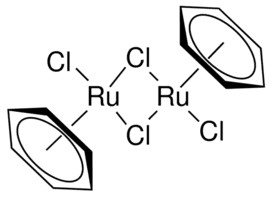
Benzeneruthenium(II) chloride dimer
Ru2(C6H6)2Cl4
Catalysis & Inorganic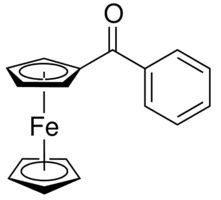
Benzoylferrocene
C17H14FeO
Catalysis & Inorganic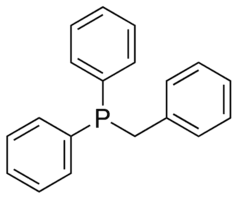
Benzyldiphenylphosphine
C6H5CH2P(C6H5)2
Catalysis & Inorganic
Beryllium
Be
Catalysis & Inorganic
Beryllium oxide
BeO
Catalysis & Inorganic![Bicyclo[2.2.1]hepta-2,5-diene-rhodium(I) chloride dimer — chemical structure, CAS 12257-42-0; Catalysis & Inorganic, fine chemical supplied by Tech Serve Solutions](/_next/image?url=https%3A%2F%2Fpub-f4d920c906024441a773a96f7098e551.r2.dev%2Fimages%2Fproducts%2F12257-42-0.png&w=3840&q=75)
Bicyclo[2.2.1]hepta-2,5-diene-rhodium(I) chloride dimer
Catalysis & Inorganic
![Bis[(10,11-η)-5-[(11bS)-dinaphtho[2,1-d:1′,2′-f][1,3,2]dioxaphosphepin-4-yl- κP4]-5H-dibenz[b,f]azepine]rhodium(I) tetrafluorobo — chemical structure, CAS 1228149-03-8; Catalysis & Inorganic, fine chemical supplied by Tech Serve Solutions](/_next/image?url=https%3A%2F%2Fpub-f4d920c906024441a773a96f7098e551.r2.dev%2Fimages%2Fproducts%2F1228149-03-8.png&w=3840&q=75)
Bis[(10,11-η)-5-[(11bS)-dinaphtho[2,1-d:1′,2′-f][1,3,2]dioxaphosphepin-4-yl- κP4]-5H-dibenz[b,f]azepine]rhodium(I) tetrafluorobo
1-d:1′
Catalysis & Inorganic![Bis[(2-dimethylamino)phenyl]amine nickel(II) chloride (C16H20ClN3Ni) — chemical structure, CAS 1033772-47-2; Catalysis & Inorganic, fine chemical supplied by Tech Serve Solutions](/_next/image?url=https%3A%2F%2Fpub-f4d920c906024441a773a96f7098e551.r2.dev%2Fimages%2Fproducts%2F1033772-47-2.png&w=3840&q=75)
Bis[(2-dimethylamino)phenyl]amine nickel(II) chloride
C16H20ClN3Ni
Catalysis & Inorganic▶ Explore more
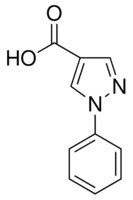
1-Phenyl-1H-pyrazole-4-carboxylic acid
C10H8N2O2
Chemical SynthesisDichloro[1,3-bis(2,4,6-trimethylphenyl)-2-imidazolidinylidene](3-methyl-2-butenylidene) (tricyclohexylphosphine)ruthenium(II)
C44H67Cl2N2PRu
Catalysis & Inorganic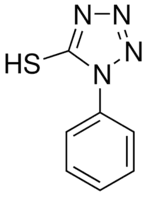
1-Phenyl-1H-tetrazole-5-thiol
C7H6N4S
Chemical Synthesis
1-Phenyl-1H-tetrazole-5-thiol sodium salt
C7H5N4NaS
Chemical Synthesis