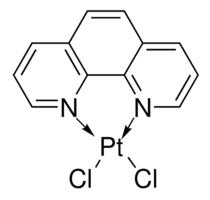
Dichloro(1,10-phenanthroline)platinum(II)
Dichloro(1,10-phenanthroline)platinum(II) (CAS 18432-95-6), with the molecular formula C12H8Cl2N2Pt and a molecular weight of 446.19 g/mol, is a platinum-containing coordination compound. It serves as a valuable reactant in the synthesis of various platinum complexes and mixed-metal systems. Additionally, it functions as a catalyst in specific chemical transformations, notably in the selective synthesis of organotin compounds.
- Synonyms
- C12H8Cl2N2Pt
Synthesis of Novel Platinum Complexes
Used as a reactant in the preparation of platinum complexes featuring unique ligands, such as chelating di-fluoro-substituted thiourea, contributing to advancements in coordination chemistry.
Formation of Mixed-Metal Complexes
Acts as a precursor for constructing complex structures that incorporate platinum alongside other metal centers, such as lanthanides, enabling the study of bimetallic systems.
Adduct Formation Studies
Involved in the formation of adducts between ternary Pt(III)-amino acid-aromatic diimine complexes and flavin mononucleotide, relevant for biochemical and medicinal chemistry research.
Catalysis in Organotin Synthesis
Functions as a catalyst for the selective synthesis of monoorganotin trihalides, a useful transformation in organometallic chemistry.
| Molecular weight | 446.19 |
|---|---|
| Empirical formula | C12H8Cl2N2Pt |
| Assay | ≥95.0% |
| Application | Reactant for:• Mixed-metal complexes incorporating platinum and lanthanide centers1• Synthesis of platinum complexes containing a chelating di-fluoro-substituted thiourea ligand2• Adduct formation between ternary Pt(III)-amino acid- aromatic diimine complexes and flavin mononucleotide3Catalyst for the selective synthesis of monoorganotin trihalides4 |
Documentation
Every batch ships with a Certificate of Analysis covering assay, identity and purity; the grade is confirmed against your enquiry. Safety Data Sheets and technical data sheets are available on request.
Supply & logistics
Samples for technical evaluation; bulk MOQ by grade and packaging. In-stock material ships in 7–10 working days, worldwide, with full export documentation.
What is Dichloro(1,10-phenanthroline)platinum(II) used for?
+
This compound is used as a reactant in the synthesis of various platinum and mixed-metal complexes, and as a catalyst in the selective synthesis of monoorganotin trihalides.
What is the CAS number and formula for Dichloro(1,10-phenanthroline)platinum(II)?
+
The CAS number is 18432-95-6, and its empirical formula (Hill notation) is C12H8Cl2N2Pt.
What grade and purity does Tech Serve Solutions supply?
+
Tech Serve Solutions supplies Dichloro(1,10-phenanthroline)platinum(II) with an assay of ≥95.0%. TSS does not represent this product as USP, BP, EP, or other pharmacopoeial grades.
What are the safety considerations when handling this chemical?
+
This compound is classified under WGK Germany 3, indicating a high hazard to water. Appropriate personal protective equipment and handling procedures should be employed to avoid exposure.
How is this chemical packed and shipped?
+
Tech Serve Solutions, a global supplier and exporter, ensures appropriate packaging and shipping of chemicals in compliance with international regulations.
How can I request a sample or quote?
+
To request a sample or a quote for Dichloro(1,10-phenanthroline)platinum(II), please contact the TSS sales team through the website or by phone.
▶ Related products
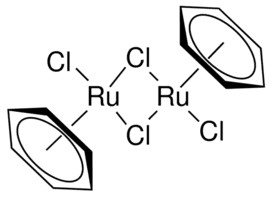
Benzeneruthenium(II) chloride dimer
Ru2(C6H6)2Cl4
Catalysis & Inorganic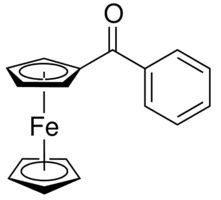
Benzoylferrocene
C17H14FeO
Catalysis & Inorganic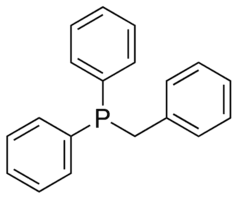
Benzyldiphenylphosphine
C6H5CH2P(C6H5)2
Catalysis & Inorganic
Beryllium
Be
Catalysis & Inorganic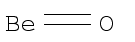
Beryllium oxide
BeO
Catalysis & Inorganic![Bicyclo[2.2.1]hepta-2,5-diene-rhodium(I) chloride dimer — chemical structure, CAS 12257-42-0; Catalysis & Inorganic, fine chemical supplied by Tech Serve Solutions](/_next/image?url=https%3A%2F%2Fpub-f4d920c906024441a773a96f7098e551.r2.dev%2Fimages%2Fproducts%2F12257-42-0.png&w=3840&q=75)
Bicyclo[2.2.1]hepta-2,5-diene-rhodium(I) chloride dimer
Catalysis & Inorganic
![Bis[(10,11-η)-5-[(11bS)-dinaphtho[2,1-d:1′,2′-f][1,3,2]dioxaphosphepin-4-yl- κP4]-5H-dibenz[b,f]azepine]rhodium(I) tetrafluorobo — chemical structure, CAS 1228149-03-8; Catalysis & Inorganic, fine chemical supplied by Tech Serve Solutions](/_next/image?url=https%3A%2F%2Fpub-f4d920c906024441a773a96f7098e551.r2.dev%2Fimages%2Fproducts%2F1228149-03-8.png&w=3840&q=75)
Bis[(10,11-η)-5-[(11bS)-dinaphtho[2,1-d:1′,2′-f][1,3,2]dioxaphosphepin-4-yl- κP4]-5H-dibenz[b,f]azepine]rhodium(I) tetrafluorobo
1-d:1′
Catalysis & Inorganic![Bis[(2-dimethylamino)phenyl]amine nickel(II) chloride (C16H20ClN3Ni) — chemical structure, CAS 1033772-47-2; Catalysis & Inorganic, fine chemical supplied by Tech Serve Solutions](/_next/image?url=https%3A%2F%2Fpub-f4d920c906024441a773a96f7098e551.r2.dev%2Fimages%2Fproducts%2F1033772-47-2.png&w=3840&q=75)
Bis[(2-dimethylamino)phenyl]amine nickel(II) chloride
C16H20ClN3Ni
Catalysis & Inorganic