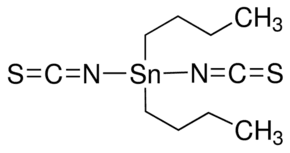
Dibutyltin diisothiocyanate
Dibutyltin diisothiocyanate (CAS: 15719-34-3), with the empirical formula C10H18N2S2Sn and a molecular weight of 349.10 g/mol, is an organotin compound utilised primarily as a reactant in chemical synthesis. It serves as a precursor for the formation of macrolactones and various metal complexes. Its reactivity also allows for unusual adduct formation and interactions with specific organometallic compounds, making it a valuable reagent in inorganic chemistry research.
- IUPAC
- Dibutyldiisothiocyanato-stannane,Dibutyldiisothiocyanato-tin,NSC 292417
Synthesis of Macrolactones
Dibutyltin diisothiocyanate acts as a key reactant in the synthesis of macrolactones, contributing to the formation of cyclic ester structures. This application is significant in organic chemistry for creating complex molecular architectures.
Formation of Metal Complexes
This compound is employed in the preparation of isocyanate and isothiocyanate complexes involving vanadocene. It also participates in interactions with vanadyl salicylaldimine β-ketimine and acetylacetonato complexes.
Adduct Formation
It serves as a reactant in the formation of unusual adducts with organotin(IV) Lewis acids. This highlights its utility in exploring novel coordination chemistry and organometallic interactions.
| Molecular weight | 349.10 |
|---|---|
| Empirical formula | C10H18N2S2Sn |
| Assay | 97% |
| Application | Reactant for synthesis of:• Macrolactones1• Isocyanate and isothiocyanate d1- and d2-complexes of vanadocene2Reactant for:• Unusual adduct formation with organotin(IV) Lewis acids3• Interactions with vanadyl salicylaldimine β-ketimine and acetylacetonato complexes4 |
| Melting point | 141-143 °C |


Hazard statements
- H302Harmful if swallowed
- H312Harmful in contact with skin
- H332Harmful if inhaled
- H372Causes damage to organs through prolonged exposure
- H411Toxic to aquatic life with long-lasting effects
Precautionary statements
- P273Avoid release to the environment
- P280Wear protective gloves, clothing and eye/face protection
- P314Get medical attention if you feel unwell
| Protective equipment | dust mask type N95 (US), Eyeshields, Gloves |
|---|---|
| Transport (UN / ADR) | UN 3146 6.1 / PGIII |
| Water hazard class (WGK, DE) | 3 |
| Hazard codes (EU) | Xn,N |
| Risk statements (R) | 20/21/22-32-33-51/53 |
| Safety statements (S) | 28-36/37/39-60-61 |
| Supplemental hazards | Contact with acids liberates very toxic gas. |
Hazard information is provided for guidance. Always consult the product Safety Data Sheet (SDS), available on request, before handling.
Documentation
Every batch ships with a Certificate of Analysis covering assay, identity and purity; the grade is confirmed against your enquiry. Safety Data Sheets and technical data sheets are available on request.
Supply & logistics
Samples for technical evaluation; bulk MOQ by grade and packaging. In-stock material ships in 7–10 working days, worldwide, with full export documentation.
What is Dibutyltin diisothiocyanate used for?
+
Dibutyltin diisothiocyanate is primarily used as a reactant in chemical synthesis, notably for the preparation of macrolactones, isocyanate and isothiocyanate complexes of vanadocene, and in forming unusual adducts with organotin(IV) Lewis acids.
What is the CAS number and formula for Dibutyltin diisothiocyanate?
+
The CAS number for Dibutyltin diisothiocyanate is 15719-34-3, and its empirical formula is C10H18N2S2Sn.
What grade and purity does Tech Serve Solutions supply?
+
Tech Serve Solutions supplies Dibutyltin diisothiocyanate with an assay of 97%. We do not represent this product as USP, BP, EP, or any other pharmacopoeia grade.
How should Dibutyltin diisothiocyanate be handled safely?
+
Dibutyltin diisothiocyanate is harmful if swallowed, in contact with skin, or if inhaled, and can cause organ damage through prolonged or repeated exposure. Contact with acids liberates very toxic gas. It is also toxic to aquatic life with long-lasting effects. Use a dust mask type N95, eyeshields, and gloves, and ensure adequate ventilation.
How is Dibutyltin diisothiocyanate packed, shipped, and exported?
+
Dibutyltin diisothiocyanate is classified under UN 3146, Hazard Class 6.1, Packing Group III. TSS ensures compliant packaging and documentation for safe global export.
How can I request a quote or sample for Dibutyltin diisothiocyanate?
+
To request a quote or sample, please use the 'Request a Quote' or 'Sample' buttons on the product page, or contact our sales team directly.
▶ Related products
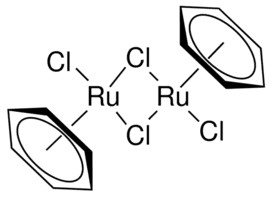
Benzeneruthenium(II) chloride dimer
Ru2(C6H6)2Cl4
Catalysis & Inorganic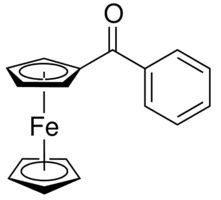
Benzoylferrocene
C17H14FeO
Catalysis & Inorganic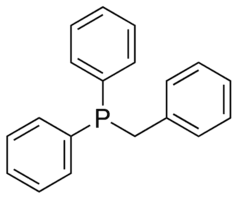
Benzyldiphenylphosphine
C6H5CH2P(C6H5)2
Catalysis & Inorganic
Beryllium
Be
Catalysis & Inorganic
Beryllium oxide
BeO
Catalysis & Inorganic![Bicyclo[2.2.1]hepta-2,5-diene-rhodium(I) chloride dimer — chemical structure, CAS 12257-42-0; Catalysis & Inorganic, fine chemical supplied by Tech Serve Solutions](/_next/image?url=https%3A%2F%2Fpub-f4d920c906024441a773a96f7098e551.r2.dev%2Fimages%2Fproducts%2F12257-42-0.png&w=3840&q=75)
Bicyclo[2.2.1]hepta-2,5-diene-rhodium(I) chloride dimer
Catalysis & Inorganic
![Bis[(10,11-η)-5-[(11bS)-dinaphtho[2,1-d:1′,2′-f][1,3,2]dioxaphosphepin-4-yl- κP4]-5H-dibenz[b,f]azepine]rhodium(I) tetrafluorobo — chemical structure, CAS 1228149-03-8; Catalysis & Inorganic, fine chemical supplied by Tech Serve Solutions](/_next/image?url=https%3A%2F%2Fpub-f4d920c906024441a773a96f7098e551.r2.dev%2Fimages%2Fproducts%2F1228149-03-8.png&w=3840&q=75)
Bis[(10,11-η)-5-[(11bS)-dinaphtho[2,1-d:1′,2′-f][1,3,2]dioxaphosphepin-4-yl- κP4]-5H-dibenz[b,f]azepine]rhodium(I) tetrafluorobo
1-d:1′
Catalysis & Inorganic![Bis[(2-dimethylamino)phenyl]amine nickel(II) chloride (C16H20ClN3Ni) — chemical structure, CAS 1033772-47-2; Catalysis & Inorganic, fine chemical supplied by Tech Serve Solutions](/_next/image?url=https%3A%2F%2Fpub-f4d920c906024441a773a96f7098e551.r2.dev%2Fimages%2Fproducts%2F1033772-47-2.png&w=3840&q=75)
Bis[(2-dimethylamino)phenyl]amine nickel(II) chloride
C16H20ClN3Ni
Catalysis & Inorganic