
Cryolite
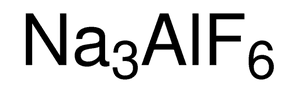
Cryolite (CAS 15096-52-3, Na3AlF6) is an inorganic compound with a molar mass of 209.94 g/mol. This white crystalline solid, also known as sodium hexafluoroaluminate, is primarily recognised for its historical and ongoing use as a flux in the electrolytic production of aluminium. Its properties also lend themselves to applications in abrasives, fluxes for welding, and as an opacifier in enamels and ceramics. Tech Serve Solutions offers Cryolite for diverse industrial and research needs.
- IUPAC
- Kryolith,Sodium hexafluoroaluminate
- Synonyms
- KryolithSodium hexafluoroaluminate
Aluminium Production
Cryolite serves as a critical electrolyte in the Hall–Héroult process for smelting aluminium. It dissolves alumina (Al2O3) and lowers the melting point, facilitating efficient electrolysis at manageable temperatures.
Abrasives and Grinding Wheels
Incorporated into grinding wheels and abrasive papers, Cryolite acts as a grinding agent. Its hardness and friability contribute to effective material removal and surface finishing.
Flux and Brazing
As a fluxing agent, Cryolite is employed in metallurgy, particularly in welding and brazing applications. It helps to clean metal surfaces and prevent oxidation during high-temperature processes.
Opacifier in Coatings
Cryolite can be used as an opacifier in the manufacturing of enamels, glazes, and glass. It imparts a white, opaque appearance to finished ceramic and glass products.
| Molecular weight | 209.94 |
|---|---|
| Linear formula | Na3AlF6 |
| Assay | ≥97.0% (from F) |
| Loss on drying | ≤0.5% loss on drying, 105 °C |
| Impurities tested | ≤0.5% silicic acid (as SiO2) |


Hazard statements
- H302Harmful if swallowed
- H332Harmful if inhaled
- H372Causes damage to organs through prolonged exposure
- H411Toxic to aquatic life with long-lasting effects
Precautionary statements
- P273Avoid release to the environment
- P314Get medical attention if you feel unwell
| Protective equipment | dust mask type N95 (US), Eyeshields, Faceshields, Gloves, type P2 (EN 143) respirator cartridges |
|---|---|
| Transport (UN / ADR) | UN 3077 9 / PGIII |
| Water hazard class (WGK, DE) | 3 |
| Hazard codes (EU) | T,N |
| Risk statements (R) | 20/22-48/23/25-51/53 |
| Safety statements (S) | 22-37-45-61 |
| Cation traces | Fe: ≤500 mg/kg |
Hazard information is provided for guidance. Always consult the product Safety Data Sheet (SDS), available on request, before handling.
Documentation
Every batch ships with a Certificate of Analysis covering assay, identity and purity; the grade is confirmed against your enquiry. Safety Data Sheets and technical data sheets are available on request.
Supply & logistics
Samples for technical evaluation; bulk MOQ by grade and packaging. In-stock material ships in 7–10 working days, worldwide, with full export documentation.
What is Cryolite used for?
+
Cryolite (CAS 15096-52-3) is primarily used as a flux in the electrolytic production of aluminium. It also finds applications in abrasives, fluxes for welding and brazing, and as an opacifier in enamels and ceramics.
What are the CAS number and chemical formula for Cryolite?
+
The CAS number for Cryolite is 15096-52-3, and its chemical formula is Na3AlF6.
What grade and purity does Tech Serve Solutions supply for Cryolite?
+
Tech Serve Solutions supplies Cryolite with an assay of ≥97.0% (from F). We do not represent this product as USP, BP, EP, or any other pharmacopoeia grade; it is supplied for industrial and research purposes.
How should Cryolite be handled safely?
+
Cryolite is harmful if swallowed or inhaled and can cause organ damage through prolonged or repeated exposure. It is also toxic to aquatic life with long-lasting effects. Handle with appropriate personal protective equipment, including a dust mask (type N95 or P2 respirator cartridges), eyeshields, faceshields, and gloves. Ensure good ventilation and avoid release to the environment. Refer to the Safety Data Sheet for comprehensive handling instructions.
Is Cryolite a controlled substance?
+
The provided data does not indicate that Cryolite (CAS 15096-52-3) is a controlled substance. However, users should always verify local regulations.
How is Cryolite packed and exported by TSS?
+
Cryolite is shipped and exported under UN 3077, Class 9, Packing Group III. Packaging details can be provided upon request; please contact us for specific export information.
How can I request a sample or quote for Cryolite?
+
To request a sample or a quote for Cryolite, please contact our sales team through the website or by phone. Provide your requirements, including quantity and delivery location.
▶ Related products
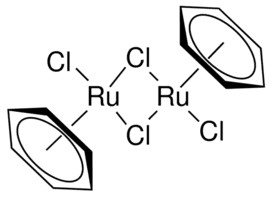
Benzeneruthenium(II) chloride dimer
Ru2(C6H6)2Cl4
Catalysis & Inorganic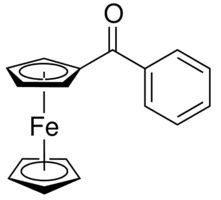
Benzoylferrocene
C17H14FeO
Catalysis & Inorganic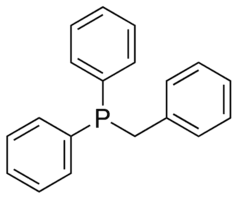
Benzyldiphenylphosphine
C6H5CH2P(C6H5)2
Catalysis & Inorganic
Beryllium
Be
Catalysis & Inorganic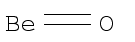
Beryllium oxide
BeO
Catalysis & Inorganic![Bicyclo[2.2.1]hepta-2,5-diene-rhodium(I) chloride dimer — chemical structure, CAS 12257-42-0; Catalysis & Inorganic, fine chemical supplied by Tech Serve Solutions](/_next/image?url=https%3A%2F%2Fpub-f4d920c906024441a773a96f7098e551.r2.dev%2Fimages%2Fproducts%2F12257-42-0.png&w=3840&q=75)
Bicyclo[2.2.1]hepta-2,5-diene-rhodium(I) chloride dimer
Catalysis & Inorganic
![Bis[(10,11-η)-5-[(11bS)-dinaphtho[2,1-d:1′,2′-f][1,3,2]dioxaphosphepin-4-yl- κP4]-5H-dibenz[b,f]azepine]rhodium(I) tetrafluorobo — chemical structure, CAS 1228149-03-8; Catalysis & Inorganic, fine chemical supplied by Tech Serve Solutions](/_next/image?url=https%3A%2F%2Fpub-f4d920c906024441a773a96f7098e551.r2.dev%2Fimages%2Fproducts%2F1228149-03-8.png&w=3840&q=75)
Bis[(10,11-η)-5-[(11bS)-dinaphtho[2,1-d:1′,2′-f][1,3,2]dioxaphosphepin-4-yl- κP4]-5H-dibenz[b,f]azepine]rhodium(I) tetrafluorobo
1-d:1′
Catalysis & Inorganic![Bis[(2-dimethylamino)phenyl]amine nickel(II) chloride (C16H20ClN3Ni) — chemical structure, CAS 1033772-47-2; Catalysis & Inorganic, fine chemical supplied by Tech Serve Solutions](/_next/image?url=https%3A%2F%2Fpub-f4d920c906024441a773a96f7098e551.r2.dev%2Fimages%2Fproducts%2F1033772-47-2.png&w=3840&q=75)
Bis[(2-dimethylamino)phenyl]amine nickel(II) chloride
C16H20ClN3Ni
Catalysis & Inorganic▶ Explore more

Bis(cyclopentadienyl)cobalt(III) hexafluorophosphate
C10H10CoF6P
Catalysis & Inorganic
1-(4-Chlorophenyl)biguanide hydrochloride
ClC6H4NHC(NH)NHC(NH)NH2 · HCl
Chemical Synthesis
Bis(cyclopentadienyl)dimethylzirconium(IV)
Catalysis & Inorganic

1-(4-Chlorophenyl)ethanol
ClC6H4CH(CH3)OH
Chemical Synthesis