
Copper(I) iodide
Copper(I) iodide (CuI), CAS 7681-65-4, is an inorganic compound with a molecular weight of 190.45 g/mol. This white to slightly yellowish solid is primarily utilised as a catalyst in organic synthesis and in the preparation of other copper compounds. Its applications extend to various chemical processes requiring a reliable source of copper(I) ions. Tech Serve Solutions supplies high-quality Copper(I) iodide for research and industrial applications.
- IUPAC
- Cuprous iodide

Catalysis in Organic Synthesis
Copper(I) iodide serves as a crucial catalyst in various organic reactions, including C-O, C-N, and C-S bond formations (e.g., Ullmann-type couplings). It facilitates reactions essential for the synthesis of complex molecules and pharmaceutical intermediates.
Chemical Synthesis
It is used as a reagent in the synthesis of other inorganic and organometallic compounds. Its ability to provide copper(I) ions makes it valuable for creating specific chemical structures and materials.
Material Science Applications
Copper(I) iodide is explored for its semiconductor properties and its use in the development of advanced materials. It can be incorporated into various functional materials and devices.
| Molecular weight | 190.45 |
|---|---|
| Empirical formula | CuI |
| Assay | ≥98.0% (AT) |
| Grade | purum |
| Boiling point | 1290 °C/1 atm (decomp)(lit.) |
| Density | 5.62 g/mL at 25 °C(lit.) |
| Solubility | dilute aqueous acid: insoluble(lit.) |
| Melting point | 605 °C(lit.) |
| Vapour pressure | 10 mmHg (656 °C) |


Hazard statements
- H302Harmful if swallowed
- H315Causes skin irritation
- H319Causes serious eye irritation
- H335May cause respiratory irritation
- H410Very toxic to aquatic life with long-lasting effects
Precautionary statements
- P261Avoid breathing dust, fume, gas or vapours
- P273Avoid release to the environment
- P305IF IN EYES
- P501Dispose of contents and container per local regulations
| Protective equipment | dust mask type N95 (US), Eyeshields, Gloves |
|---|---|
| Transport (UN / ADR) | UN 3077 9 / PGIII |
| Water hazard class (WGK, DE) | 3 |
| Hazard codes (EU) | Xn,N |
| Risk statements (R) | 22-36/37/38-50/53 |
| Safety statements (S) | 22-24/25-26-61 |
Hazard information is provided for guidance. Always consult the product Safety Data Sheet (SDS), available on request, before handling.
Documentation
Every batch ships with a Certificate of Analysis covering assay, identity and purity; the grade is confirmed against your enquiry. Safety Data Sheets and technical data sheets are available on request.
Supply & logistics
Samples for technical evaluation; bulk MOQ by grade and packaging. In-stock material ships in 7–10 working days, worldwide, with full export documentation.
What is Copper(I) iodide used for?
+
Copper(I) iodide is primarily used as a catalyst in organic synthesis, particularly for cross-coupling reactions, and in the synthesis of other chemical compounds and materials.
What is the CAS number and formula for Copper(I) iodide?
+
The CAS number for Copper(I) iodide is 7681-65-4, and its chemical formula is CuI.
What grade and purity does Tech Serve Solutions supply?
+
Tech Serve Solutions supplies Copper(I) iodide with a minimum assay of ≥98.0% (AT) and a 'purum' grade. We do not represent this product as USP, BP, or EP grade.
What are the safety and handling precautions for Copper(I) iodide?
+
Copper(I) iodide is classified as Warning with hazards including H302 (Harmful if swallowed), H315 (Causes skin irritation), H319 (Causes serious eye irritation), H335 (May cause respiratory irritation), and H410 (Very toxic to aquatic life with long lasting effects). Recommended personal protective equipment includes a dust mask (type N95), eyeshields, and gloves. Avoid breathing dust and ensure good ventilation. Handle in accordance with P261, P273, P305 + P351 + P338, and P501.
How is Copper(I) iodide packed, shipped, and exported?
+
Tech Serve Solutions offers Copper(I) iodide in various packaging suitable for safe transport and handling, adhering to international shipping regulations for hazardous materials (e.g., UN 3077, Class 9).
How can I request a quote or sample of Copper(I) iodide?
+
To request a quote or a sample of Copper(I) iodide, please contact our sales team through the website or by phone, providing your specific requirements.
▶ Related products
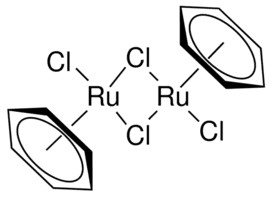
Benzeneruthenium(II) chloride dimer
Ru2(C6H6)2Cl4
Catalysis & Inorganic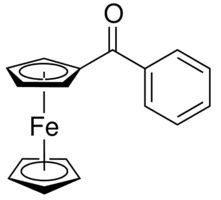
Benzoylferrocene
C17H14FeO
Catalysis & Inorganic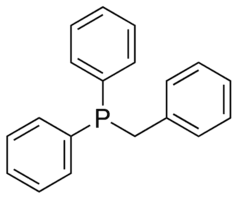
Benzyldiphenylphosphine
C6H5CH2P(C6H5)2
Catalysis & Inorganic
Beryllium
Be
Catalysis & Inorganic
Beryllium oxide
BeO
Catalysis & Inorganic![Bicyclo[2.2.1]hepta-2,5-diene-rhodium(I) chloride dimer — chemical structure, CAS 12257-42-0; Catalysis & Inorganic, fine chemical supplied by Tech Serve Solutions](/_next/image?url=https%3A%2F%2Fpub-f4d920c906024441a773a96f7098e551.r2.dev%2Fimages%2Fproducts%2F12257-42-0.png&w=3840&q=75)
Bicyclo[2.2.1]hepta-2,5-diene-rhodium(I) chloride dimer
Catalysis & Inorganic
![Bis[(10,11-η)-5-[(11bS)-dinaphtho[2,1-d:1′,2′-f][1,3,2]dioxaphosphepin-4-yl- κP4]-5H-dibenz[b,f]azepine]rhodium(I) tetrafluorobo — chemical structure, CAS 1228149-03-8; Catalysis & Inorganic, fine chemical supplied by Tech Serve Solutions](/_next/image?url=https%3A%2F%2Fpub-f4d920c906024441a773a96f7098e551.r2.dev%2Fimages%2Fproducts%2F1228149-03-8.png&w=3840&q=75)
Bis[(10,11-η)-5-[(11bS)-dinaphtho[2,1-d:1′,2′-f][1,3,2]dioxaphosphepin-4-yl- κP4]-5H-dibenz[b,f]azepine]rhodium(I) tetrafluorobo
1-d:1′
Catalysis & Inorganic![Bis[(2-dimethylamino)phenyl]amine nickel(II) chloride (C16H20ClN3Ni) — chemical structure, CAS 1033772-47-2; Catalysis & Inorganic, fine chemical supplied by Tech Serve Solutions](/_next/image?url=https%3A%2F%2Fpub-f4d920c906024441a773a96f7098e551.r2.dev%2Fimages%2Fproducts%2F1033772-47-2.png&w=3840&q=75)
Bis[(2-dimethylamino)phenyl]amine nickel(II) chloride
C16H20ClN3Ni
Catalysis & Inorganic▶ Explore more

Bis(cyclopentadienyl)cobalt(III) hexafluorophosphate
C10H10CoF6P
Catalysis & Inorganic
1-(4-Chlorophenyl)biguanide hydrochloride
ClC6H4NHC(NH)NHC(NH)NH2 · HCl
Chemical Synthesis
Bis(cyclopentadienyl)dimethylzirconium(IV)
Catalysis & Inorganic

1-(4-Chlorophenyl)ethanol
ClC6H4CH(CH3)OH
Chemical Synthesis