
Cobalt carbonyl
Cobalt carbonyl (CAS: 10210-68-1), with the formula Co2(CO)8 and a molecular weight of 341.95 g/mol, is a significant organometallic compound. It is primarily recognised for its potent catalytic activity in various organic synthesis reactions. This compound is supplied by Tech Serve Solutions moistened with hexane (1-10%) and exhibits an assay of ≥90% (Co). Its applications span catalysis and inorganic chemistry, making it a valuable reagent for chemical synthesis.
- IUPAC
- Cobalt tetracarbonyl dimer,Di-μ-carbonylhexacarbonyldicobal,Dicobalt octacarbonyl,Octacarbonyldicobalt
- Synonyms
- Cobalt tetracarbonyl dimerDi-μ-carbonylhexacarbonyldicobalDicobalt octacarbonylOctacarbonyldicobalt
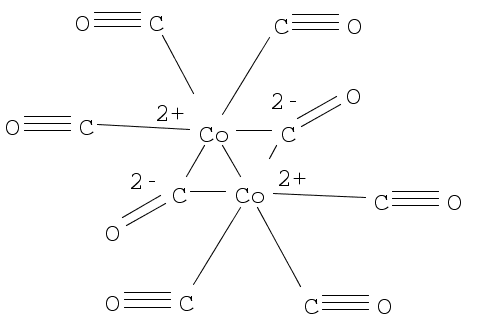
Catalysis in Organic Synthesis
Cobalt carbonyl serves as a highly effective catalyst for numerous organic transformations. It is particularly useful in hydroformylation, carbonylation, and polymerization reactions, enabling the synthesis of complex molecules and valuable chemical intermediates.
Precursor for Cobalt-Containing Materials
This organometallic compound can act as a precursor for the deposition of cobalt-containing films or nanoparticles. These materials find applications in electronics, magnetism, and catalysis.
Research and Development
Due to its rich coordination chemistry and catalytic properties, cobalt carbonyl is extensively used in academic and industrial research for exploring new synthetic methodologies and catalytic systems.
| Molecular weight | 341.95 |
|---|---|
| Linear formula | Co2(CO)8 |
| Assay | ≥90% (Co) |
| Storage temperature | 2-8°C |


Hazard statements
- H251Self-heating; may catch fire
- H302Harmful if swallowed
- H304May be fatal if swallowed and enters airways
- H315Causes skin irritation
- H317May cause an allergic skin reaction
- H330Fatal if inhaled
- H351Suspected of causing cancer
- H361F
- H373May cause damage to organs through prolonged exposure
- H412Harmful to aquatic life with long-lasting effects
Precautionary statements
- P235Keep cool
- P260Do not breathe dust, fume, gas, mist, vapours or spray
- P273Avoid release to the environment
- P280Wear protective gloves, clothing and eye/face protection
- P284Wear respiratory protection
- P301IF SWALLOWED
| Protective equipment | Eyeshields, Faceshields, full-face particle respirator type N100 (US), Gloves, respirator cartridge type N100 (US), type P1 (EN143) respirator filter, type P3 (EN 143) respirator cartridges |
|---|---|
| Flash point | -23 °C / -9.4 °F |
| Transport (UN / ADR) | UN 3190 4.2 / PGII |
| Water hazard class (WGK, DE) | 3 |
| Hazard codes (EU) | T+ |
| Risk statements (R) | 22-26-40-43-48/20-52/53-62 |
| Safety statements (S) | 28-36/37-45-61 |
Hazard information is provided for guidance. Always consult the product Safety Data Sheet (SDS), available on request, before handling.
| Quality | moistened with hexane (hexane 1-10%) |
|---|
Documentation
Every batch ships with a Certificate of Analysis covering assay, identity and purity; the grade is confirmed against your enquiry. Safety Data Sheets and technical data sheets are available on request.
Supply & logistics
Samples for technical evaluation; bulk MOQ by grade and packaging. In-stock material ships in 7–10 working days, worldwide, with full export documentation.
What is Cobalt carbonyl primarily used for?
+
Cobalt carbonyl is primarily used as a catalyst in various organic synthesis reactions, including hydroformylation and carbonylation, and as a precursor for cobalt-containing materials.
What are the CAS number and formula for Cobalt carbonyl?
+
The CAS number for Cobalt carbonyl is 10210-68-1, and its formula is Co2(CO)8.
What grade and purity does Tech Serve Solutions supply?
+
Tech Serve Solutions supplies Cobalt carbonyl with an assay of ≥90% (Co), moistened with hexane (1-10%). We do not represent this product as USP, BP, or EP grade.
How should Cobalt carbonyl be handled and stored?
+
Cobalt carbonyl is flammable and toxic. It requires careful handling with appropriate personal protective equipment, including eyeshields, gloves, and a full-face particle respirator. Store at 2-8°C as it is self-heating and may ignite spontaneously in air.
Is Cobalt carbonyl regulated or controlled?
+
Cobalt carbonyl is not explicitly listed as a controlled substance in widely accessible global databases, but its hazardous nature necessitates strict adherence to safety regulations during handling, storage, and transport.
How is Cobalt carbonyl packed and exported?
+
Cobalt carbonyl is shipped as a UN 3190, Hazard Class 4.2, Packing Group II material. Packaging is designed to meet stringent international regulations for hazardous goods transport, ensuring safe export.
How can I request a quote or sample for Cobalt carbonyl?
+
To request a quote or a sample of Cobalt carbonyl, please contact our sales team through the TSS website or by calling our dedicated line. Our experts will assist you promptly.
▶ Related products
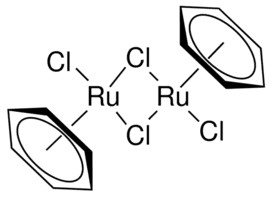
Benzeneruthenium(II) chloride dimer
Ru2(C6H6)2Cl4
Catalysis & Inorganic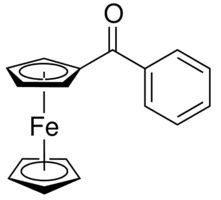
Benzoylferrocene
C17H14FeO
Catalysis & Inorganic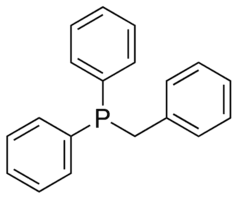
Benzyldiphenylphosphine
C6H5CH2P(C6H5)2
Catalysis & Inorganic
Beryllium
Be
Catalysis & Inorganic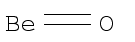
Beryllium oxide
BeO
Catalysis & Inorganic![Bicyclo[2.2.1]hepta-2,5-diene-rhodium(I) chloride dimer — chemical structure, CAS 12257-42-0; Catalysis & Inorganic, fine chemical supplied by Tech Serve Solutions](/_next/image?url=https%3A%2F%2Fpub-f4d920c906024441a773a96f7098e551.r2.dev%2Fimages%2Fproducts%2F12257-42-0.png&w=3840&q=75)
Bicyclo[2.2.1]hepta-2,5-diene-rhodium(I) chloride dimer
Catalysis & Inorganic
![Bis[(10,11-η)-5-[(11bS)-dinaphtho[2,1-d:1′,2′-f][1,3,2]dioxaphosphepin-4-yl- κP4]-5H-dibenz[b,f]azepine]rhodium(I) tetrafluorobo — chemical structure, CAS 1228149-03-8; Catalysis & Inorganic, fine chemical supplied by Tech Serve Solutions](/_next/image?url=https%3A%2F%2Fpub-f4d920c906024441a773a96f7098e551.r2.dev%2Fimages%2Fproducts%2F1228149-03-8.png&w=3840&q=75)
Bis[(10,11-η)-5-[(11bS)-dinaphtho[2,1-d:1′,2′-f][1,3,2]dioxaphosphepin-4-yl- κP4]-5H-dibenz[b,f]azepine]rhodium(I) tetrafluorobo
1-d:1′
Catalysis & Inorganic![Bis[(2-dimethylamino)phenyl]amine nickel(II) chloride (C16H20ClN3Ni) — chemical structure, CAS 1033772-47-2; Catalysis & Inorganic, fine chemical supplied by Tech Serve Solutions](/_next/image?url=https%3A%2F%2Fpub-f4d920c906024441a773a96f7098e551.r2.dev%2Fimages%2Fproducts%2F1033772-47-2.png&w=3840&q=75)
Bis[(2-dimethylamino)phenyl]amine nickel(II) chloride
C16H20ClN3Ni
Catalysis & Inorganic▶ Explore more

Bis(cyclopentadienyl)cobalt(III) hexafluorophosphate
C10H10CoF6P
Catalysis & Inorganic
1-(4-Chlorophenyl)biguanide hydrochloride
ClC6H4NHC(NH)NHC(NH)NH2 · HCl
Chemical Synthesis
Bis(cyclopentadienyl)dimethylzirconium(IV)
Catalysis & Inorganic

1-(4-Chlorophenyl)ethanol
ClC6H4CH(CH3)OH
Chemical Synthesis