
Cobalt
Cobalt (Co, CAS: 7440-48-4) is a lustrous, silvery-grey metal with a faint bluish tint. It is a key element in various industrial applications, primarily recognised for its catalytic properties and use in alloys. Available as a powder, Cobalt (99.5% trace metals basis) is supplied by Tech Serve Solutions for research and development purposes.

Catalysis
Cobalt compounds are widely employed as catalysts in numerous organic reactions, including hydrogenation, oxidation, and polymerisation processes. Its unique electronic structure facilitates electron transfer, making it effective in facilitating chemical transformations.
Alloy Production
This metal is a critical component in the manufacturing of high-strength, corrosion-resistant alloys. These alloys find applications in aerospace, gas turbines, and other demanding industrial environments requiring superior material performance.
Pigments and Dyes
Cobalt compounds have historically been used to impart vibrant blue colours to glass, ceramics, and paints. Its ability to form stable, intensely coloured complexes makes it valuable in the coloration industry.
Battery Technology
Cobalt is an essential material in the production of rechargeable batteries, particularly lithium-ion batteries. It plays a crucial role in the cathode chemistry, contributing to energy density and battery performance.
| Molecular weight | 58.93 |
|---|---|
| Empirical formula | Co |
| Assay | 99.5% trace metals basis |
| Form | powder |
| Boiling point | 2900 °C(lit.) |
| Density | 8.9 g/mL at 25 °C(lit.) |
| Concentration | in H2O |

Hazard statements
- H317May cause an allergic skin reaction
- H334May cause allergy or asthma symptoms if inhaled
- H413May cause long-lasting harmful effects to aquatic life
Precautionary statements
- P261Avoid breathing dust, fume, gas or vapours
- P280Wear protective gloves, clothing and eye/face protection
- P342
| Protective equipment | dust mask type N95 (US), Eyeshields, Faceshields, Gloves |
|---|---|
| Transport (UN / ADR) | UN 3089 4.1 / PGII |
| Water hazard class (WGK, DE) | nwg |
| Hazard codes (EU) | Xn |
| Risk statements (R) | 42/43-53 |
| Safety statements (S) | 22-24-37-61 |
Hazard information is provided for guidance. Always consult the product Safety Data Sheet (SDS), available on request, before handling.
| Resistivity | 6.24 μΩ-cm, 20°C |
|---|---|
| Thickness | 0.1 mm |
Documentation
Every batch ships with a Certificate of Analysis covering assay, identity and purity; the grade is confirmed against your enquiry. Safety Data Sheets and technical data sheets are available on request.
Supply & logistics
Samples for technical evaluation; bulk MOQ by grade and packaging. In-stock material ships in 7–10 working days, worldwide, with full export documentation.
What is Cobalt used for?
+
Cobalt (Co) is primarily used in catalysis, the production of high-strength alloys, as a pigment in glass and ceramics, and in battery technology, particularly for lithium-ion batteries.
What is the CAS number and formula for Cobalt?
+
The CAS number for Cobalt is 7440-48-4, and its chemical formula is Co.
What grade and purity does Tech Serve Solutions supply?
+
Tech Serve Solutions supplies Cobalt with an assay of 99.5% on a trace metals basis, supplied as a powder. This product is intended for research and laboratory use and is not represented as USP, BP, or EP grade.
How should Cobalt powder be handled safely?
+
Cobalt powder is classified as a sensitiser (H317) and can cause respiratory irritation (H334). It also carries a long-term aquatic hazard (H413). Handle with appropriate personal protective equipment, including a dust mask (N95), eyeshields, face shields, and gloves, in a well-ventilated area.
How is Cobalt packed and shipped?
+
Cobalt powder is shipped under UN 3089, Class 4.1, Packing Group II. Specific packaging details are available upon request, and TSS complies with all relevant export regulations.
How can I request a quote or sample for Cobalt?
+
To request a quote or a sample of Cobalt, please contact our sales team via the website or direct contact details provided.
▶ Related products
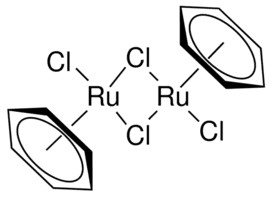
Benzeneruthenium(II) chloride dimer
Ru2(C6H6)2Cl4
Catalysis & Inorganic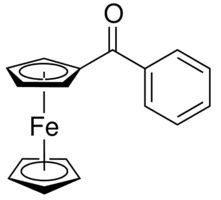
Benzoylferrocene
C17H14FeO
Catalysis & Inorganic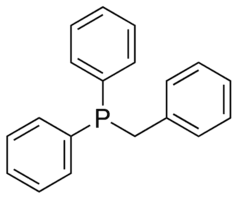
Benzyldiphenylphosphine
C6H5CH2P(C6H5)2
Catalysis & Inorganic
Beryllium
Be
Catalysis & Inorganic
Beryllium oxide
BeO
Catalysis & Inorganic![Bicyclo[2.2.1]hepta-2,5-diene-rhodium(I) chloride dimer — chemical structure, CAS 12257-42-0; Catalysis & Inorganic, fine chemical supplied by Tech Serve Solutions](/_next/image?url=https%3A%2F%2Fpub-f4d920c906024441a773a96f7098e551.r2.dev%2Fimages%2Fproducts%2F12257-42-0.png&w=3840&q=75)
Bicyclo[2.2.1]hepta-2,5-diene-rhodium(I) chloride dimer
Catalysis & Inorganic
![Bis[(10,11-η)-5-[(11bS)-dinaphtho[2,1-d:1′,2′-f][1,3,2]dioxaphosphepin-4-yl- κP4]-5H-dibenz[b,f]azepine]rhodium(I) tetrafluorobo — chemical structure, CAS 1228149-03-8; Catalysis & Inorganic, fine chemical supplied by Tech Serve Solutions](/_next/image?url=https%3A%2F%2Fpub-f4d920c906024441a773a96f7098e551.r2.dev%2Fimages%2Fproducts%2F1228149-03-8.png&w=3840&q=75)
Bis[(10,11-η)-5-[(11bS)-dinaphtho[2,1-d:1′,2′-f][1,3,2]dioxaphosphepin-4-yl- κP4]-5H-dibenz[b,f]azepine]rhodium(I) tetrafluorobo
1-d:1′
Catalysis & Inorganic![Bis[(2-dimethylamino)phenyl]amine nickel(II) chloride (C16H20ClN3Ni) — chemical structure, CAS 1033772-47-2; Catalysis & Inorganic, fine chemical supplied by Tech Serve Solutions](/_next/image?url=https%3A%2F%2Fpub-f4d920c906024441a773a96f7098e551.r2.dev%2Fimages%2Fproducts%2F1033772-47-2.png&w=3840&q=75)
Bis[(2-dimethylamino)phenyl]amine nickel(II) chloride
C16H20ClN3Ni
Catalysis & Inorganic▶ Explore more

Bis(cyclopentadienyl)cobalt(III) hexafluorophosphate
C10H10CoF6P
Catalysis & Inorganic
1-(4-Chlorophenyl)biguanide hydrochloride
ClC6H4NHC(NH)NHC(NH)NH2 · HCl
Chemical Synthesis
Bis(cyclopentadienyl)dimethylzirconium(IV)
Catalysis & Inorganic

1-(4-Chlorophenyl)ethanol
ClC6H4CH(CH3)OH
Chemical Synthesis