
Chloro(cyclopentadienyl)[bis(diphenylphosphino)methane]ruthenium(II)
Chloro(cyclopentadienyl)[bis(diphenylphosphino)methane]ruthenium(II), CAS 71397-33-6, with formula C30H27ClP2Ru and a molecular weight of 586.01 g/mol, is a ruthenium-based organometallic compound. It serves as a valuable catalyst in various organic synthesis transformations, particularly in hydration, alkylation, cyclization, and oxidation reactions. Its utility extends to the catalysis of specific reactions involving alcohols and alkynes, making it a key reagent in synthetic chemistry research and development.
![Chloro(cyclopentadienyl)[bis(diphenylphosphino)methane]ruthenium(II) (C30H27ClP2Ru) — chemical structure, CAS 71397-33-6; Chemistry, fine chemical supplied by Tech Serve Solutions](/_next/image?url=https%3A%2F%2Fpub-f4d920c906024441a773a96f7098e551.r2.dev%2Fimages%2Fproducts%2F71397-33-6.png&w=3840&q=75)
Anti-Markovnikov Hydration Catalyst
This ruthenium complex effectively catalyses the anti-Markovnikov hydration of unsaturated organic molecules. This regioselective transformation is crucial for synthesising specific alcohol isomers not readily accessible by other methods.
Catalyst for β-Alkylation
It facilitates the β-alkylation of substrates using primary alcohols. This application allows for the introduction of alkyl chains at specific positions, expanding synthetic possibilities in complex molecule construction.
Cyclization of Terminal Alkynals
The compound acts as a catalyst for the cyclization of terminal alkynals to form cycloalkenes. This reaction is important for generating cyclic structures found in many natural products and pharmaceutical compounds.
Electrochemical Oxidation of Methanol
It plays a role in the electrochemical oxidation of methanol. This application is relevant in the field of electrochemistry and potential energy conversion technologies.
Hydration of 1-Alkynes
This ruthenium catalyst is employed for the hydration of 1-alkynes, leading to the formation of ketones. This reaction provides a direct route to carbonyl compounds from terminal alkynes.
Isomerization of Allylic Alcohols
The complex catalyses the isomerization of allylic alcohols. This process rearranges the double bond and hydroxyl group, which can be a key step in multi-step syntheses.
| Molecular weight | 586.01 |
|---|---|
| Empirical formula | C30H27ClP2Ru |
| Assay | 97% |
| Application | Catalyst for:• Anti-Markovnikov hydration1• β-alkylation with primary alcohols2• Cyclization of terminal alkynals to cycloalkenes3• Electrochemical oxidation of methanol4• Hydration of 1-alkynes5• Isomerization of allylic alcohols6 |
| Melting point | 190-196 °C |
Documentation
Every batch ships with a Certificate of Analysis covering assay, identity and purity; the grade is confirmed against your enquiry. Safety Data Sheets and technical data sheets are available on request.
Supply & logistics
Samples for technical evaluation; bulk MOQ by grade and packaging. In-stock material ships in 7–10 working days, worldwide, with full export documentation.
What is Chloro(cyclopentadienyl)[bis(diphenylphosphino)methane]ruthenium(II) used for?
+
Chloro(cyclopentadienyl)[bis(diphenylphosphino)methane]ruthenium(II) (CAS 71397-33-6) is primarily used as a catalyst in various organic synthesis reactions. These include anti-Markovnikov hydration, β-alkylation with primary alcohols, cyclization of terminal alkynals, electrochemical oxidation of methanol, hydration of 1-alkynes, and isomerization of allylic alcohols.
What is the CAS number and formula for Chloro(cyclopentadienyl)[bis(diphenylphosphino)methane]ruthenium(II)?
+
The CAS number is 71397-33-6, and the empirical formula (Hill notation) is C30H27ClP2Ru.
What grade and purity does Tech Serve Solutions supply?
+
Tech Serve Solutions supplies Chloro(cyclopentadienyl)[bis(diphenylphosphino)methane]ruthenium(II) with an assay of 97%. This product is supplied for research and laboratory use, and TSS does not represent it as meeting USP, BP, EP, or other pharmacopoeial standards.
How should Chloro(cyclopentadienyl)[bis(diphenylphosphino)methane]ruthenium(II) be handled?
+
According to the provided data, this compound has a WGK Germany classification of 3, indicating it is hazardous to water. Appropriate safety precautions should be taken to avoid environmental release. Users should consult the full Safety Data Sheet (SDS) for detailed handling, storage, and disposal information, including necessary personal protective equipment.
How is this chemical shipped or exported?
+
Tech Serve Solutions is a specialist global supplier and exporter of fine chemicals. This product can be exported worldwide, adhering to all relevant international shipping regulations for hazardous materials. Please contact us for specific shipping details to your region.
How can I request a sample or a quote for this product?
+
To request a sample or a quote for Chloro(cyclopentadienyl)[bis(diphenylphosphino)methane]ruthenium(II), please use the 'Request a Quote' or 'Sample Request' forms on our website, or contact our sales department directly via email or phone.
▶ Related products
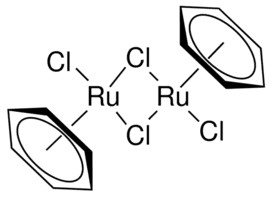
Benzeneruthenium(II) chloride dimer
Ru2(C6H6)2Cl4
Catalysis & Inorganic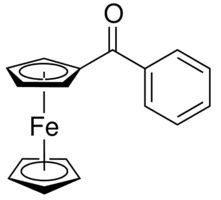
Benzoylferrocene
C17H14FeO
Catalysis & Inorganic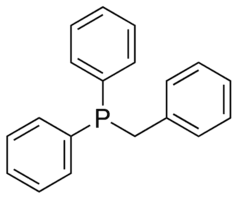
Benzyldiphenylphosphine
C6H5CH2P(C6H5)2
Catalysis & Inorganic
Beryllium
Be
Catalysis & Inorganic
Beryllium oxide
BeO
Catalysis & Inorganic![Bicyclo[2.2.1]hepta-2,5-diene-rhodium(I) chloride dimer — chemical structure, CAS 12257-42-0; Catalysis & Inorganic, fine chemical supplied by Tech Serve Solutions](/_next/image?url=https%3A%2F%2Fpub-f4d920c906024441a773a96f7098e551.r2.dev%2Fimages%2Fproducts%2F12257-42-0.png&w=3840&q=75)
Bicyclo[2.2.1]hepta-2,5-diene-rhodium(I) chloride dimer
Catalysis & Inorganic
![Bis[(10,11-η)-5-[(11bS)-dinaphtho[2,1-d:1′,2′-f][1,3,2]dioxaphosphepin-4-yl- κP4]-5H-dibenz[b,f]azepine]rhodium(I) tetrafluorobo — chemical structure, CAS 1228149-03-8; Catalysis & Inorganic, fine chemical supplied by Tech Serve Solutions](/_next/image?url=https%3A%2F%2Fpub-f4d920c906024441a773a96f7098e551.r2.dev%2Fimages%2Fproducts%2F1228149-03-8.png&w=3840&q=75)
Bis[(10,11-η)-5-[(11bS)-dinaphtho[2,1-d:1′,2′-f][1,3,2]dioxaphosphepin-4-yl- κP4]-5H-dibenz[b,f]azepine]rhodium(I) tetrafluorobo
1-d:1′
Catalysis & Inorganic![Bis[(2-dimethylamino)phenyl]amine nickel(II) chloride (C16H20ClN3Ni) — chemical structure, CAS 1033772-47-2; Catalysis & Inorganic, fine chemical supplied by Tech Serve Solutions](/_next/image?url=https%3A%2F%2Fpub-f4d920c906024441a773a96f7098e551.r2.dev%2Fimages%2Fproducts%2F1033772-47-2.png&w=3840&q=75)
Bis[(2-dimethylamino)phenyl]amine nickel(II) chloride
C16H20ClN3Ni
Catalysis & Inorganic▶ Explore more

Bis(cyclopentadienyl)cobalt(III) hexafluorophosphate
C10H10CoF6P
Catalysis & Inorganic
1-(4-Chlorophenyl)biguanide hydrochloride
ClC6H4NHC(NH)NHC(NH)NH2 · HCl
Chemical Synthesis
Bis(cyclopentadienyl)dimethylzirconium(IV)
Catalysis & Inorganic

1-(4-Chlorophenyl)ethanol
ClC6H4CH(CH3)OH
Chemical Synthesis