
Chloro[2-dicyclohexyl(2′,6′-dimethoxybiphenyl)phosphine] gold(I)
Chloro[2-dicyclohexyl(2′,6′-dimethoxybiphenyl)phosphine] gold(I), CAS 854045-95-7, possesses the molecular formula C26H35AuClO2P and a molecular weight of 642.95 g/mol. This gold(I) chloride complex, also known as SPhos AuCl, is a valuable reagent primarily utilised in catalysis for complex organic synthesis. Its high purity makes it suitable for demanding chemical transformations.
- IUPAC
- 2-Dicyclohexylphosphino-2′,6′-dimethoxybiphenyl gold(I) chloride,SPhos AuCl
- Synonyms
- 2-Dicyclohexylphosphino-2′,6′-dimethoxybiphenyl gold(I) chlorideSPhos AuCl
![Chloro[2-dicyclohexyl(2′,6′-dimethoxybiphenyl)phosphine] gold(I) (C26H35AuClO2P) — chemical structure, CAS 854045-95-7; Chemistry, fine chemical supplied by Tech Serve Solutions](/_next/image?url=https%3A%2F%2Fpub-f4d920c906024441a773a96f7098e551.r2.dev%2Fimages%2Fproducts%2F854045-95-7.png&w=3840&q=75)
Homogeneous Catalysis
This gold(I) complex serves as an effective catalyst in various homogeneous organic reactions. It facilitates transformations such as cyclisations, additions, and rearrangements under mild conditions.
Organic Synthesis Reagent
As a specialized gold precursor, it is instrumental in the synthesis of complex organic molecules. Its reactivity profile allows for selective functionalization and bond formation in intricate molecular architectures.
Cross-Coupling Reactions
The compound can be employed as a catalyst or pre-catalyst in certain cross-coupling methodologies. It enables the formation of carbon-carbon and carbon-heteroatom bonds critical in pharmaceutical and materials science.
| Molecular weight | 642.95 |
|---|---|
| Empirical formula | C26H35AuClO2P |
| Assay | 97% |
| Melting point | 263-266 °C |

Hazard statements
- H315Causes skin irritation
- H319Causes serious eye irritation
- H335May cause respiratory irritation
Precautionary statements
- P261Avoid breathing dust, fume, gas or vapours
- P305IF IN EYES
| Water hazard class (WGK, DE) | 3 |
|---|---|
| Hazard codes (EU) | Xi |
| Risk statements (R) | 36/37/38 |
| Safety statements (S) | 26 |
Hazard information is provided for guidance. Always consult the product Safety Data Sheet (SDS), available on request, before handling.
Documentation
Every batch ships with a Certificate of Analysis covering assay, identity and purity; the grade is confirmed against your enquiry. Safety Data Sheets and technical data sheets are available on request.
Supply & logistics
Samples for technical evaluation; bulk MOQ by grade and packaging. In-stock material ships in 7–10 working days, worldwide, with full export documentation.
What is Chloro[2-dicyclohexyl(2′,6′-dimethoxybiphenyl)phosphine] gold(I) used for?
+
Chloro[2-dicyclohexyl(2′,6′-dimethoxybiphenyl)phosphine] gold(I) is primarily used as a catalyst in various organic synthesis reactions, including cyclisations, additions, and cross-coupling reactions.
What is the CAS number and formula for Chloro[2-dicyclohexyl(2′,6′-dimethoxybiphenyl)phosphine] gold(I)?
+
The CAS number is 854045-95-7, and the empirical formula is C26H35AuClO2P.
What grade and purity does Tech Serve Solutions supply?
+
Tech Serve Solutions supplies this compound with a minimum purity of 97%. It is typically considered a research or technical grade material and is not represented as USP, BP, or EP grade.
What are the primary safety hazards associated with this compound?
+
This compound is classified as a Warning, with hazard statements H315 (Causes skin irritation), H319 (Causes serious eye irritation), and H335 (May cause respiratory irritation).
How is this chemical packed, shipped, and exported?
+
We ensure secure and compliant packaging for all our chemicals. For detailed information on packing, shipping, and international export, please contact our sales team.
How can I request a sample or quote for this chemical?
+
To request a sample or a formal quotation, please contact the Tech Serve Solutions sales department via email or phone, providing the product name and CAS number.
▶ Related products
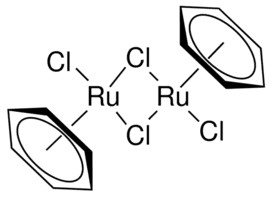
Benzeneruthenium(II) chloride dimer
Ru2(C6H6)2Cl4
Catalysis & Inorganic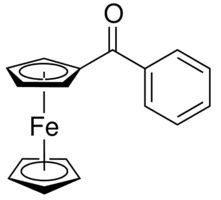
Benzoylferrocene
C17H14FeO
Catalysis & Inorganic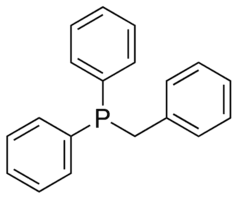
Benzyldiphenylphosphine
C6H5CH2P(C6H5)2
Catalysis & Inorganic
Beryllium
Be
Catalysis & Inorganic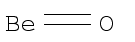
Beryllium oxide
BeO
Catalysis & Inorganic![Bicyclo[2.2.1]hepta-2,5-diene-rhodium(I) chloride dimer — chemical structure, CAS 12257-42-0; Catalysis & Inorganic, fine chemical supplied by Tech Serve Solutions](/_next/image?url=https%3A%2F%2Fpub-f4d920c906024441a773a96f7098e551.r2.dev%2Fimages%2Fproducts%2F12257-42-0.png&w=3840&q=75)
Bicyclo[2.2.1]hepta-2,5-diene-rhodium(I) chloride dimer
Catalysis & Inorganic
![Bis[(10,11-η)-5-[(11bS)-dinaphtho[2,1-d:1′,2′-f][1,3,2]dioxaphosphepin-4-yl- κP4]-5H-dibenz[b,f]azepine]rhodium(I) tetrafluorobo — chemical structure, CAS 1228149-03-8; Catalysis & Inorganic, fine chemical supplied by Tech Serve Solutions](/_next/image?url=https%3A%2F%2Fpub-f4d920c906024441a773a96f7098e551.r2.dev%2Fimages%2Fproducts%2F1228149-03-8.png&w=3840&q=75)
Bis[(10,11-η)-5-[(11bS)-dinaphtho[2,1-d:1′,2′-f][1,3,2]dioxaphosphepin-4-yl- κP4]-5H-dibenz[b,f]azepine]rhodium(I) tetrafluorobo
1-d:1′
Catalysis & Inorganic![Bis[(2-dimethylamino)phenyl]amine nickel(II) chloride (C16H20ClN3Ni) — chemical structure, CAS 1033772-47-2; Catalysis & Inorganic, fine chemical supplied by Tech Serve Solutions](/_next/image?url=https%3A%2F%2Fpub-f4d920c906024441a773a96f7098e551.r2.dev%2Fimages%2Fproducts%2F1033772-47-2.png&w=3840&q=75)
Bis[(2-dimethylamino)phenyl]amine nickel(II) chloride
C16H20ClN3Ni
Catalysis & Inorganic▶ Explore more

Bis(cyclopentadienyl)cobalt(III) hexafluorophosphate
C10H10CoF6P
Catalysis & Inorganic
1-(4-Chlorophenyl)biguanide hydrochloride
ClC6H4NHC(NH)NHC(NH)NH2 · HCl
Chemical Synthesis
Bis(cyclopentadienyl)dimethylzirconium(IV)
Catalysis & Inorganic

1-(4-Chlorophenyl)ethanol
ClC6H4CH(CH3)OH
Chemical Synthesis