
Calcium oxide
Calcium oxide (CAS: 1305-78-8, Formula: CaO) is a highly reactive inorganic compound, commonly known as quicklime. This anhydrous white powder possesses a molecular weight of 56.08 g/mol. Its primary applications include its use as a flux in metallurgy, in the manufacture of cement and mortar, and as a drying agent due to its strong affinity for water. It also finds use in various chemical syntheses and industrial processes.
- IUPAC
- Lime,Quicklime

Metallurgical Flux
Calcium oxide is widely employed as a flux in the steelmaking industry. It reacts with impurities such as silica, alumina, and phosphorus oxides, forming slag that can be easily removed from the molten metal.
Construction Materials
As a key component in cement and mortar production, calcium oxide (quicklime) reacts with water to form calcium hydroxide, which then hardens over time. This property is fundamental to its use in construction.
Chemical Synthesis and Dehydration
Due to its strong affinity for water and carbon dioxide, anhydrous calcium oxide is used as a drying agent in various chemical processes. It also serves as a reactant or catalyst in numerous inorganic and organic syntheses.
Environmental Applications
Calcium oxide is utilised in flue gas desulfurisation processes to remove sulphur dioxide emissions from industrial sources. It is also used in water and sewage treatment for pH adjustment and impurity removal.
| Molecular weight | 56.08 |
|---|---|
| Linear formula | CaO |
| Assay | 99.9% trace metals basis |
| Grade | anhydrous |
| Form | powder |
| Boiling point | 2850 °C(lit.) |
| Density | 3.3 g/mL at 25 °C(lit.) |
| Loss on drying | 10.0% loss on ignition, 1000°C (absorbed H2O and CO2) |


Hazard statements
- H315Causes skin irritation
- H318Causes serious eye damage
- H335May cause respiratory irritation
Precautionary statements
- P261Avoid breathing dust, fume, gas or vapours
- P280Wear protective gloves, clothing and eye/face protection
- P305IF IN EYES
| Protective equipment | dust mask type N95 (US), Eyeshields, Faceshields, Gloves |
|---|---|
| Water hazard class (WGK, DE) | 1 |
| Hazard codes (EU) | Xi |
| Risk statements (R) | 37/38-41 |
| Safety statements (S) | 26-39 |
Hazard information is provided for guidance. Always consult the product Safety Data Sheet (SDS), available on request, before handling.
Documentation
Every batch ships with a Certificate of Analysis covering assay, identity and purity; the grade is confirmed against your enquiry. Safety Data Sheets and technical data sheets are available on request.
Supply & logistics
Samples for technical evaluation; bulk MOQ by grade and packaging. In-stock material ships in 7–10 working days, worldwide, with full export documentation.
What is Calcium Oxide used for?
+
Calcium oxide (CaO) is used as a metallurgical flux, in cement and mortar production, as a drying agent in chemical processes, in flue gas desulfurisation, and in water treatment, among other industrial applications.
What are the CAS number and formula for Calcium Oxide?
+
The CAS number for Calcium Oxide is 1305-78-8, and its chemical formula is CaO.
What grade and purity does Tech Serve Solutions supply?
+
Tech Serve Solutions supplies Calcium Oxide in an anhydrous grade with an assay of 99.9% trace metals basis. We do not represent this product as USP, BP, or EP grade.
What are the safety considerations when handling Calcium Oxide?
+
Calcium Oxide is a corrosive substance that causes severe skin burns and eye damage. It may also cause respiratory irritation. Appropriate personal protective equipment, including a dust mask (type N95 US), eyeshields, face shield, and gloves, must be worn. Ensure adequate ventilation.
Is Calcium Oxide packed and shipped internationally by TSS?
+
Yes, Tech Serve Solutions is a specialist global supplier and exporter of fine chemicals like Calcium Oxide.
How can I request a sample or quote for Calcium Oxide?
+
Please contact our sales team through the website to request a sample or a quote for Calcium Oxide.
▶ Related products
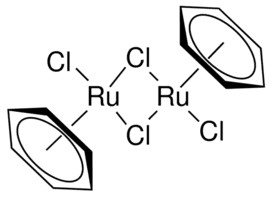
Benzeneruthenium(II) chloride dimer
Ru2(C6H6)2Cl4
Catalysis & Inorganic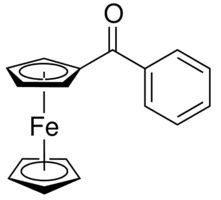
Benzoylferrocene
C17H14FeO
Catalysis & Inorganic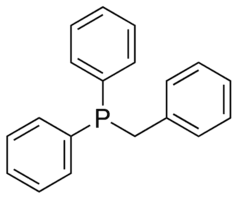
Benzyldiphenylphosphine
C6H5CH2P(C6H5)2
Catalysis & Inorganic
Beryllium
Be
Catalysis & Inorganic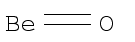
Beryllium oxide
BeO
Catalysis & Inorganic![Bicyclo[2.2.1]hepta-2,5-diene-rhodium(I) chloride dimer — chemical structure, CAS 12257-42-0; Catalysis & Inorganic, fine chemical supplied by Tech Serve Solutions](/_next/image?url=https%3A%2F%2Fpub-f4d920c906024441a773a96f7098e551.r2.dev%2Fimages%2Fproducts%2F12257-42-0.png&w=3840&q=75)
Bicyclo[2.2.1]hepta-2,5-diene-rhodium(I) chloride dimer
Catalysis & Inorganic
![Bis[(10,11-η)-5-[(11bS)-dinaphtho[2,1-d:1′,2′-f][1,3,2]dioxaphosphepin-4-yl- κP4]-5H-dibenz[b,f]azepine]rhodium(I) tetrafluorobo — chemical structure, CAS 1228149-03-8; Catalysis & Inorganic, fine chemical supplied by Tech Serve Solutions](/_next/image?url=https%3A%2F%2Fpub-f4d920c906024441a773a96f7098e551.r2.dev%2Fimages%2Fproducts%2F1228149-03-8.png&w=3840&q=75)
Bis[(10,11-η)-5-[(11bS)-dinaphtho[2,1-d:1′,2′-f][1,3,2]dioxaphosphepin-4-yl- κP4]-5H-dibenz[b,f]azepine]rhodium(I) tetrafluorobo
1-d:1′
Catalysis & Inorganic![Bis[(2-dimethylamino)phenyl]amine nickel(II) chloride (C16H20ClN3Ni) — chemical structure, CAS 1033772-47-2; Catalysis & Inorganic, fine chemical supplied by Tech Serve Solutions](/_next/image?url=https%3A%2F%2Fpub-f4d920c906024441a773a96f7098e551.r2.dev%2Fimages%2Fproducts%2F1033772-47-2.png&w=3840&q=75)
Bis[(2-dimethylamino)phenyl]amine nickel(II) chloride
C16H20ClN3Ni
Catalysis & Inorganic▶ Explore more
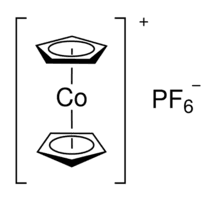
Bis(cyclopentadienyl)cobalt(III) hexafluorophosphate
C10H10CoF6P
Catalysis & Inorganic
1-(4-Chlorophenyl)biguanide hydrochloride
ClC6H4NHC(NH)NHC(NH)NH2 · HCl
Chemical Synthesis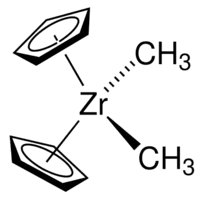
Bis(cyclopentadienyl)dimethylzirconium(IV)
Catalysis & Inorganic
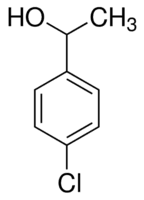
1-(4-Chlorophenyl)ethanol
ClC6H4CH(CH3)OH
Chemical Synthesis