
Cadmium
Cadmium (CAS: 7440-43-9, Formula: Cd, Molar Mass: 112.41 g/mol) is a soft, silvery-white metal known for its conductivity and use in alloys. Supplied by Tech Serve Solutions (TSS) with an assay of ≥99.99% on a trace metals basis, it finds critical applications in specialised industrial processes, including electroplating, battery manufacturing, and as a component in certain pigments and catalysts. Its unique properties make it valuable in specific scientific and manufacturing contexts.
Reagent for EPA Methods
This granular Cadmium is suitable for use in EPA methods 353.2 and 353.3, as outlined in 'Methods for Chemical Analysis of Water and Wastes'. It serves as a key reagent in these analytical procedures.
Alloy Component
Cadmium is utilised in the creation of various alloys, often to improve properties such as machinability, corrosion resistance, and solderability. These alloys have diverse industrial applications.
Electroplating
Its excellent corrosion resistance makes cadmium a desirable material for electroplating other metals, providing a protective and aesthetically pleasing finish in demanding environments.
Catalysis
In the field of chemical synthesis, cadmium can function as a catalyst or a component within catalytic systems. Its specific electronic properties lend themselves to certain catalytic reactions.
Materials Science Research
Cadmium metal and its compounds are employed in materials science research for developing new materials with specific electronic, optical, or magnetic properties. Its granular form and high purity are beneficial for experimental work.
| Molecular weight | 112.41 |
|---|---|
| Empirical formula | Cd |
| Assay | ≥99.99% trace metals basis |
| Form | granular |
| Boiling point | 765 °C(lit.) |
| Density | 8.65 g/mL at 25 °C(lit.) |
| Particle size | 0.3-1.6 mm |
| Melting point | 320.9 °C(lit.) |
| Application | Suitable for EPA methods 353.2 and 353.3, ′Methods for Chemical Analysis of Water and Wastes′ |


Hazard statements
- H330Fatal if inhaled
- H341Suspected of causing genetic defects
- H350May cause cancer
- H361FD
- H372Causes damage to organs through prolonged exposure
- H410Very toxic to aquatic life with long-lasting effects
Precautionary statements
- P201Obtain special instructions before use
- P260Do not breathe dust, fume, gas, mist, vapours or spray
- P273Avoid release to the environment
- P281Use personal protective equipment as required
- P284Wear respiratory protection
- P310Immediately call a POISON CENTER or doctor
| Protective equipment | dust mask type N95 (US), Eyeshields, Faceshields, Gloves, type P2 (EN 143) respirator cartridges |
|---|---|
| Transport (UN / ADR) | UN 2570 6.1/PG 1 |
| Water hazard class (WGK, DE) | 3 |
| Hazard codes (EU) | T+,N |
| Risk statements (R) | 45-63-26-48/23/25-50/53-62-68 |
| Safety statements (S) | 53-45-60-61 |
Hazard information is provided for guidance. Always consult the product Safety Data Sheet (SDS), available on request, before handling.
| Resistivity | 7.27 μΩ-cm, 22°C |
|---|---|
| Thickness | 0.5 mm |
Documentation
Every batch ships with a Certificate of Analysis covering assay, identity and purity; the grade is confirmed against your enquiry. Safety Data Sheets and technical data sheets are available on request.
Supply & logistics
Samples for technical evaluation; bulk MOQ by grade and packaging. In-stock material ships in 7–10 working days, worldwide, with full export documentation.
What is Cadmium (CAS 7440-43-9) primarily used for?
+
Cadmium (CAS: 7440-43-9, Formula: Cd) is used as a reagent for specific EPA analytical methods, in alloy production, for electroplating, in catalysis, and for materials science research, particularly when high purity is required.
What is the CAS number and chemical formula for Cadmium?
+
The CAS number for Cadmium is 7440-43-9, and its chemical formula is Cd.
What grade and purity does Tech Serve Solutions supply for Cadmium?
+
Tech Serve Solutions supplies Cadmium with an assay of ≥99.99% on a trace metals basis. We do not represent this product as USP, BP, EP, or any other pharmacopoeia grade.
How should Cadmium be handled safely?
+
Cadmium is a dangerous substance (GHS06, GHS08, GHS09, Signal Word: Danger) and is toxic if inhaled (H330), suspected of causing genetic defects (H341), may cause cancer (H350), suspected of damaging fertility or the unborn child (H361fd), and causes damage to organs through prolonged or repeated exposure (H372). It is also very toxic to aquatic life with long-lasting effects (H410). Handle with appropriate personal protective equipment, including dust mask type N95, eyeshields, faceshields, gloves, and P2 respirator cartridges. Ensure adequate ventilation and avoid dust formation. Consult the Safety Data Sheet (SDS) before use.
Is Cadmium a controlled substance?
+
Cadmium is classified under RID/ADR with UN 2570, Hazard Class 6.1 (Toxic substances), Packing Group I. It also carries the European hazard codes T+ (Very Toxic) and N (Dangerous for the environment). Please consult your local regulations regarding its handling and use.
How is Cadmium packed, shipped, and exported by TSS?
+
Tech Serve Solutions carefully packs Cadmium according to international shipping regulations (UN 2570, 6.1/PG 1) for safe transport and export. Specific packaging details will be provided with your order confirmation.
How can I request a quote or sample of Cadmium?
+
To request a quote or a sample of Cadmium, please contact our sales team via the website or direct email. Please specify the quantity required and your delivery location.
▶ Related products
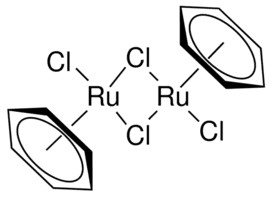
Benzeneruthenium(II) chloride dimer
Ru2(C6H6)2Cl4
Catalysis & Inorganic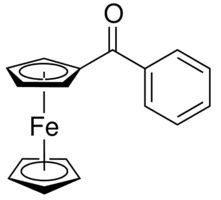
Benzoylferrocene
C17H14FeO
Catalysis & Inorganic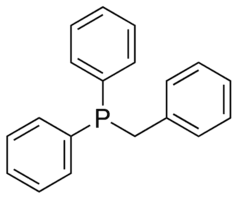
Benzyldiphenylphosphine
C6H5CH2P(C6H5)2
Catalysis & Inorganic
Beryllium
Be
Catalysis & Inorganic
Beryllium oxide
BeO
Catalysis & Inorganic![Bicyclo[2.2.1]hepta-2,5-diene-rhodium(I) chloride dimer — chemical structure, CAS 12257-42-0; Catalysis & Inorganic, fine chemical supplied by Tech Serve Solutions](/_next/image?url=https%3A%2F%2Fpub-f4d920c906024441a773a96f7098e551.r2.dev%2Fimages%2Fproducts%2F12257-42-0.png&w=3840&q=75)
Bicyclo[2.2.1]hepta-2,5-diene-rhodium(I) chloride dimer
Catalysis & Inorganic
![Bis[(10,11-η)-5-[(11bS)-dinaphtho[2,1-d:1′,2′-f][1,3,2]dioxaphosphepin-4-yl- κP4]-5H-dibenz[b,f]azepine]rhodium(I) tetrafluorobo — chemical structure, CAS 1228149-03-8; Catalysis & Inorganic, fine chemical supplied by Tech Serve Solutions](/_next/image?url=https%3A%2F%2Fpub-f4d920c906024441a773a96f7098e551.r2.dev%2Fimages%2Fproducts%2F1228149-03-8.png&w=3840&q=75)
Bis[(10,11-η)-5-[(11bS)-dinaphtho[2,1-d:1′,2′-f][1,3,2]dioxaphosphepin-4-yl- κP4]-5H-dibenz[b,f]azepine]rhodium(I) tetrafluorobo
1-d:1′
Catalysis & Inorganic![Bis[(2-dimethylamino)phenyl]amine nickel(II) chloride (C16H20ClN3Ni) — chemical structure, CAS 1033772-47-2; Catalysis & Inorganic, fine chemical supplied by Tech Serve Solutions](/_next/image?url=https%3A%2F%2Fpub-f4d920c906024441a773a96f7098e551.r2.dev%2Fimages%2Fproducts%2F1033772-47-2.png&w=3840&q=75)
Bis[(2-dimethylamino)phenyl]amine nickel(II) chloride
C16H20ClN3Ni
Catalysis & Inorganic▶ Explore more

Bis(cyclopentadienyl)cobalt(III) hexafluorophosphate
C10H10CoF6P
Catalysis & Inorganic
1-(4-Chlorophenyl)biguanide hydrochloride
ClC6H4NHC(NH)NHC(NH)NH2 · HCl
Chemical Synthesis
Bis(cyclopentadienyl)dimethylzirconium(IV)
Catalysis & Inorganic

1-(4-Chlorophenyl)ethanol
ClC6H4CH(CH3)OH
Chemical Synthesis