
Borane diphenylphosphine complex
Borane diphenylphosphine complex (CAS 41593-58-2), with the linear formula (C<sub>6</sub>H<sub>5</sub>)<sub>2</sub>PH·BH<sub>3</sub> and a molecular weight of 200.02 g/mol, is a versatile chemical reagent. It serves as a key reactant in various synthetic organic transformations, including nucleophilic additions and catalytic dehydrogenations. This compound is essential for preparing complex ligands and in specialised coupling reactions, making it valuable in catalysis and chemical synthesis research.
- IUPAC
- (Diphenylphosphine)trihydroboron

Nucleophilic Addition Reactions
Borane diphenylphosphine complex acts as a nucleophile in addition reactions, facilitating the formation of new carbon-heteroatom bonds. Its reactivity is key in various organic syntheses.
Catalytic Dehydrogenation
In the presence of specific ruthenium complexes, this borane complex can participate in catalytic dehydrogenation processes. This is useful for removing hydrogen from organic substrates.
Ligand Synthesis
It is employed in the preparation of sophisticated bidentate phosphine-phosphite ligands, which are crucial components in homogeneous catalysis and coordination chemistry research.
Coupling Reactions
The complex can be utilised in catalytic coupling reactions, for instance, with alkynyl bromides, enabling the construction of complex organic frameworks.
Staudinger Ligation
It finds application in catalyst-free Staudinger ligation, a technique valuable for indirect 18F-radiolabeling in radiochemistry.
| Molecular weight | 200.02 |
|---|---|
| Linear formula | (C6H5)2PH·BH3 |
| Assay | 98% |
| Boiling point | 148-150 °C/10 mmHg(lit.) |
| Application | Reactant for:• Nucleophilic addition reactions (anion)1• Catalytic dehydrogenation in the presence of ruthenium bidentate phosphine compelxes2• Deprotonation reactions3• Catalytic coupling with alkynyl bromides4• Catalyst-free Staudinger ligation for indirect 18F-radiolabeling5• Preparation of chiral phosphine-phosphite bidentate ligands with biphenyl backbone6• Reactions with frustrated lewis pair combinations of group 14 triflates and sterically hindered nitrogen bases7 |
| Melting point | 47-50 °C(lit.) |

Hazard statements
- H261In contact with water releases flammable gas
Precautionary statements
- P231Handle under inert gas
- P422
| Protective equipment | Eyeshields, full-face particle respirator type N100 (US), Gloves, respirator cartridge type N100 (US), type P1 (EN143) respirator filter, type P3 (EN 143) respirator cartridges |
|---|---|
| Transport (UN / ADR) | UN 2813 4.3 / PGII |
| Water hazard class (WGK, DE) | 3 |
| Hazard codes (EU) | F |
| Risk statements (R) | 15 |
| Safety statements (S) | 43 |
Hazard information is provided for guidance. Always consult the product Safety Data Sheet (SDS), available on request, before handling.
Documentation
Every batch ships with a Certificate of Analysis covering assay, identity and purity; the grade is confirmed against your enquiry. Safety Data Sheets and technical data sheets are available on request.
Supply & logistics
Samples for technical evaluation; bulk MOQ by grade and packaging. In-stock material ships in 7–10 working days, worldwide, with full export documentation.
What is Borane diphenylphosphine complex used for?
+
Borane diphenylphosphine complex (CAS 41593-58-2) is used as a reactant in nucleophilic addition reactions, catalytic dehydrogenation, deprotonation reactions, catalytic coupling reactions, Staudinger ligation, preparation of chiral ligands, and reactions with frustrated Lewis pair combinations.
What are the CAS number and formula for Borane diphenylphosphine complex?
+
The CAS number for Borane diphenylphosphine complex is 41593-58-2, and its linear formula is (C6H5)2PH·BH3.
What grade and purity does Tech Serve Solutions supply?
+
Tech Serve Solutions supplies Borane diphenylphosphine complex with an assay of 98%. This product is not represented as USP, BP, EP, or other pharmacopoeial grades.
How should Borane diphenylphosphine complex be handled safely?
+
Borane diphenylphosphine complex is a dangerous substance that may develop flammable gases in contact with water (H261). It requires careful handling with appropriate personal protective equipment, including eyeshields, a full-face particle respirator (type N100 US), gloves, and specific respirator cartridges or filters (type P1/P3 EN143). Store under inert gas (P231 + P232), and keep contents remote (P422).
Is Borane diphenylphosphine complex shipped internationally?
+
Yes, Tech Serve Solutions exports Borane diphenylphosphine complex globally. It is classified under UN 2813, Hazard Class 4.3, Packing Group II.
How can I request a quote or sample for Borane diphenylphosphine complex?
+
To request a quote or sample of Borane diphenylphosphine complex, please contact the TSS sales department through our website or by phone.
▶ Related products
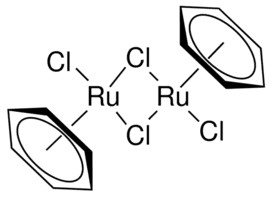
Benzeneruthenium(II) chloride dimer
Ru2(C6H6)2Cl4
Catalysis & Inorganic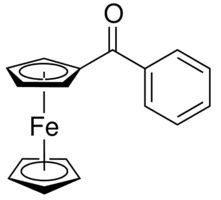
Benzoylferrocene
C17H14FeO
Catalysis & Inorganic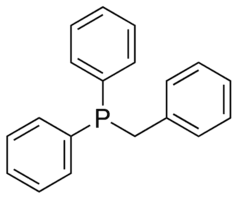
Benzyldiphenylphosphine
C6H5CH2P(C6H5)2
Catalysis & Inorganic
Beryllium
Be
Catalysis & Inorganic
Beryllium oxide
BeO
Catalysis & Inorganic![Bicyclo[2.2.1]hepta-2,5-diene-rhodium(I) chloride dimer — chemical structure, CAS 12257-42-0; Catalysis & Inorganic, fine chemical supplied by Tech Serve Solutions](/_next/image?url=https%3A%2F%2Fpub-f4d920c906024441a773a96f7098e551.r2.dev%2Fimages%2Fproducts%2F12257-42-0.png&w=3840&q=75)
Bicyclo[2.2.1]hepta-2,5-diene-rhodium(I) chloride dimer
Catalysis & Inorganic
![Bis[(10,11-η)-5-[(11bS)-dinaphtho[2,1-d:1′,2′-f][1,3,2]dioxaphosphepin-4-yl- κP4]-5H-dibenz[b,f]azepine]rhodium(I) tetrafluorobo — chemical structure, CAS 1228149-03-8; Catalysis & Inorganic, fine chemical supplied by Tech Serve Solutions](/_next/image?url=https%3A%2F%2Fpub-f4d920c906024441a773a96f7098e551.r2.dev%2Fimages%2Fproducts%2F1228149-03-8.png&w=3840&q=75)
Bis[(10,11-η)-5-[(11bS)-dinaphtho[2,1-d:1′,2′-f][1,3,2]dioxaphosphepin-4-yl- κP4]-5H-dibenz[b,f]azepine]rhodium(I) tetrafluorobo
1-d:1′
Catalysis & Inorganic![Bis[(2-dimethylamino)phenyl]amine nickel(II) chloride (C16H20ClN3Ni) — chemical structure, CAS 1033772-47-2; Catalysis & Inorganic, fine chemical supplied by Tech Serve Solutions](/_next/image?url=https%3A%2F%2Fpub-f4d920c906024441a773a96f7098e551.r2.dev%2Fimages%2Fproducts%2F1033772-47-2.png&w=3840&q=75)
Bis[(2-dimethylamino)phenyl]amine nickel(II) chloride
C16H20ClN3Ni
Catalysis & Inorganic▶ Explore more

Bis(cyclopentadienyl)cobalt(III) hexafluorophosphate
C10H10CoF6P
Catalysis & Inorganic
1-(4-Chlorophenyl)biguanide hydrochloride
ClC6H4NHC(NH)NHC(NH)NH2 · HCl
Chemical Synthesis
Bis(cyclopentadienyl)dimethylzirconium(IV)
Catalysis & Inorganic

1-(4-Chlorophenyl)ethanol
ClC6H4CH(CH3)OH
Chemical Synthesis