
Bismuth(III) acetate
Bismuth(III) acetate (CAS: 22306-37-2), with the linear formula (CH3CO2)3Bi and a molecular weight of 386.11 g/mol, is a valuable inorganic compound. It is primarily utilised as a precursor in materials science, particularly for the deposition of thin films via solution methods. Its high purity makes it suitable for advanced applications in microelectronics and catalysis.
- IUPAC
- Acetic acid bismuth(III) salt,Bismuth triacetate
- Synonyms
- Acetic acid bismuth(III) saltBismuth triacetate
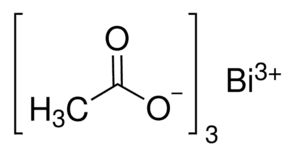
Materials Science Precursor
Bismuth(III) acetate serves as a key precursor for the deposition of bismuth-containing thin films and coatings. These films find applications in various advanced material technologies.
Solution Deposition
Its solubility characteristics make it ideal for solution-based deposition techniques, enabling the fabrication of functional materials for electronic and optical devices.
Catalysis Research
This compound is employed in research settings for developing new catalytic processes, leveraging the unique properties of bismuth in chemical transformations.
Microelectronics Fabrication
Used in the synthesis of materials for microelectronic components, contributing to advancements in semiconductor technology and device miniaturisation.
| Molecular weight | 386.11 |
|---|---|
| Linear formula | (CH3CO2)3Bi |
| Assay | ≥99.99% trace metals basis |
| Impurities tested | ≤5% Bi2O3 |
Documentation
Every batch ships with a Certificate of Analysis covering assay, identity and purity; the grade is confirmed against your enquiry. Safety Data Sheets and technical data sheets are available on request.
Supply & logistics
Samples for technical evaluation; bulk MOQ by grade and packaging. In-stock material ships in 7–10 working days, worldwide, with full export documentation.
What is Bismuth(III) acetate used for?
+
Bismuth(III) acetate is primarily used as a precursor in materials science for the solution deposition of bismuth-containing thin films, with applications in microelectronics and catalysis.
What is the CAS number and formula for Bismuth(III) acetate?
+
The CAS number for Bismuth(III) acetate is 22306-37-2, and its linear formula is (CH3CO2)3Bi.
What grade and purity does Tech Serve Solutions supply?
+
Tech Serve Solutions supplies Bismuth(III) acetate with an assay of ≥99.99% trace metals basis. This is a high-purity technical/research grade material, and TSS does not represent it as USP, BP, or EP.
What are the safety and handling recommendations for Bismuth(III) acetate?
+
Bismuth(III) acetate is classified under WGK 3 in Germany, indicating a significant hazard to water. Handle with appropriate personal protective equipment in a well-ventilated area, avoiding contact with skin and eyes and preventing release into the environment.
How is Bismuth(III) acetate packed and shipped?
+
Bismuth(III) acetate is securely packed to ensure safe transit and is available for export globally by Tech Serve Solutions, a specialist supplier since 1998.
How can I request a quote or sample of Bismuth(III) acetate?
+
To request a quote or sample of Bismuth(III) acetate, please contact our sales team through the website or by phone. We are happy to assist with your specific requirements.
▶ Related products
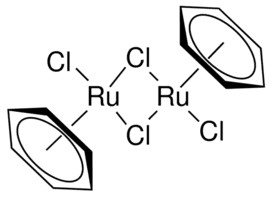
Benzeneruthenium(II) chloride dimer
Ru2(C6H6)2Cl4
Catalysis & Inorganic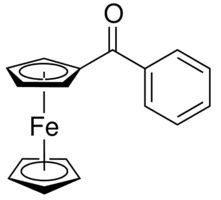
Benzoylferrocene
C17H14FeO
Catalysis & Inorganic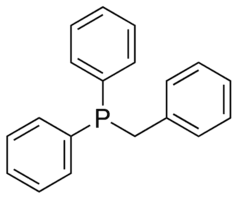
Benzyldiphenylphosphine
C6H5CH2P(C6H5)2
Catalysis & Inorganic
Beryllium
Be
Catalysis & Inorganic
Beryllium oxide
BeO
Catalysis & Inorganic![Bicyclo[2.2.1]hepta-2,5-diene-rhodium(I) chloride dimer — chemical structure, CAS 12257-42-0; Catalysis & Inorganic, fine chemical supplied by Tech Serve Solutions](/_next/image?url=https%3A%2F%2Fpub-f4d920c906024441a773a96f7098e551.r2.dev%2Fimages%2Fproducts%2F12257-42-0.png&w=3840&q=75)
Bicyclo[2.2.1]hepta-2,5-diene-rhodium(I) chloride dimer
Catalysis & Inorganic
![Bis[(10,11-η)-5-[(11bS)-dinaphtho[2,1-d:1′,2′-f][1,3,2]dioxaphosphepin-4-yl- κP4]-5H-dibenz[b,f]azepine]rhodium(I) tetrafluorobo — chemical structure, CAS 1228149-03-8; Catalysis & Inorganic, fine chemical supplied by Tech Serve Solutions](/_next/image?url=https%3A%2F%2Fpub-f4d920c906024441a773a96f7098e551.r2.dev%2Fimages%2Fproducts%2F1228149-03-8.png&w=3840&q=75)
Bis[(10,11-η)-5-[(11bS)-dinaphtho[2,1-d:1′,2′-f][1,3,2]dioxaphosphepin-4-yl- κP4]-5H-dibenz[b,f]azepine]rhodium(I) tetrafluorobo
1-d:1′
Catalysis & Inorganic![Bis[(2-dimethylamino)phenyl]amine nickel(II) chloride (C16H20ClN3Ni) — chemical structure, CAS 1033772-47-2; Catalysis & Inorganic, fine chemical supplied by Tech Serve Solutions](/_next/image?url=https%3A%2F%2Fpub-f4d920c906024441a773a96f7098e551.r2.dev%2Fimages%2Fproducts%2F1033772-47-2.png&w=3840&q=75)
Bis[(2-dimethylamino)phenyl]amine nickel(II) chloride
C16H20ClN3Ni
Catalysis & Inorganic▶ Explore more

Bis(cyclopentadienyl)cobalt(III) hexafluorophosphate
C10H10CoF6P
Catalysis & Inorganic
1-(4-Chlorophenyl)biguanide hydrochloride
ClC6H4NHC(NH)NHC(NH)NH2 · HCl
Chemical Synthesis
Bis(cyclopentadienyl)dimethylzirconium(IV)
Catalysis & Inorganic

1-(4-Chlorophenyl)ethanol
ClC6H4CH(CH3)OH
Chemical Synthesis