
Bismuth
Bismuth (CAS 7440-69-9) is a dense, lustrous, brittle, grey-white post-transition metal with the chemical formula Bi. It exhibits diamagnetic properties and has a relatively low melting point for a metal. Bismuth finds application in various fields including catalysis, materials science, and chemical synthesis, often serving as a less toxic substitute for lead in alloys and compounds.

Catalysis
Bismuth compounds are employed as catalysts in various organic transformations. Their unique electronic properties facilitate specific reaction pathways in chemical synthesis.
Alloys
Due to its low melting point and non-toxicity, bismuth is used in low-melting point alloys, such as Wood's metal, for applications in fire sprinklers and fuses. It also serves as a lead substitute in some applications.
Materials Science
Bismuth and its compounds are explored for their thermoelectric, magnetoresistive, and optical properties, finding potential use in advanced materials and electronic devices.
Chemical Synthesis
Bismuth compounds act as versatile reagents and catalysts in organic synthesis, enabling specific functional group transformations and complex molecule construction.
| Molecular weight | 208.98 |
|---|---|
| Empirical formula | Bi |
| Assay | ≥99.99% trace metals basis |
| Form | granular |
| Boiling point | 1560 °C(lit.) |
| Density | 9.8 g/mL at 25 °C(lit.) |
| Vapour pressure | <0.1 mmHg (20 °C) |
| Melting point | 271 °C(lit.)272 °C |
| Protective equipment | Eyeshields, Gloves, type N95 (US), type P1 (EN143) respirator filter |
|---|---|
| Water hazard class (WGK, DE) | nwg |
Hazard information is provided for guidance. Always consult the product Safety Data Sheet (SDS), available on request, before handling.
| Resistivity | 129 μΩ-cm, 20°C |
|---|
Documentation
Every batch ships with a Certificate of Analysis covering assay, identity and purity; the grade is confirmed against your enquiry. Safety Data Sheets and technical data sheets are available on request.
Supply & logistics
Samples for technical evaluation; bulk MOQ by grade and packaging. In-stock material ships in 7–10 working days, worldwide, with full export documentation.
What is Bismuth used for?
+
Bismuth (CAS 7440-69-9) is used in catalysis, the production of low-melting point alloys, as a less toxic substitute for lead, and in materials science for its unique electronic and optical properties.
What is the CAS number and formula for Bismuth?
+
The CAS number for Bismuth is 7440-69-9, and its chemical formula is Bi.
What grade and purity does Tech Serve Solutions supply?
+
Tech Serve Solutions supplies Bismuth with an assay of ≥99.99% on a trace metals basis. We do not represent this product as USP, BP, or EP grade.
How should Bismuth be handled safely?
+
When handling Bismuth, it is recommended to wear eyeshields and gloves. A type N95 (US) or type P1 (EN143) respirator filter should be used if dust or fumes are present. Refer to the Safety Data Sheet for comprehensive handling information.
Is Bismuth a controlled substance?
+
Based on the provided data, Bismuth (CAS 7440-69-9) is not listed as a controlled substance.
How is Bismuth shipped and exported by TSS?
+
Tech Serve Solutions is a specialist global supplier and exporter of fine chemicals, including Bismuth, ensuring compliant packaging and shipping for international delivery.
How can I request a sample or quote for Bismuth?
+
To request a sample or a quote for Bismuth, please contact our sales team through the Tech Serve Solutions website or your designated sales representative.
▶ Related products
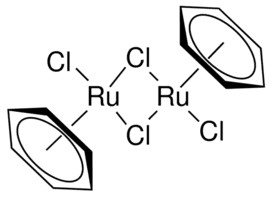
Benzeneruthenium(II) chloride dimer
Ru2(C6H6)2Cl4
Catalysis & Inorganic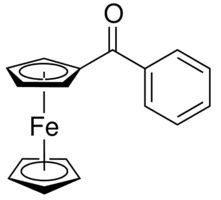
Benzoylferrocene
C17H14FeO
Catalysis & Inorganic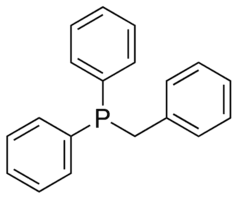
Benzyldiphenylphosphine
C6H5CH2P(C6H5)2
Catalysis & Inorganic
Beryllium
Be
Catalysis & Inorganic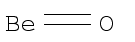
Beryllium oxide
BeO
Catalysis & Inorganic![Bicyclo[2.2.1]hepta-2,5-diene-rhodium(I) chloride dimer — chemical structure, CAS 12257-42-0; Catalysis & Inorganic, fine chemical supplied by Tech Serve Solutions](/_next/image?url=https%3A%2F%2Fpub-f4d920c906024441a773a96f7098e551.r2.dev%2Fimages%2Fproducts%2F12257-42-0.png&w=3840&q=75)
Bicyclo[2.2.1]hepta-2,5-diene-rhodium(I) chloride dimer
Catalysis & Inorganic
![Bis[(10,11-η)-5-[(11bS)-dinaphtho[2,1-d:1′,2′-f][1,3,2]dioxaphosphepin-4-yl- κP4]-5H-dibenz[b,f]azepine]rhodium(I) tetrafluorobo — chemical structure, CAS 1228149-03-8; Catalysis & Inorganic, fine chemical supplied by Tech Serve Solutions](/_next/image?url=https%3A%2F%2Fpub-f4d920c906024441a773a96f7098e551.r2.dev%2Fimages%2Fproducts%2F1228149-03-8.png&w=3840&q=75)
Bis[(10,11-η)-5-[(11bS)-dinaphtho[2,1-d:1′,2′-f][1,3,2]dioxaphosphepin-4-yl- κP4]-5H-dibenz[b,f]azepine]rhodium(I) tetrafluorobo
1-d:1′
Catalysis & Inorganic![Bis[(2-dimethylamino)phenyl]amine nickel(II) chloride (C16H20ClN3Ni) — chemical structure, CAS 1033772-47-2; Catalysis & Inorganic, fine chemical supplied by Tech Serve Solutions](/_next/image?url=https%3A%2F%2Fpub-f4d920c906024441a773a96f7098e551.r2.dev%2Fimages%2Fproducts%2F1033772-47-2.png&w=3840&q=75)
Bis[(2-dimethylamino)phenyl]amine nickel(II) chloride
C16H20ClN3Ni
Catalysis & Inorganic▶ Explore more

Bis(cyclopentadienyl)cobalt(III) hexafluorophosphate
C10H10CoF6P
Catalysis & Inorganic
1-(4-Chlorophenyl)biguanide hydrochloride
ClC6H4NHC(NH)NHC(NH)NH2 · HCl
Chemical Synthesis
Bis(cyclopentadienyl)dimethylzirconium(IV)
Catalysis & Inorganic

1-(4-Chlorophenyl)ethanol
ClC6H4CH(CH3)OH
Chemical Synthesis