
Bis(triphenylphosphine)rhodium(I) carbonyl chloride
Bis(triphenylphosphine)rhodium(I) carbonyl chloride, CAS 13938-94-8, is a rhodium(I) complex with the linear formula [(C6H5)3P]2RhCl(CO). This compound, with a molecular weight of 690.94 g/mol, is primarily utilised as a catalyst in various chemical synthesis applications, particularly known for its role in cyclometallation reactions. Tech Serve Solutions supplies this high-purity chemical for research and industrial catalysis needs.
- IUPAC
- Chlorocarbonylbis(triphenylphosphine)rhodium(I),RhCl(CO)(PPh3)2,Rhodiumbis(triphenylphosphine) carbonyl chloride
- Synonyms
- Chlorocarbonylbis(triphenylphosphine)rhodium(I)Rhodium bis(triphenylphosphine) carbonyl chlorideRhCl(CO)(PPh3)2
![Bis(triphenylphosphine)rhodium(I) carbonyl chloride ([(C6H5)3P]2RhCl(CO)) — chemical structure, CAS 13938-94-8; Chemistry, fine chemical supplied by Tech Serve Solutions](/_next/image?url=https%3A%2F%2Fpub-f4d920c906024441a773a96f7098e551.r2.dev%2Fimages%2Fproducts%2F13938-94-8.png&w=3840&q=75)
Cyclometallation Reactions
This rhodium complex is specifically employed to facilitate cyclometallation processes. These reactions are crucial for forming metal-carbon bonds and are extensively studied in organometallic chemistry and catalysis.
Homogeneous Catalysis
As a rhodium-based catalyst, it can be applied in various homogeneous catalytic transformations. Its structure, featuring rhodium in a low oxidation state coordinated by phosphine ligands and carbon monoxide, enables participation in catalytic cycles.
Organometallic Synthesis
The compound serves as a valuable precursor or reagent in the synthesis of more complex organometallic compounds. Its well-defined coordination sphere allows for predictable reactivity in synthetic procedures.
| Molecular weight | 690.94 |
|---|---|
| Linear formula | [(C6H5)3P]2RhCl(CO) |
| Assay | 99.9% |
| Application | Used for cyclometallation.1 |
| Melting point | 224-227 °C (dec.)(lit.) |
| Protective equipment | Eyeshields, Gloves, type N95 (US), type P1 (EN143) respirator filter |
|---|---|
| Water hazard class (WGK, DE) | 3 |
Hazard information is provided for guidance. Always consult the product Safety Data Sheet (SDS), available on request, before handling.
Documentation
Every batch ships with a Certificate of Analysis covering assay, identity and purity; the grade is confirmed against your enquiry. Safety Data Sheets and technical data sheets are available on request.
Supply & logistics
Samples for technical evaluation; bulk MOQ by grade and packaging. In-stock material ships in 7–10 working days, worldwide, with full export documentation.
What is Bis(triphenylphosphine)rhodium(I) carbonyl chloride used for?
+
Bis(triphenylphosphine)rhodium(I) carbonyl chloride is used for cyclometallation reactions and in various chemical synthesis applications as a rhodium-based catalyst.
What is the CAS number and formula for Bis(triphenylphosphine)rhodium(I) carbonyl chloride?
+
The CAS number is 13938-94-8 and the linear formula is [(C6H5)3P]2RhCl(CO).
What grade and purity does Tech Serve Solutions supply?
+
Tech Serve Solutions supplies Bis(triphenylphosphine)rhodium(I) carbonyl chloride with a minimum assay of 99.9%. This product is supplied for research and laboratory use and is not represented as USP, BP, EP, or pharmacopoeia grade.
How should Bis(triphenylphosphine)rhodium(I) carbonyl chloride be handled?
+
Handling requires appropriate personal protective equipment, including eyeshields and gloves. A type N95 (US) or type P1 (EN143) respirator filter should be used. Refer to the Safety Data Sheet for comprehensive handling information.
Is Bis(triphenylphosphine)rhodium(I) carbonyl chloride a controlled substance?
+
Based on the provided data, there is no indication that Bis(triphenylphosphine)rhodium(I) carbonyl chloride is a controlled substance.
How can I request a sample or quote for Bis(triphenylphosphine)rhodium(I) carbonyl chloride?
+
To request a sample or a quotation, please contact the Tech Serve Solutions sales team through the website or by phone, providing the product name and CAS number.
How is this chemical packed and shipped?
+
Tech Serve Solutions responsibly packs and ships chemicals according to international regulations. Specific packaging details will be provided upon request, and we are experienced in exporting globally.
▶ Related products

Benzeneruthenium(II) chloride dimer
Ru2(C6H6)2Cl4
Catalysis & Inorganic
Benzoylferrocene
C17H14FeO
Catalysis & Inorganic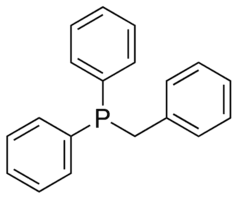
Benzyldiphenylphosphine
C6H5CH2P(C6H5)2
Catalysis & Inorganic
Beryllium
Be
Catalysis & Inorganic
Beryllium oxide
BeO
Catalysis & Inorganic![Bicyclo[2.2.1]hepta-2,5-diene-rhodium(I) chloride dimer — chemical structure, CAS 12257-42-0; Catalysis & Inorganic, fine chemical supplied by Tech Serve Solutions](/_next/image?url=https%3A%2F%2Fpub-f4d920c906024441a773a96f7098e551.r2.dev%2Fimages%2Fproducts%2F12257-42-0.png&w=3840&q=75)
Bicyclo[2.2.1]hepta-2,5-diene-rhodium(I) chloride dimer
Catalysis & Inorganic
![Bis[(10,11-η)-5-[(11bS)-dinaphtho[2,1-d:1′,2′-f][1,3,2]dioxaphosphepin-4-yl- κP4]-5H-dibenz[b,f]azepine]rhodium(I) tetrafluorobo — chemical structure, CAS 1228149-03-8; Catalysis & Inorganic, fine chemical supplied by Tech Serve Solutions](/_next/image?url=https%3A%2F%2Fpub-f4d920c906024441a773a96f7098e551.r2.dev%2Fimages%2Fproducts%2F1228149-03-8.png&w=3840&q=75)
Bis[(10,11-η)-5-[(11bS)-dinaphtho[2,1-d:1′,2′-f][1,3,2]dioxaphosphepin-4-yl- κP4]-5H-dibenz[b,f]azepine]rhodium(I) tetrafluorobo
1-d:1′
Catalysis & Inorganic![Bis[(2-dimethylamino)phenyl]amine nickel(II) chloride (C16H20ClN3Ni) — chemical structure, CAS 1033772-47-2; Catalysis & Inorganic, fine chemical supplied by Tech Serve Solutions](/_next/image?url=https%3A%2F%2Fpub-f4d920c906024441a773a96f7098e551.r2.dev%2Fimages%2Fproducts%2F1033772-47-2.png&w=3840&q=75)
Bis[(2-dimethylamino)phenyl]amine nickel(II) chloride
C16H20ClN3Ni
Catalysis & Inorganic▶ Explore more

Bis(cyclopentadienyl)cobalt(III) hexafluorophosphate
C10H10CoF6P
Catalysis & Inorganic
1-(4-Chlorophenyl)biguanide hydrochloride
ClC6H4NHC(NH)NHC(NH)NH2 · HCl
Chemical Synthesis
Bis(cyclopentadienyl)dimethylzirconium(IV)
Catalysis & Inorganic

1-(4-Chlorophenyl)ethanol
ClC6H4CH(CH3)OH
Chemical Synthesis