
Bis(dimethylphosphino)methane
Bis(dimethylphosphino)methane (CAS 64065-08-3), abbreviated DMPM, is an electron-rich bidentate diphosphine ligand with the formula (CH3)2PCH2P(CH3)2 and a molar mass of 136.11 g/mol. The two dimethylphosphino groups bridged by a single methylene give a short-bite chelate widely used to assemble mono- and dinuclear transition-metal complexes for coordination chemistry and homogeneous catalysis. It is supplied as a colourless, air-sensitive (pyrophoric) liquid for research use.
- IUPAC
- DMPM
- Synonyms
- Bis(dimethylphosphino)methaneDMPMdmpm1,1-Bis(dimethylphosphino)methaneMethylenebis(dimethylphosphine)(CH3)2PCH2P(CH3)2bis(dimethylphosphanyl)methane

Bidentate diphosphine ligand
The two trivalent phosphorus donors chelate metal centres to form stable five- or four-membered rings. DMPM is a strongly electron-donating, small-bite ligand used to tune the electronic and steric environment of coordination complexes.
Dinuclear and bridged metal complexes
Its short methylene backbone allows the ligand to bridge two metals, supporting the preparation of dinuclear platinum, ruthenium and related complexes, including luminescent face-to-face platinum(II) alkynyl phosphine systems.
Homogeneous catalysis
DMPM is used to build catalytically active diphosphine complexes, for example in palladium-diphosphine catalysed carbonylation of ethene and in the formation of ruthenium(II) phosphine catalysts.
Organophosphorus and coordination research
The reagent serves studies of phosphorus-phosphorus bonding and nuclear spin-spin coupling, and the asymmetric alkylation of racemic secondary phosphines, making it a useful tool in fundamental organophosphorus chemistry.
| Molecular weight | 136.11 |
|---|---|
| Linear formula | (CH3)2PCH2P(CH3)2 |
| Assay | 97% |
| Boiling point | 42 °C/12 mmHg(lit.) |
| Density | 0.86 g/mL at 25 °C(lit.) |
| Refractive index | n20/D 1.5060(lit.) |
| Application | Reactant for:• Preparation of ruthenium carbonyl hydrido phosphanido diphosphine dinuclear complexes1• Luminescent face-to-face dinuclear platinum(II) alkynyl phosphine complexes2• Phosphorus-phosphorus bond and nuclear spin-spin coupling3• Formation of a catalytic ruthenium(II)-triphos complex4Catalyst for:• Asymmetric alkylation of racemic secondary phosphines5• Palladium-diphosphine catalyzed carbonylation of ethene6 |

Hazard statements
- H250Catches fire spontaneously if exposed to air
Precautionary statements
- P222Do not allow contact with air
- P231Handle under inert gas
- P422
| Protective equipment | Eyeshields, Faceshields, full-face respirator (US), Gloves, multi-purpose combination respirator cartridge (US), type ABEK (EN14387) respirator filter |
|---|---|
| Transport (UN / ADR) | UN 2845 4.2 |
| Water hazard class (WGK, DE) | 3 |
| Hazard codes (EU) | F |
| Risk statements (R) | 17 |
| Safety statements (S) | 16-29-36/37/39 |
Hazard information is provided for guidance. Always consult the product Safety Data Sheet (SDS), available on request, before handling.
Documentation
Every batch ships with a Certificate of Analysis covering assay, identity and purity; the grade is confirmed against your enquiry. Safety Data Sheets and technical data sheets are available on request.
Supply & logistics
Samples for technical evaluation; bulk MOQ by grade and packaging. In-stock material ships in 7–10 working days, worldwide, with full export documentation.
What is Bis(dimethylphosphino)methane used for?
+
It is used as a bidentate diphosphine (chelating) ligand in coordination chemistry and homogeneous catalysis. DMPM forms mononuclear and bridged dinuclear transition-metal complexes, including platinum and ruthenium systems, and supports catalytic transformations such as palladium-catalysed carbonylation of ethene.
What is the CAS number and molecular formula of Bis(dimethylphosphino)methane?
+
The CAS number is 64065-08-3 and the linear formula is (CH3)2PCH2P(CH3)2. Its molecular weight is 136.11 g/mol and the MDL number is MFCD00058731. It is commonly abbreviated DMPM (dmpm).
What grade and purity does Tech Serve Solutions supply?
+
Tech Serve Solutions supplies Bis(dimethylphosphino)methane at a typical assay of 97% as a research/reagent-grade material. We do not represent it as USP, BP or EP pharmacopoeia grade. A Certificate of Analysis is provided with each batch.
Is Bis(dimethylphosphino)methane hazardous, and how should it be handled?
+
Yes. It is classified GHS02, signal word Danger, with hazard statement H250: catches fire spontaneously if exposed to air (pyrophoric). It must be kept under inert gas, away from air and ignition sources. Handle in a glovebox or under nitrogen/argon using Schlenk technique, with eye and face protection, gloves and a suitable respirator. For transport it is UN 2845, Class 4.2 (spontaneously combustible); WGK Germany 3. Always consult the SDS before use.
How is Bis(dimethylphosphino)methane packed, shipped and exported?
+
As an air-sensitive, pyrophoric liquid it is packed under inert gas in sealed, compatible containers and shipped as UN 2845, Class 4.2 dangerous goods with appropriate hazard documentation. As a global exporter, Tech Serve Solutions arranges compliant labelling, packaging and freight to international destinations subject to applicable regulations.
How do I request a sample or quote?
+
Contact Tech Serve Solutions with your required quantity, purity and destination country, and our team will respond with availability, lead time and a formal quotation. Sample requests are handled subject to the dangerous-goods status of the material.
▶ Related products
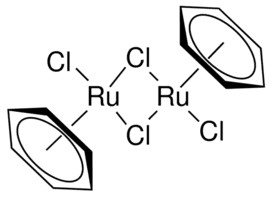
Benzeneruthenium(II) chloride dimer
Ru2(C6H6)2Cl4
Catalysis & Inorganic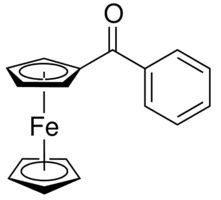
Benzoylferrocene
C17H14FeO
Catalysis & Inorganic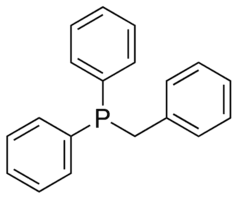
Benzyldiphenylphosphine
C6H5CH2P(C6H5)2
Catalysis & Inorganic
Beryllium
Be
Catalysis & Inorganic
Beryllium oxide
BeO
Catalysis & Inorganic![Bicyclo[2.2.1]hepta-2,5-diene-rhodium(I) chloride dimer — chemical structure, CAS 12257-42-0; Catalysis & Inorganic, fine chemical supplied by Tech Serve Solutions](/_next/image?url=https%3A%2F%2Fpub-f4d920c906024441a773a96f7098e551.r2.dev%2Fimages%2Fproducts%2F12257-42-0.png&w=3840&q=75)
Bicyclo[2.2.1]hepta-2,5-diene-rhodium(I) chloride dimer
Catalysis & Inorganic
![Bis[(10,11-η)-5-[(11bS)-dinaphtho[2,1-d:1′,2′-f][1,3,2]dioxaphosphepin-4-yl- κP4]-5H-dibenz[b,f]azepine]rhodium(I) tetrafluorobo — chemical structure, CAS 1228149-03-8; Catalysis & Inorganic, fine chemical supplied by Tech Serve Solutions](/_next/image?url=https%3A%2F%2Fpub-f4d920c906024441a773a96f7098e551.r2.dev%2Fimages%2Fproducts%2F1228149-03-8.png&w=3840&q=75)
Bis[(10,11-η)-5-[(11bS)-dinaphtho[2,1-d:1′,2′-f][1,3,2]dioxaphosphepin-4-yl- κP4]-5H-dibenz[b,f]azepine]rhodium(I) tetrafluorobo
1-d:1′
Catalysis & Inorganic![Bis[(2-dimethylamino)phenyl]amine nickel(II) chloride (C16H20ClN3Ni) — chemical structure, CAS 1033772-47-2; Catalysis & Inorganic, fine chemical supplied by Tech Serve Solutions](/_next/image?url=https%3A%2F%2Fpub-f4d920c906024441a773a96f7098e551.r2.dev%2Fimages%2Fproducts%2F1033772-47-2.png&w=3840&q=75)
Bis[(2-dimethylamino)phenyl]amine nickel(II) chloride
C16H20ClN3Ni
Catalysis & Inorganic▶ Explore more

Bis(cyclopentadienyl)cobalt(III) hexafluorophosphate
C10H10CoF6P
Catalysis & Inorganic
1-(4-Chlorophenyl)biguanide hydrochloride
ClC6H4NHC(NH)NHC(NH)NH2 · HCl
Chemical Synthesis
Bis(cyclopentadienyl)dimethylzirconium(IV)
Catalysis & Inorganic

1-(4-Chlorophenyl)ethanol
ClC6H4CH(CH3)OH
Chemical Synthesis