
Bis[di-(tert-butyl)(4-trifluoromethylphenyl)phosphine]palladium(II) chloride
Bis[di-(tert-butyl)(4-trifluoromethylphenyl)phosphine]palladium(II) chloride (CAS 887919-36-0; C30H44Cl2F6P2Pd; molar mass 757.93 g/mol) is an air-stable, well-defined homogeneous palladium(II) precatalyst bearing two electron-rich, bulky trifluoromethyl-substituted di-tert-butylaryl phosphine ligands. It is used principally as a catalyst for Suzuki coupling of heteroaryl chlorides and related palladium-mediated cross-couplings in research and fine-chemical synthesis. Tech Serve Solutions supplies it as a research-grade reagent to laboratories and manufacturers worldwide.
- Synonyms
- Bis[di-(tert-butyl)(4-trifluoromethylphenyl)phosphine]palladium(II) chlorideDichlorobis[di-tert-butyl(4-trifluoromethylphenyl)phosphine]palladium(II)Bis[di-tert-butyl(4-trifluoromethylphenyl)phosphino]palladium(II) dichlorideCAS 887919-36-0
![Bis[di-(tert-butyl)(4-trifluoromethylphenyl)phosphine]palladium(II) chloride (C30H44Cl2F6P2Pd) — chemical structure, CAS 887919-36-0; Chemistry, fine chemical supplied by Tech Serve Solutions](/_next/image?url=https%3A%2F%2Fpub-f4d920c906024441a773a96f7098e551.r2.dev%2Fimages%2Fproducts%2F887919-36-0.png&w=3840&q=75)
Suzuki-Miyaura cross-coupling
Serves as a defined palladium(II) precatalyst for Suzuki coupling reactions, with the supplied data specifically noting its use in the coupling of heteroaryl chlorides. The bulky, electron-rich phosphine ligands help activate less reactive aryl and heteroaryl chloride substrates.
Carbon-carbon bond formation
Provides a convenient, weighable source of ligated palladium(0) on reduction for forming biaryl and heterobiaryl C-C bonds. This makes it useful in building substituted aromatic and heteroaromatic frameworks.
Pharmaceutical and agrochemical intermediate synthesis
Homogeneous palladium phosphine catalysts of this type are widely applied in the construction of advanced intermediates for pharmaceutical and agrochemical research. It supports route development where reliable coupling of demanding substrates is required.
Research and process development
As an air-stable, single-component precatalyst it offers reproducible loading for catalyst screening and reaction optimisation. This suits both small-scale discovery chemistry and scale-up studies.
| Molecular weight | 757.93 |
|---|---|
| Empirical formula | C30H44Cl2F6P2Pd |
| Application | Catalyst for Suzuki Coupling reaction of heteroaryl chlorides |
| Melting point | 230 °C (D) |

Hazard statements
- H315Causes skin irritation
- H319Causes serious eye irritation
- H335May cause respiratory irritation
Precautionary statements
- P261Avoid breathing dust, fume, gas or vapours
- P305IF IN EYES
| Protective equipment | dust mask type N95 (US), Eyeshields, Gloves |
|---|---|
| Water hazard class (WGK, DE) | 3 |
| Hazard codes (EU) | Xi |
| Risk statements (R) | 36/37/38 |
| Safety statements (S) | 26 |
Hazard information is provided for guidance. Always consult the product Safety Data Sheet (SDS), available on request, before handling.
Documentation
Every batch ships with a Certificate of Analysis covering assay, identity and purity; the grade is confirmed against your enquiry. Safety Data Sheets and technical data sheets are available on request.
Supply & logistics
Samples for technical evaluation; bulk MOQ by grade and packaging. In-stock material ships in 7–10 working days, worldwide, with full export documentation.
What is Bis[di-(tert-butyl)(4-trifluoromethylphenyl)phosphine]palladium(II) chloride used for?
+
It is used primarily as a homogeneous palladium(II) precatalyst for Suzuki coupling reactions, including the coupling of heteroaryl chlorides, and for related palladium-mediated carbon-carbon cross-couplings. Such catalysts are applied in fine-chemical, pharmaceutical and agrochemical synthesis to form biaryl and heterobiaryl bonds.
What is the CAS number and molecular formula of Bis[di-(tert-butyl)(4-trifluoromethylphenyl)phosphine]palladium(II) chloride?
+
Its CAS number is 887919-36-0 and its empirical formula (Hill notation) is C30H44Cl2F6P2Pd, corresponding to a molecular weight of 757.93 g/mol. It melts with decomposition at about 230 °C.
What grade and purity does Tech Serve Solutions supply?
+
Tech Serve Solutions supplies this material as a research-grade catalyst suitable for laboratory and synthetic use. We do not represent it as USP, BP or EP pharmacopoeia grade; a current specification and certificate of analysis can be provided with each batch on request.
What are the safety and handling requirements?
+
The product carries GHS07 with the signal word Warning and hazard statements H315 (causes skin irritation), H319 (causes serious eye irritation) and H335 (may cause respiratory irritation). Handle with a type N95 dust mask, eye shields and gloves, avoid dust formation, and if it gets in the eyes rinse cautiously with water for several minutes (P261, P305+P351+P338). It is assigned WGK 3 (German water hazard class), so prevent release to the environment. Always consult the Safety Data Sheet before use.
How is Bis[di-(tert-butyl)(4-trifluoromethylphenyl)phosphine]palladium(II) chloride packed, shipped and exported?
+
It is packed in tightly sealed, appropriately labelled containers sized to the order and protected for international transport. Tech Serve Solutions ships and exports globally with full documentation, including a Safety Data Sheet and certificate of analysis; specific pack sizes and shipping arrangements are confirmed at the time of enquiry.
How do I request a sample or quote?
+
Contact Tech Serve Solutions with your required quantity, pack size and destination, and our team will provide a quotation and confirm sample availability. Please reference the product name and CAS 887919-36-0 to ensure an accurate response.
▶ Related products
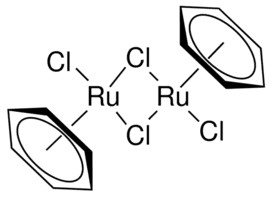
Benzeneruthenium(II) chloride dimer
Ru2(C6H6)2Cl4
Catalysis & Inorganic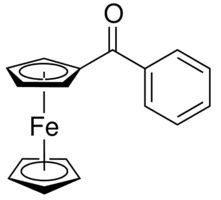
Benzoylferrocene
C17H14FeO
Catalysis & Inorganic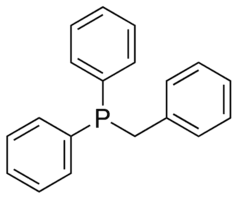
Benzyldiphenylphosphine
C6H5CH2P(C6H5)2
Catalysis & Inorganic
Beryllium
Be
Catalysis & Inorganic
Beryllium oxide
BeO
Catalysis & Inorganic![Bicyclo[2.2.1]hepta-2,5-diene-rhodium(I) chloride dimer — chemical structure, CAS 12257-42-0; Catalysis & Inorganic, fine chemical supplied by Tech Serve Solutions](/_next/image?url=https%3A%2F%2Fpub-f4d920c906024441a773a96f7098e551.r2.dev%2Fimages%2Fproducts%2F12257-42-0.png&w=3840&q=75)
Bicyclo[2.2.1]hepta-2,5-diene-rhodium(I) chloride dimer
Catalysis & Inorganic
![Bis[(10,11-η)-5-[(11bS)-dinaphtho[2,1-d:1′,2′-f][1,3,2]dioxaphosphepin-4-yl- κP4]-5H-dibenz[b,f]azepine]rhodium(I) tetrafluorobo — chemical structure, CAS 1228149-03-8; Catalysis & Inorganic, fine chemical supplied by Tech Serve Solutions](/_next/image?url=https%3A%2F%2Fpub-f4d920c906024441a773a96f7098e551.r2.dev%2Fimages%2Fproducts%2F1228149-03-8.png&w=3840&q=75)
Bis[(10,11-η)-5-[(11bS)-dinaphtho[2,1-d:1′,2′-f][1,3,2]dioxaphosphepin-4-yl- κP4]-5H-dibenz[b,f]azepine]rhodium(I) tetrafluorobo
1-d:1′
Catalysis & Inorganic![Bis[(2-dimethylamino)phenyl]amine nickel(II) chloride (C16H20ClN3Ni) — chemical structure, CAS 1033772-47-2; Catalysis & Inorganic, fine chemical supplied by Tech Serve Solutions](/_next/image?url=https%3A%2F%2Fpub-f4d920c906024441a773a96f7098e551.r2.dev%2Fimages%2Fproducts%2F1033772-47-2.png&w=3840&q=75)
Bis[(2-dimethylamino)phenyl]amine nickel(II) chloride
C16H20ClN3Ni
Catalysis & Inorganic▶ Explore more

Bis(cyclopentadienyl)cobalt(III) hexafluorophosphate
C10H10CoF6P
Catalysis & Inorganic
1-(4-Chlorophenyl)biguanide hydrochloride
ClC6H4NHC(NH)NHC(NH)NH2 · HCl
Chemical Synthesis
Bis(cyclopentadienyl)dimethylzirconium(IV)
Catalysis & Inorganic

1-(4-Chlorophenyl)ethanol
ClC6H4CH(CH3)OH
Chemical Synthesis