
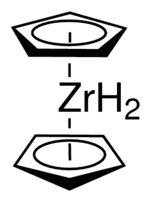
Bis(cyclopentadienyl)zirconium(IV) dihydride
Bis(cyclopentadienyl)zirconium(IV) dihydride (CAS 37342-98-6; C10H12Zr; molar mass 223.43 g/mol), commonly called zirconocene dihydride, is an air- and moisture-sensitive organozirconium hydride. Tech Serve Solutions supplies it as a research-grade reagent of about 95% assay for use as a precursor in chemical vapour deposition (CVD) and atomic layer deposition (ALD), as a stoichiometric hydride and reducing agent, and in organometallic synthesis and catalysis studies.
- IUPAC
- Zirconcene dihydride
- Synonyms
- Bis(cyclopentadienyl)zirconium(IV) dihydrideZirconocene dihydrideDicyclopentadienylzirconium dihydrideBis(cyclopentadienyl)dihydrozirconiumCp2ZrH2
CVD and ALD precursor
Used as a zirconium-bearing organometallic precursor in vapour deposition processes such as CVD and ALD. It supports the preparation of zirconium-containing thin films and related materials for micro- and nano-electronics research.
Organometallic hydride reagent
Serves as a metallocene dihydride in organometallic chemistry, providing reactive zirconium-hydride bonds. It is employed in the synthesis and study of zirconium complexes and related coordination compounds.
Hydrogenation and reduction studies
The zirconium-hydride functionality makes it useful as a stoichiometric hydride source and reducing agent in laboratory-scale transformations. Such reactivity is of interest in homogeneous catalysis and mechanistic investigations.
Materials science research
Applied in materials science and inorganic chemistry as a defined molecular source of zirconium. It is suited to studies that require a well-characterised organozirconium building block.
| Molecular weight | 223.43 |
|---|---|
| Empirical formula | C10H12Zr |
| Assay | 95% |


Hazard statements
- H261In contact with water releases flammable gas
- H314Causes severe skin burns and eye damage
Precautionary statements
- P231Handle under inert gas
- P280Wear protective gloves, clothing and eye/face protection
- P305IF IN EYES
- P310Immediately call a POISON CENTER or doctor
- P422
| Protective equipment | Eyeshields, Faceshields, full-face particle respirator type N100 (US), Gloves, respirator cartridge type N100 (US), type P1 (EN143) respirator filter, type P3 (EN 143) respirator cartridges |
|---|---|
| Transport (UN / ADR) | UN 3131 4.3/PG 2 |
| Water hazard class (WGK, DE) | 3 |
| Hazard codes (EU) | F,C |
| Risk statements (R) | 11-15-34 |
| Safety statements (S) | 16-26-27-36/37/39 |
Hazard information is provided for guidance. Always consult the product Safety Data Sheet (SDS), available on request, before handling.
Documentation
Every batch ships with a Certificate of Analysis covering assay, identity and purity; the grade is confirmed against your enquiry. Safety Data Sheets and technical data sheets are available on request.
Supply & logistics
Samples for technical evaluation; bulk MOQ by grade and packaging. In-stock material ships in 7–10 working days, worldwide, with full export documentation.
What is Bis(cyclopentadienyl)zirconium(IV) dihydride used for?
+
It is used mainly as a precursor for chemical vapour deposition (CVD) and atomic layer deposition (ALD), and as a reactive zirconium-hydride reagent in organometallic synthesis, reduction chemistry and catalysis research. As a defined molecular zirconium source, it also features in materials science and inorganic chemistry studies.
What is the CAS number and molecular formula of Bis(cyclopentadienyl)zirconium(IV) dihydride?
+
Its CAS number is 37342-98-6 and its empirical formula is C10H12Zr (Hill notation), with a molecular weight of 223.43 g/mol. The MDL number is MFCD04126436 and the PubChem Substance ID is 24878490. It is also known as zirconocene dihydride.
What grade and purity does Tech Serve Solutions supply?
+
Tech Serve Solutions supplies this material as a research/technical-grade reagent with a typical assay of about 95%. We do not represent it as USP, BP or EP pharmacopoeia grade. A certificate of analysis can be provided with each lot, and specifications can be confirmed against your requirements at the time of enquiry.
What are the safety and handling precautions?
+
This is a hazardous material carrying signal word Danger with GHS pictograms GHS02 and GHS05. The hazard statements are H261 (in contact with water releases flammable gas) and H314 (causes severe skin burns and eye damage). It is air- and moisture-sensitive: handle under inert atmosphere, keep away from water, and use eye, face and respiratory protection plus gloves. Always consult the Safety Data Sheet before use.
How is Bis(cyclopentadienyl)zirconium(IV) dihydride packed, shipped and exported?
+
Because it reacts with water, it is packed under inert, moisture-excluding conditions in suitably sealed containers and sized to order. For transport it is classified as UN 3131, hazard class 4.3, packing group II (water-reactive solid), and is shipped as dangerous goods in line with applicable IMDG, IATA and ADR rules. Tech Serve Solutions exports worldwide with full documentation.
How do I request a sample or quote?
+
Contact Tech Serve Solutions with the quantity, required assay or specification, and your destination, and we will provide a quotation and lead time. Samples may be available subject to dangerous-goods transport requirements. Our team can also supply the Safety Data Sheet and certificate of analysis on request.
▶ Related products
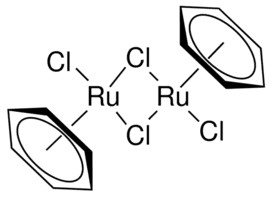
Benzeneruthenium(II) chloride dimer
Ru2(C6H6)2Cl4
Catalysis & Inorganic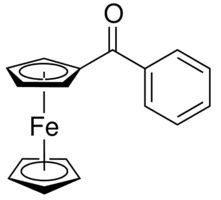
Benzoylferrocene
C17H14FeO
Catalysis & Inorganic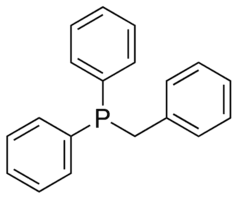
Benzyldiphenylphosphine
C6H5CH2P(C6H5)2
Catalysis & Inorganic
Beryllium
Be
Catalysis & Inorganic
Beryllium oxide
BeO
Catalysis & Inorganic![Bicyclo[2.2.1]hepta-2,5-diene-rhodium(I) chloride dimer — chemical structure, CAS 12257-42-0; Catalysis & Inorganic, fine chemical supplied by Tech Serve Solutions](/_next/image?url=https%3A%2F%2Fpub-f4d920c906024441a773a96f7098e551.r2.dev%2Fimages%2Fproducts%2F12257-42-0.png&w=3840&q=75)
Bicyclo[2.2.1]hepta-2,5-diene-rhodium(I) chloride dimer
Catalysis & Inorganic
![Bis[(10,11-η)-5-[(11bS)-dinaphtho[2,1-d:1′,2′-f][1,3,2]dioxaphosphepin-4-yl- κP4]-5H-dibenz[b,f]azepine]rhodium(I) tetrafluorobo — chemical structure, CAS 1228149-03-8; Catalysis & Inorganic, fine chemical supplied by Tech Serve Solutions](/_next/image?url=https%3A%2F%2Fpub-f4d920c906024441a773a96f7098e551.r2.dev%2Fimages%2Fproducts%2F1228149-03-8.png&w=3840&q=75)
Bis[(10,11-η)-5-[(11bS)-dinaphtho[2,1-d:1′,2′-f][1,3,2]dioxaphosphepin-4-yl- κP4]-5H-dibenz[b,f]azepine]rhodium(I) tetrafluorobo
1-d:1′
Catalysis & Inorganic![Bis[(2-dimethylamino)phenyl]amine nickel(II) chloride (C16H20ClN3Ni) — chemical structure, CAS 1033772-47-2; Catalysis & Inorganic, fine chemical supplied by Tech Serve Solutions](/_next/image?url=https%3A%2F%2Fpub-f4d920c906024441a773a96f7098e551.r2.dev%2Fimages%2Fproducts%2F1033772-47-2.png&w=3840&q=75)
Bis[(2-dimethylamino)phenyl]amine nickel(II) chloride
C16H20ClN3Ni
Catalysis & Inorganic▶ Explore more

Bis(cyclopentadienyl)cobalt(III) hexafluorophosphate
C10H10CoF6P
Catalysis & Inorganic
1-(4-Chlorophenyl)biguanide hydrochloride
ClC6H4NHC(NH)NHC(NH)NH2 · HCl
Chemical Synthesis
Bis(cyclopentadienyl)dimethylzirconium(IV)
Catalysis & Inorganic

1-(4-Chlorophenyl)ethanol
ClC6H4CH(CH3)OH
Chemical Synthesis