
Bis(cyclopentadienyl)zirconium(IV) dichloride
Bis(cyclopentadienyl)zirconium(IV) dichloride (CAS 1291-32-3), also known as zirconocene dichloride, is an organometallic zirconium complex with the formula C10H10Cl2Zr and a molar mass of 292.32 g/mol. Supplied as a crystalline solid of ≥98% assay, this bent metallocene is a versatile catalyst precursor and synthetic reagent, used most widely with co-catalysts such as MAO in olefin polymerisation and across organozirconium chemistry. Tech Serve Solutions supplies it to research and industrial users worldwide.
- IUPAC
- Di(cyclopentadienyl)zirconium(IV) dichloride,Dichlorodicyclopentadienylzirconium,Dichlorozirconocene,Zirconium dicyclopentadiene dichloride,Zirconocene dichloride
- Synonyms
- Zirconocene dichlorideDi(cyclopentadienyl)zirconium(IV) dichlorideDichlorodicyclopentadienylzirconiumDichlorozirconoceneZirconium dicyclopentadiene dichlorideBis(cyclopentadienyl)zirconium dichlorideDicyclopentadienylzirconium dichloride

Olefin polymerisation catalyst precursor
Activated with co-catalysts such as methylaluminoxane (MAO), zirconocene dichloride forms single-site metallocene catalysts for the polymerisation of ethylene, propylene and other olefins. It is a foundational compound in the development of metallocene-catalysed polyolefins.
Organozirconium synthesis
It serves as a primary starting material for preparing a wide range of organozirconium complexes, including hydride, alkyl and the Schwartz-type reagent. Its well-defined bent-metallocene framework makes it a reliable entry point into zirconium chemistry.
Hydrozirconation and organic transformations
Zirconocene-derived reagents prepared from this compound are used in hydrozirconation of alkenes and alkynes and in carbon-carbon bond-forming reactions, providing access to functionalised intermediates in organic synthesis.
Materials science and catalysis research
The compound is employed in academic and industrial laboratories as a model metallocene for studying catalyst structure-activity relationships, ligand design and supported-catalyst systems.
| Molecular weight | 292.32 |
|---|---|
| Empirical formula | C10H10Cl2Zr |
| Assay | ≥98% |
| Melting point | 242-245 °C(lit.) |

Hazard statements
- H315Causes skin irritation
- H319Causes serious eye irritation
- H335May cause respiratory irritation
Precautionary statements
- P261Avoid breathing dust, fume, gas or vapours
- P305IF IN EYES
| Protective equipment | dust mask type N95 (US), Eyeshields, Gloves |
|---|---|
| Water hazard class (WGK, DE) | 3 |
| Hazard codes (EU) | Xi |
| Risk statements (R) | 36/37/38 |
| Safety statements (S) | 26-36 |
Hazard information is provided for guidance. Always consult the product Safety Data Sheet (SDS), available on request, before handling.
| Greener Alternative Product Characteristics | Catalysis |
|---|
Documentation
Every batch ships with a Certificate of Analysis covering assay, identity and purity; the grade is confirmed against your enquiry. Safety Data Sheets and technical data sheets are available on request.
Supply & logistics
Samples for technical evaluation; bulk MOQ by grade and packaging. In-stock material ships in 7–10 working days, worldwide, with full export documentation.
What is Bis(cyclopentadienyl)zirconium(IV) dichloride used for?
+
It is used chiefly as a catalyst precursor for olefin polymerisation, where, combined with co-catalysts such as MAO, it generates single-site metallocene catalysts for polyethylene and polypropylene. It is also a key starting material for organozirconium reagents and for hydrozirconation and other transformations in organic and organometallic synthesis.
What is the CAS number and molecular formula of Bis(cyclopentadienyl)zirconium(IV) dichloride?
+
The CAS number is 1291-32-3 and the molecular formula is C10H10Cl2Zr (Hill notation), with a molecular weight of 292.32 g/mol. The EC number is 215-066-8 and the MDL number is MFCD00003726. It is commonly known as zirconocene dichloride.
What grade and purity does Tech Serve Solutions supply?
+
We supply Bis(cyclopentadienyl)zirconium(IV) dichloride as a research and technical grade material with an assay of ≥98%, presented as a crystalline solid with a literature melting point of 242-245 °C. We do not represent it as USP, BP or EP pharmacopoeial grade. A certificate of analysis can be provided with each batch on request.
What are the safety and handling requirements?
+
Under GHS the compound carries the signal word Warning (pictogram GHS07) with hazard statements H315 (causes skin irritation), H319 (causes serious eye irritation) and H335 (may cause respiratory irritation). Handle with a dust mask (type N95), eye protection and gloves, avoid dust formation and use adequate ventilation (P261, P305+P351+P338). It is rated WGK 3 (severe hazard to water) and must be kept out of drains and watercourses. Always consult the Safety Data Sheet before use.
Is Bis(cyclopentadienyl)zirconium(IV) dichloride a controlled or scheduled substance?
+
The supplied data indicates no narcotic, psychotropic or precursor drug-control scheduling for this compound. It is, however, classified as severely hazardous to water (WGK 3), so disposal and spill control must follow local environmental regulations.
How is it packed, shipped and exported?
+
It is packed in tightly sealed containers suitable for moisture-sensitive solids, with packaging matched to the order quantity, from laboratory packs to bulk. We label and document consignments to applicable transport and export requirements and ship to customers worldwide; specific packing and shipping arrangements are confirmed at the time of enquiry.
How do I request a sample or quote?
+
Contact Tech Serve Solutions with your required quantity, grade and destination, quoting CAS 1291-32-3, and our team will respond with availability, lead time, documentation and a formal quotation. Sample requests for qualification are welcome where feasible.
▶ Related products
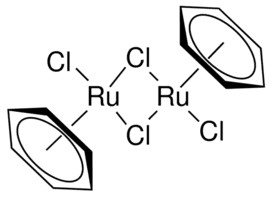
Benzeneruthenium(II) chloride dimer
Ru2(C6H6)2Cl4
Catalysis & Inorganic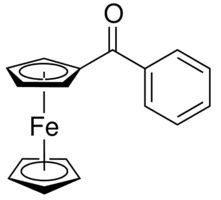
Benzoylferrocene
C17H14FeO
Catalysis & Inorganic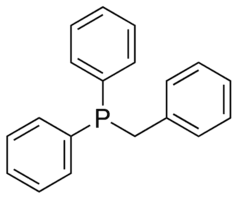
Benzyldiphenylphosphine
C6H5CH2P(C6H5)2
Catalysis & Inorganic
Beryllium
Be
Catalysis & Inorganic
Beryllium oxide
BeO
Catalysis & Inorganic![Bicyclo[2.2.1]hepta-2,5-diene-rhodium(I) chloride dimer — chemical structure, CAS 12257-42-0; Catalysis & Inorganic, fine chemical supplied by Tech Serve Solutions](/_next/image?url=https%3A%2F%2Fpub-f4d920c906024441a773a96f7098e551.r2.dev%2Fimages%2Fproducts%2F12257-42-0.png&w=3840&q=75)
Bicyclo[2.2.1]hepta-2,5-diene-rhodium(I) chloride dimer
Catalysis & Inorganic
![Bis[(10,11-η)-5-[(11bS)-dinaphtho[2,1-d:1′,2′-f][1,3,2]dioxaphosphepin-4-yl- κP4]-5H-dibenz[b,f]azepine]rhodium(I) tetrafluorobo — chemical structure, CAS 1228149-03-8; Catalysis & Inorganic, fine chemical supplied by Tech Serve Solutions](/_next/image?url=https%3A%2F%2Fpub-f4d920c906024441a773a96f7098e551.r2.dev%2Fimages%2Fproducts%2F1228149-03-8.png&w=3840&q=75)
Bis[(10,11-η)-5-[(11bS)-dinaphtho[2,1-d:1′,2′-f][1,3,2]dioxaphosphepin-4-yl- κP4]-5H-dibenz[b,f]azepine]rhodium(I) tetrafluorobo
1-d:1′
Catalysis & Inorganic![Bis[(2-dimethylamino)phenyl]amine nickel(II) chloride (C16H20ClN3Ni) — chemical structure, CAS 1033772-47-2; Catalysis & Inorganic, fine chemical supplied by Tech Serve Solutions](/_next/image?url=https%3A%2F%2Fpub-f4d920c906024441a773a96f7098e551.r2.dev%2Fimages%2Fproducts%2F1033772-47-2.png&w=3840&q=75)
Bis[(2-dimethylamino)phenyl]amine nickel(II) chloride
C16H20ClN3Ni
Catalysis & Inorganic▶ Explore more

Bis(cyclopentadienyl)cobalt(III) hexafluorophosphate
C10H10CoF6P
Catalysis & Inorganic
1-(4-Chlorophenyl)biguanide hydrochloride
ClC6H4NHC(NH)NHC(NH)NH2 · HCl
Chemical Synthesis
Bis(cyclopentadienyl)dimethylzirconium(IV)
Catalysis & Inorganic

1-(4-Chlorophenyl)ethanol
ClC6H4CH(CH3)OH
Chemical Synthesis