
Bis(cyclopentadienyl)vanadium(IV) dichloride
Bis(cyclopentadienyl)vanadium(IV) dichloride (CAS 12083-48-6), commonly known as vanadocene dichloride, is an organometallic vanadium(IV) sandwich complex with the formula C10H10Cl2V and a molecular weight of 252.03 g/mol. Supplied as a research-grade reagent of 95% assay, it is used principally as a catalyst and precursor in organic and polymer synthesis, including pinacol-type coupling, oligomerisation and aqueous polymerisation, and as a subject of medicinal-chemistry research.
- IUPAC
- Di-π-Cyclopentadienylvanadium dichloride,Dichlorobis(cyclopentadienyl)vanadium,Dichlorovanadocene,Vanadocene dichloride
- Synonyms
- Vanadocene dichlorideDichlorovanadoceneDichlorobis(cyclopentadienyl)vanadiumDi-π-cyclopentadienylvanadium dichlorideBis(cyclopentadienyl)vanadium(IV) dichloride

Catalysis of carbon-carbon bond formation
Acts as a catalyst for dl-selective pinacol-type coupling reactions, enabling the reductive coupling of carbonyl compounds. It is valued in synthetic chemistry for its defined vanadium(IV) redox behaviour.
Oligomerisation and polymerisation
Serves as a catalyst for oligomerisation via the Aufbau propagation reaction and for aqueous polymerisation reactions using oxygen as a co-catalyst. These applications exploit the complex's ability to initiate and propagate chain growth.
Preparation of vicinal aminoalcohols
Reported as a catalyst for the solvent-free, room-temperature preparation of vicinal aminoalcohols, which have been studied as fungistatic agents. This offers a mild route to functionalised building blocks.
Organometallic and coordination research
Used as a well-defined vanadocene precursor for the synthesis of further vanadium complexes and for studies in organometallic and coordination chemistry. Its sandwich structure makes it a useful model system.
Medicinal-chemistry and biochemical research
Investigated as a potential pharmacological compound, including as an inhibitor of human topoisomerase II with reported antitumour activity. It has also been examined as an affector of calcium carbonate crystal growth. These are research uses only and imply no therapeutic claim.
| Molecular weight | 252.03 |
|---|---|
| Empirical formula | C10H10Cl2V |
| Assay | 95% |
| Storage temperature | 2-8°C |
| Application | Uses:• Potential pharmacological compound for cancer treatment1• Catalyst for solvent free, room temperature preparation of vicinal aminoalcohols as fungistatic agents2• Catalyst fot oligomerization reactions via the Aufbau propagation reaction3• Catalyst for aqueous polymerization reactions using oxygen as a cocatalyst4• Catalyst for dl-selective pinacol-type coupling reactions5• Affector of crystal growth of calcium carbonate6• Inhibitor of human topoisomerase II enzyme with antitumor activity7 |

Hazard statements
- H301Toxic if swallowed
- H315Causes skin irritation
- H319Causes serious eye irritation
- H335May cause respiratory irritation
Precautionary statements
- P261Avoid breathing dust, fume, gas or vapours
- P301IF SWALLOWED
- P305IF IN EYES
| Protective equipment | Eyeshields, Faceshields, Gloves, type P2 (EN 143) respirator cartridges |
|---|---|
| Transport (UN / ADR) | UN 3285 6.1/PG 3 |
| Water hazard class (WGK, DE) | 3 |
| Hazard codes (EU) | T |
| Risk statements (R) | 25-36/37/38 |
| Safety statements (S) | 26-28-36/37/39-45 |
Hazard information is provided for guidance. Always consult the product Safety Data Sheet (SDS), available on request, before handling.
Documentation
Every batch ships with a Certificate of Analysis covering assay, identity and purity; the grade is confirmed against your enquiry. Safety Data Sheets and technical data sheets are available on request.
Supply & logistics
Samples for technical evaluation; bulk MOQ by grade and packaging. In-stock material ships in 7–10 working days, worldwide, with full export documentation.
What is Bis(cyclopentadienyl)vanadium(IV) dichloride used for?
+
It is used mainly as a catalyst and organometallic precursor in chemical synthesis. Documented uses include dl-selective pinacol-type coupling, oligomerisation via the Aufbau reaction, aqueous polymerisation with oxygen as a co-catalyst, and the solvent-free preparation of vicinal aminoalcohols. It is also studied in medicinal and biochemical research, for example as a topoisomerase II inhibitor.
What is the CAS number and molecular formula of Bis(cyclopentadienyl)vanadium(IV) dichloride?
+
The CAS number is 12083-48-6 and the molecular formula is C10H10Cl2V, with a molecular weight of 252.03 g/mol. The MDL number is MFCD00014260 and the EC number is 235-150-8. It is also widely known as vanadocene dichloride.
What grade and purity does Tech Serve Solutions supply?
+
Tech Serve Solutions supplies Bis(cyclopentadienyl)vanadium(IV) dichloride as a research-grade reagent with an assay of 95%. It is offered for laboratory, catalytic and research applications; we do not represent it as USP, BP or EP pharmacopoeial grade. A certificate of analysis can be provided with each batch on request.
What are the safety and handling requirements for this compound?
+
It is classified GHS06 with the signal word Danger. The hazard statements are H301 (toxic if swallowed), H315 (causes skin irritation), H319 (causes serious eye irritation) and H335 (may cause respiratory irritation). Handle with eye and face protection, gloves and a type P2 (EN 143) respirator, avoid dust formation, and follow precautionary statements P261, P301+P310 and P305+P351+P338. It is assigned WGK 3 (highly hazardous to water) and should be stored at 2-8°C.
How is Bis(cyclopentadienyl)vanadium(IV) dichloride packed, shipped and exported?
+
It is packed in sealed, appropriately labelled containers sized to the order and kept refrigerated at 2-8°C where required. For transport it is classified as a dangerous good, UN 3285, Class 6.1, Packing Group III, and is shipped in compliant packaging with full documentation. Tech Serve Solutions exports worldwide subject to applicable regulations and carrier acceptance.
How do I request a sample or quote?
+
Contact Tech Serve Solutions with the quantity, required packaging and your destination, and our team will respond with availability, lead time and documentation. Samples and a current certificate of analysis can be arranged for qualified buyers on request.
▶ Related products
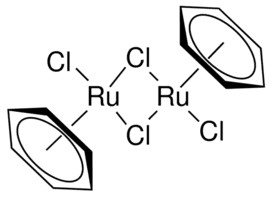
Benzeneruthenium(II) chloride dimer
Ru2(C6H6)2Cl4
Catalysis & Inorganic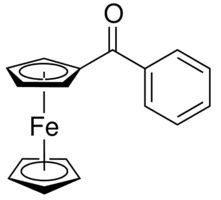
Benzoylferrocene
C17H14FeO
Catalysis & Inorganic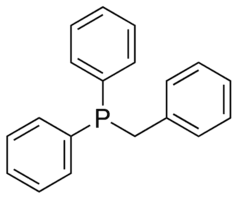
Benzyldiphenylphosphine
C6H5CH2P(C6H5)2
Catalysis & Inorganic
Beryllium
Be
Catalysis & Inorganic
Beryllium oxide
BeO
Catalysis & Inorganic![Bicyclo[2.2.1]hepta-2,5-diene-rhodium(I) chloride dimer — chemical structure, CAS 12257-42-0; Catalysis & Inorganic, fine chemical supplied by Tech Serve Solutions](/_next/image?url=https%3A%2F%2Fpub-f4d920c906024441a773a96f7098e551.r2.dev%2Fimages%2Fproducts%2F12257-42-0.png&w=3840&q=75)
Bicyclo[2.2.1]hepta-2,5-diene-rhodium(I) chloride dimer
Catalysis & Inorganic
![Bis[(10,11-η)-5-[(11bS)-dinaphtho[2,1-d:1′,2′-f][1,3,2]dioxaphosphepin-4-yl- κP4]-5H-dibenz[b,f]azepine]rhodium(I) tetrafluorobo — chemical structure, CAS 1228149-03-8; Catalysis & Inorganic, fine chemical supplied by Tech Serve Solutions](/_next/image?url=https%3A%2F%2Fpub-f4d920c906024441a773a96f7098e551.r2.dev%2Fimages%2Fproducts%2F1228149-03-8.png&w=3840&q=75)
Bis[(10,11-η)-5-[(11bS)-dinaphtho[2,1-d:1′,2′-f][1,3,2]dioxaphosphepin-4-yl- κP4]-5H-dibenz[b,f]azepine]rhodium(I) tetrafluorobo
1-d:1′
Catalysis & Inorganic![Bis[(2-dimethylamino)phenyl]amine nickel(II) chloride (C16H20ClN3Ni) — chemical structure, CAS 1033772-47-2; Catalysis & Inorganic, fine chemical supplied by Tech Serve Solutions](/_next/image?url=https%3A%2F%2Fpub-f4d920c906024441a773a96f7098e551.r2.dev%2Fimages%2Fproducts%2F1033772-47-2.png&w=3840&q=75)
Bis[(2-dimethylamino)phenyl]amine nickel(II) chloride
C16H20ClN3Ni
Catalysis & Inorganic▶ Explore more

Bis(cyclopentadienyl)cobalt(III) hexafluorophosphate
C10H10CoF6P
Catalysis & Inorganic
1-(4-Chlorophenyl)biguanide hydrochloride
ClC6H4NHC(NH)NHC(NH)NH2 · HCl
Chemical Synthesis
Bis(cyclopentadienyl)dimethylzirconium(IV)
Catalysis & Inorganic

1-(4-Chlorophenyl)ethanol
ClC6H4CH(CH3)OH
Chemical Synthesis