
Bis(chlorogold(I)) [1,1′-bis(diphenylphosphino)ferrocene]
Bis(chlorogold(I)) [1,1′-bis(diphenylphosphino)ferrocene] (CAS 122092-51-7) is a dinuclear gold(I) phosphine complex with the empirical formula C34H28Au2Cl2FeP2 and a molecular weight of 1019.22 g/mol. In it, the chelating ferrocene-based diphosphine dppf bridges two chlorogold(I) units, giving an air-stable crystalline solid (m.p. 223–229 °C). Tech Serve Solutions supplies it as a research-grade gold catalyst precursor for homogeneous gold catalysis and organometallic synthesis.
- IUPAC
- [μ-Ferrocene-1,1′-diylbis(diphenylphosphine-κP)]bis[chlorogold(I)]
- Synonyms
- Bis(chlorogold(I)) [1,1′-bis(diphenylphosphino)ferrocene][μ-Ferrocene-1,1′-diylbis(diphenylphosphine-κP)]bis[chlorogold(I)]1,1′-Bis(diphenylphosphino)ferrocene bis(gold chloride)dppf(AuCl)2Dichloro[1,1′-bis(diphenylphosphino)ferrocene]digold(I)CAS 122092-51-7
![Bis(chlorogold(I)) [1,1′-bis(diphenylphosphino)ferrocene] (C34H28Au2Cl2FeP2) — chemical structure, CAS 122092-51-7; Chemistry, fine chemical supplied by Tech Serve Solutions](/_next/image?url=https%3A%2F%2Fpub-f4d920c906024441a773a96f7098e551.r2.dev%2Fimages%2Fproducts%2F122092-51-7.png&w=3840&q=75)
Homogeneous gold catalysis
Serves as a digold(I) precatalyst for gold-catalysed transformations such as cycloisomerisations and additions of nucleophiles to alkynes, allenes and alkenes. The two gold(I) centres are typically activated in situ by a silver or other halide-abstracting salt to generate the active cationic species.
Organometallic and coordination synthesis
Acts as a defined gold(I) building block for preparing further gold and heterobimetallic complexes. The bridging dppf ligand provides a robust phosphine-ferrocene scaffold for studying bonding, structure and reactivity at gold.
Catalysis method development
Used in laboratory screening and methodology studies where a well-characterised dppf-supported digold source is required. Its defined composition supports reproducible exploration of ligand and counter-ion effects in gold-mediated bond formation.
Research and reference reagent
Employed as a reference dinuclear gold(I) complex in academic and industrial research, including mechanistic and spectroscopic investigations of gold–phosphine chemistry.
| Molecular weight | 1019.22 |
|---|---|
| Empirical formula | C34H28Au2Cl2FeP2 |
| Assay | 95% |
| Application | Gold Catalysts — 21st Century ′Gold Rush′ |
| Melting point | 223-229 °C |
Documentation
Every batch ships with a Certificate of Analysis covering assay, identity and purity; the grade is confirmed against your enquiry. Safety Data Sheets and technical data sheets are available on request.
Supply & logistics
Samples for technical evaluation; bulk MOQ by grade and packaging. In-stock material ships in 7–10 working days, worldwide, with full export documentation.
What is Bis(chlorogold(I)) [1,1′-bis(diphenylphosphino)ferrocene] used for?
+
It is a dinuclear gold(I) phosphine complex used mainly as a catalyst precursor in homogeneous gold catalysis and as a defined gold(I) building block in organometallic synthesis. The dppf-bridged digold structure is typically activated with a halide-abstracting salt to generate cationic gold species for reactions such as cycloisomerisations and nucleophilic additions to alkynes and allenes.
What is the CAS number and molecular formula of Bis(chlorogold(I)) [1,1′-bis(diphenylphosphino)ferrocene]?
+
Its CAS number is 122092-51-7 and its empirical formula is C34H28Au2Cl2FeP2 (Hill notation), corresponding to a molecular weight of 1019.22 g/mol. It is also named [μ-Ferrocene-1,1′-diylbis(diphenylphosphine-κP)]bis[chlorogold(I)] and has a melting point of 223–229 °C.
What grade and purity does Tech Serve Solutions supply?
+
Tech Serve Solutions supplies this complex as a research-grade reagent with a typical assay of 95%. It is offered as a technical/research-grade organometallic material for synthesis and catalysis and is not represented as USP, BP or EP pharmacopoeial grade. A Certificate of Analysis confirming the batch assay is provided with each order.
What are the safety and handling requirements?
+
As an organometallic gold(I) complex, this material should be handled by trained personnel using standard laboratory precautions: wear gloves, eye protection and suitable clothing, avoid generating or breathing dust, and work in a well-ventilated area or fume hood. It is classified WGK 3 (highly hazardous to water), so it must be kept out of drains and watercourses. A full Safety Data Sheet is supplied and should be consulted before use, as detailed GHS classification may be batch- or supplier-specific.
How is Bis(chlorogold(I)) [1,1′-bis(diphenylphosphino)ferrocene] packed, shipped and exported?
+
It is supplied in tightly sealed laboratory containers appropriate to the order quantity, labelled in line with GHS requirements and accompanied by a Safety Data Sheet and Certificate of Analysis. As a global exporter, Tech Serve Solutions arranges compliant international documentation and shipping; precise packaging and transport classification are confirmed at the time of order.
How do I request a sample or quote?
+
Contact Tech Serve Solutions with your required quantity, purity and destination, quoting product reference 1088 and CAS 122092-51-7. Our team will confirm availability, lead time, packaging and export documentation, and provide a formal quotation or sample as appropriate.
▶ Related products
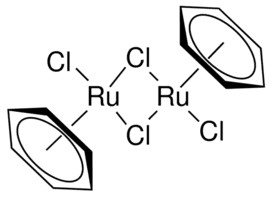
Benzeneruthenium(II) chloride dimer
Ru2(C6H6)2Cl4
Catalysis & Inorganic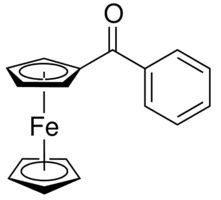
Benzoylferrocene
C17H14FeO
Catalysis & Inorganic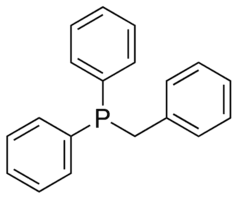
Benzyldiphenylphosphine
C6H5CH2P(C6H5)2
Catalysis & Inorganic
Beryllium
Be
Catalysis & Inorganic
Beryllium oxide
BeO
Catalysis & Inorganic![Bicyclo[2.2.1]hepta-2,5-diene-rhodium(I) chloride dimer — chemical structure, CAS 12257-42-0; Catalysis & Inorganic, fine chemical supplied by Tech Serve Solutions](/_next/image?url=https%3A%2F%2Fpub-f4d920c906024441a773a96f7098e551.r2.dev%2Fimages%2Fproducts%2F12257-42-0.png&w=3840&q=75)
Bicyclo[2.2.1]hepta-2,5-diene-rhodium(I) chloride dimer
Catalysis & Inorganic
![Bis[(10,11-η)-5-[(11bS)-dinaphtho[2,1-d:1′,2′-f][1,3,2]dioxaphosphepin-4-yl- κP4]-5H-dibenz[b,f]azepine]rhodium(I) tetrafluorobo — chemical structure, CAS 1228149-03-8; Catalysis & Inorganic, fine chemical supplied by Tech Serve Solutions](/_next/image?url=https%3A%2F%2Fpub-f4d920c906024441a773a96f7098e551.r2.dev%2Fimages%2Fproducts%2F1228149-03-8.png&w=3840&q=75)
Bis[(10,11-η)-5-[(11bS)-dinaphtho[2,1-d:1′,2′-f][1,3,2]dioxaphosphepin-4-yl- κP4]-5H-dibenz[b,f]azepine]rhodium(I) tetrafluorobo
1-d:1′
Catalysis & Inorganic![Bis[(2-dimethylamino)phenyl]amine nickel(II) chloride (C16H20ClN3Ni) — chemical structure, CAS 1033772-47-2; Catalysis & Inorganic, fine chemical supplied by Tech Serve Solutions](/_next/image?url=https%3A%2F%2Fpub-f4d920c906024441a773a96f7098e551.r2.dev%2Fimages%2Fproducts%2F1033772-47-2.png&w=3840&q=75)
Bis[(2-dimethylamino)phenyl]amine nickel(II) chloride
C16H20ClN3Ni
Catalysis & Inorganic▶ Explore more

Bis(cyclopentadienyl)cobalt(III) hexafluorophosphate
C10H10CoF6P
Catalysis & Inorganic
1-(4-Chlorophenyl)biguanide hydrochloride
ClC6H4NHC(NH)NHC(NH)NH2 · HCl
Chemical Synthesis
Bis(cyclopentadienyl)dimethylzirconium(IV)
Catalysis & Inorganic

1-(4-Chlorophenyl)ethanol
ClC6H4CH(CH3)OH
Chemical Synthesis