Bis(benzene)chromium(0)
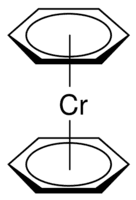
Bis(benzene)chromium(0) (CAS 1271-54-1) is an organochromium sandwich compound with the formula C12H12Cr and a molar mass of 208.22 g/mol. Also known as dibenzenechromium, it is a flammable crystalline solid (m.p. 260-265 °C) in which a central chromium(0) atom is bound between two benzene rings. It is used principally as a catalyst and pre-catalyst in organometallic chemistry and research-scale synthesis. Tech Serve Solutions supplies it at 97% assay for laboratory and industrial use.
- IUPAC
- Dibenzenechromium
- Synonyms
- DibenzenechromiumBis(benzene)chromiumBis(eta6-benzene)chromiumDibenzenechromium(0)Bis(benzene)chromium(0)Chromium, bis(eta6-benzene)-
Olefin hydrogenation catalyst
Bis(benzene)chromium(0) is used as a catalyst for the hydrogenation of olefins. Its electron-rich chromium(0) centre supports homogeneous catalytic transformations of unsaturated substrates.
Electron transfer chain catalysis
The compound functions within electron transfer chain (ETC) catalysis mechanisms, where its reversible redox behaviour can mediate catalytic cycles in organometallic reactions.
Pre-catalyst for hydrosilation
It serves as a pre-catalyst for the hydrosilation of ketones and aldehydes, enabling the addition of silicon-hydrogen bonds across carbonyl groups under controlled conditions.
Dehydrocoupling pre-catalyst
Bis(benzene)chromium(0) is employed as a pre-catalyst for the dehydrocoupling of triphenylsilane with primary alcohols, supporting silicon-oxygen bond formation.
Organometallic research reagent
As a classic bis(arene) sandwich complex, it is a reference compound in coordination and organometallic chemistry, used to study chromium(0) bonding, redox chemistry and related synthetic methodology.
| Molecular weight | 208.22 |
|---|---|
| Empirical formula | C12H12Cr |
| Assay | 97% |
| Application | Catalyst for:• Olefin hydrogenation1• Electron transfer chain catalysis mechanism2• Pre-catalyst for the hydrosilation of ketones and aldehydes, for the dehydrocoupling of triphenylsilane with primary alcohols3 |
| Melting point | 260-265 °C(lit.) |

Hazard statements
- H228Flammable solid
Precautionary statements
- P210Keep away from heat, sparks and open flames. No smoking
| Protective equipment | Eyeshields, full-face particle respirator type N100 (US), Gloves, respirator cartridge type N100 (US), type P1 (EN143) respirator filter, type P3 (EN 143) respirator cartridges |
|---|---|
| Transport (UN / ADR) | UN 1325 4.1 / PGII |
| Water hazard class (WGK, DE) | 3 |
| Hazard codes (EU) | F |
| Risk statements (R) | 11 |
| Safety statements (S) | 16-33 |
Hazard information is provided for guidance. Always consult the product Safety Data Sheet (SDS), available on request, before handling.
Documentation
Every batch ships with a Certificate of Analysis covering assay, identity and purity; the grade is confirmed against your enquiry. Safety Data Sheets and technical data sheets are available on request.
Supply & logistics
Samples for technical evaluation; bulk MOQ by grade and packaging. In-stock material ships in 7–10 working days, worldwide, with full export documentation.
What is Bis(benzene)chromium(0) used for?
+
Bis(benzene)chromium(0) is used mainly as a catalyst and pre-catalyst in organometallic chemistry. Documented uses include olefin hydrogenation, electron transfer chain catalysis, hydrosilation of ketones and aldehydes, and the dehydrocoupling of triphenylsilane with primary alcohols. It also serves as a reference organochromium sandwich compound in research.
What is the CAS number and molecular formula of Bis(benzene)chromium(0)?
+
The CAS number is 1271-54-1 and the empirical formula is C12H12Cr (Hill notation), with a molecular weight of 208.22 g/mol. Its EC number is 215-042-7 and MDL number MFCD00015485. It is also known as dibenzenechromium.
What grade and purity does Tech Serve Solutions supply?
+
Tech Serve Solutions supplies Bis(benzene)chromium(0) at 97% assay as a research and technical grade material for laboratory and industrial use. We do not represent it as USP, BP or EP pharmacopoeial grade. Certificate of analysis details can be confirmed against the specific lot on request.
What are the safety and handling hazards of Bis(benzene)chromium(0)?
+
It is classified as a flammable solid under GHS with signal word Danger and hazard statement H228 (flammable solid); the key precautionary statement is P210 (keep away from heat, sparks, open flames and hot surfaces). Under the European system it carries hazard code F and R11. Handle with eye protection, gloves and appropriate respiratory protection, away from ignition sources. It also carries Water Hazard Class WGK 3 (highly hazardous to water), so contact with water bodies and drains must be avoided. Always consult the Safety Data Sheet before use.
How is Bis(benzene)chromium(0) packed, shipped and exported?
+
It is supplied in securely sealed containers appropriate to the order quantity, labelled in line with GHS requirements. For transport it is classified as a dangerous good: UN 1325, Class 4.1 (flammable solid), Packing Group II. Tech Serve Solutions arranges compliant packaging, documentation and export to international destinations in accordance with applicable dangerous-goods regulations.
How do I request a sample or quote for Bis(benzene)chromium(0)?
+
Contact Tech Serve Solutions with your required quantity, purity and destination, and our team will respond with availability, lead time and a quotation. Please state any documentation or regulatory requirements so we can include the correct paperwork for export.
▶ Related products
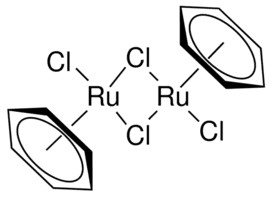
Benzeneruthenium(II) chloride dimer
Ru2(C6H6)2Cl4
Catalysis & Inorganic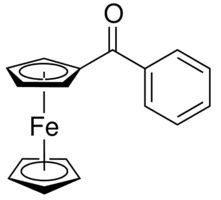
Benzoylferrocene
C17H14FeO
Catalysis & Inorganic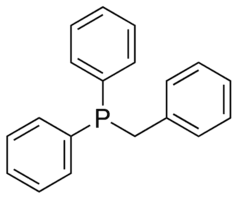
Benzyldiphenylphosphine
C6H5CH2P(C6H5)2
Catalysis & Inorganic
Beryllium
Be
Catalysis & Inorganic
Beryllium oxide
BeO
Catalysis & Inorganic![Bicyclo[2.2.1]hepta-2,5-diene-rhodium(I) chloride dimer — chemical structure, CAS 12257-42-0; Catalysis & Inorganic, fine chemical supplied by Tech Serve Solutions](/_next/image?url=https%3A%2F%2Fpub-f4d920c906024441a773a96f7098e551.r2.dev%2Fimages%2Fproducts%2F12257-42-0.png&w=3840&q=75)
Bicyclo[2.2.1]hepta-2,5-diene-rhodium(I) chloride dimer
Catalysis & Inorganic
![Bis[(10,11-η)-5-[(11bS)-dinaphtho[2,1-d:1′,2′-f][1,3,2]dioxaphosphepin-4-yl- κP4]-5H-dibenz[b,f]azepine]rhodium(I) tetrafluorobo — chemical structure, CAS 1228149-03-8; Catalysis & Inorganic, fine chemical supplied by Tech Serve Solutions](/_next/image?url=https%3A%2F%2Fpub-f4d920c906024441a773a96f7098e551.r2.dev%2Fimages%2Fproducts%2F1228149-03-8.png&w=3840&q=75)
Bis[(10,11-η)-5-[(11bS)-dinaphtho[2,1-d:1′,2′-f][1,3,2]dioxaphosphepin-4-yl- κP4]-5H-dibenz[b,f]azepine]rhodium(I) tetrafluorobo
1-d:1′
Catalysis & Inorganic![Bis[(2-dimethylamino)phenyl]amine nickel(II) chloride (C16H20ClN3Ni) — chemical structure, CAS 1033772-47-2; Catalysis & Inorganic, fine chemical supplied by Tech Serve Solutions](/_next/image?url=https%3A%2F%2Fpub-f4d920c906024441a773a96f7098e551.r2.dev%2Fimages%2Fproducts%2F1033772-47-2.png&w=3840&q=75)
Bis[(2-dimethylamino)phenyl]amine nickel(II) chloride
C16H20ClN3Ni
Catalysis & Inorganic