Bis(acetonitrile)dichloropalladium(II)
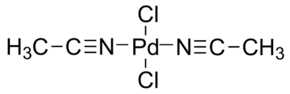
Bis(acetonitrile)dichloropalladium(II) (CAS 14592-56-4; formula PdCl2·(CH3CN)2; molar mass 259.43 g/mol) is a homogeneous palladium(II) complex supplied as a research-grade reagent at 99% assay. The two labile acetonitrile ligands are readily displaced, making it a versatile, soluble palladium source and precatalyst for cross-coupling and related transformations in organic and organometallic synthesis. Tech Serve Solutions supplies it as a laboratory reagent for research and process-development use.
- IUPAC
- Palladium(II) chloride diacetonitrile complex
- Synonyms
- Bis(acetonitrile)dichloropalladium(II)Bis(acetonitrile)palladium(II) chlorideDichlorobis(acetonitrile)palladium(II)Palladium(II) chloride diacetonitrile complexBis(acetonitrile)dichloropalladiumPdCl2(CH3CN)2Bis(acetonitrile)palladium dichloride
Palladium precatalyst for cross-coupling
Serves as a soluble palladium(II) source for catalysed carbon-carbon and carbon-heteroatom bond-forming reactions. The labile acetonitrile ligands are easily exchanged for phosphines and other donors to generate active catalytic species in situ.
Organometallic synthesis and ligand exchange
Acts as a convenient starting material for preparing other palladium complexes, since the weakly bound acetonitrile ligands are readily replaced by a wide range of ligands. This makes it useful for assembling defined catalyst systems on the bench.
Homogeneous catalysis research
Used in academic and industrial laboratories investigating palladium-catalysed methodology and reaction development. Its solubility in common organic solvents supports homogeneous reaction conditions.
Process and method development
Employed during route scouting and process chemistry where a well-defined, soluble palladium(II) precursor is required. Supplied at a consistent 99% assay to support reproducible experimental work.
| Molecular weight | 259.43 |
|---|---|
| Linear formula | PdCl2 · (CH3CN)2 |
| Assay | 99% |
| Application | Application Guide for Palladium Catalyzed Cross-Coupling Reactions |

Hazard statements
- H301Toxic if swallowed
- H311Toxic in contact with skin
- H331Toxic if inhaled
Precautionary statements
- P261Avoid breathing dust, fume, gas or vapours
- P280Wear protective gloves, clothing and eye/face protection
- P301IF SWALLOWED
- P311Call a POISON CENTER or doctor
| Protective equipment | Eyeshields, Faceshields, Gloves, type P2 (EN 143) respirator cartridges |
|---|---|
| Transport (UN / ADR) | UN 3077 9 / PGIII |
| Water hazard class (WGK, DE) | 3 |
| Hazard codes (EU) | T |
| Risk statements (R) | 23/24/25 |
| Safety statements (S) | 16-27-36/37-45 |
Hazard information is provided for guidance. Always consult the product Safety Data Sheet (SDS), available on request, before handling.
Documentation
Every batch ships with a Certificate of Analysis covering assay, identity and purity; the grade is confirmed against your enquiry. Safety Data Sheets and technical data sheets are available on request.
Supply & logistics
Samples for technical evaluation; bulk MOQ by grade and packaging. In-stock material ships in 7–10 working days, worldwide, with full export documentation.
What is Bis(acetonitrile)dichloropalladium(II) used for?
+
It is used as a homogeneous palladium(II) precatalyst and palladium source in organic and organometallic synthesis. Its two labile acetonitrile ligands are readily displaced, allowing it to generate active palladium species for cross-coupling and to serve as a precursor to other palladium complexes.
What is the CAS number and molecular formula of Bis(acetonitrile)dichloropalladium(II)?
+
The CAS number is 14592-56-4 and the linear formula is PdCl2·(CH3CN)2, with a molecular weight of 259.43 g/mol. The EC number is 238-637-3 and the MDL number is MFCD00013122.
What grade and purity does Tech Serve Solutions supply?
+
Tech Serve Solutions supplies Bis(acetonitrile)dichloropalladium(II) at 99% assay as a research/laboratory-grade reagent. We do not represent it as USP, BP or EP pharmacopoeia grade. A specification or certificate of analysis can be provided on request to confirm suitability for your application.
What are the safety and handling requirements?
+
This compound is hazardous and carries GHS signal word Danger with pictogram GHS06. It is toxic if swallowed, in contact with skin, or if inhaled (H301, H311, H331). Handle only with suitable engineering controls and personal protective equipment, including eye and face protection, gloves and a type P2 (EN 143) respirator where exposure is possible. Always consult the Safety Data Sheet before use.
How is Bis(acetonitrile)dichloropalladium(II) packed, shipped and exported?
+
It is packed in appropriate inert, well-sealed containers with sizing to suit laboratory and pilot quantities, and labelled in line with GHS requirements. For transport it is classified as UN 3077, Class 9, Packing Group III, and is shipped with full export documentation to international destinations.
How do I request a sample or quote?
+
Contact Tech Serve Solutions with your required quantity, purity and destination, and our team will respond with availability, lead time and documentation. Samples and a certificate of analysis can be arranged to support evaluation and qualification.
▶ Related products
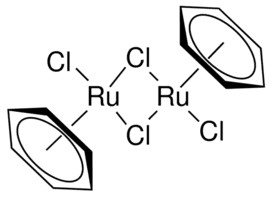
Benzeneruthenium(II) chloride dimer
Ru2(C6H6)2Cl4
Catalysis & Inorganic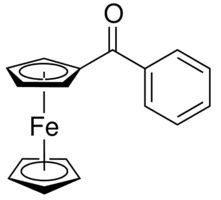
Benzoylferrocene
C17H14FeO
Catalysis & Inorganic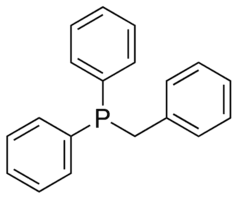
Benzyldiphenylphosphine
C6H5CH2P(C6H5)2
Catalysis & Inorganic
Beryllium
Be
Catalysis & Inorganic
Beryllium oxide
BeO
Catalysis & Inorganic![Bicyclo[2.2.1]hepta-2,5-diene-rhodium(I) chloride dimer — chemical structure, CAS 12257-42-0; Catalysis & Inorganic, fine chemical supplied by Tech Serve Solutions](/_next/image?url=https%3A%2F%2Fpub-f4d920c906024441a773a96f7098e551.r2.dev%2Fimages%2Fproducts%2F12257-42-0.png&w=3840&q=75)
Bicyclo[2.2.1]hepta-2,5-diene-rhodium(I) chloride dimer
Catalysis & Inorganic
![Bis[(10,11-η)-5-[(11bS)-dinaphtho[2,1-d:1′,2′-f][1,3,2]dioxaphosphepin-4-yl- κP4]-5H-dibenz[b,f]azepine]rhodium(I) tetrafluorobo — chemical structure, CAS 1228149-03-8; Catalysis & Inorganic, fine chemical supplied by Tech Serve Solutions](/_next/image?url=https%3A%2F%2Fpub-f4d920c906024441a773a96f7098e551.r2.dev%2Fimages%2Fproducts%2F1228149-03-8.png&w=3840&q=75)
Bis[(10,11-η)-5-[(11bS)-dinaphtho[2,1-d:1′,2′-f][1,3,2]dioxaphosphepin-4-yl- κP4]-5H-dibenz[b,f]azepine]rhodium(I) tetrafluorobo
1-d:1′
Catalysis & Inorganic![Bis[(2-dimethylamino)phenyl]amine nickel(II) chloride (C16H20ClN3Ni) — chemical structure, CAS 1033772-47-2; Catalysis & Inorganic, fine chemical supplied by Tech Serve Solutions](/_next/image?url=https%3A%2F%2Fpub-f4d920c906024441a773a96f7098e551.r2.dev%2Fimages%2Fproducts%2F1033772-47-2.png&w=3840&q=75)
Bis[(2-dimethylamino)phenyl]amine nickel(II) chloride
C16H20ClN3Ni
Catalysis & Inorganic