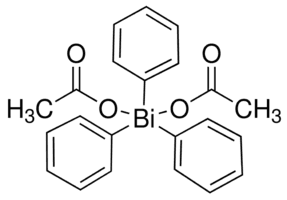
Bis(acetato-O)triphenylbismuth(V)
Bis(acetato-O)triphenylbismuth(V) (CAS 7239-60-3), also known as triphenylbismuth diacetate, is an organobismuth(V) compound with the formula (CH3CO2)2Bi(C6H5)3 and a molar mass of 558.38 g/mol. Supplied as a solid at 98% assay, it is a pentavalent triarylbismuth dicarboxylate used in research as a mild oxidant and aryl-transfer reagent in organic synthesis, and as a bismuth source for catalysis, materials science and vapour-deposition work.
- Synonyms
- Bis(acetato-O)triphenylbismuth(V)Triphenylbismuth diacetateTriphenylbismuth(V) diacetateTriphenylbismuthine diacetateDiacetatotriphenylbismuth(V)(CH3CO2)2Bi(C6H5)3
Aryl-transfer reagent in synthesis
Triarylbismuth(V) dicarboxylates such as this compound are well-documented mild reagents for the arylation of carbon, nitrogen and oxygen nucleophiles, including phenols, enols and amines, under comparatively neutral conditions.
Selective oxidant
Pentavalent organobismuth(V) acetates are used as mild, selective oxidising agents in organic chemistry, for example in the oxidation of alcohols and certain diols to the corresponding carbonyl compounds.
Catalysis and inorganic chemistry
It serves as a defined bismuth(V) building block for catalysis studies and the preparation of other organobismuth species in inorganic and organometallic research.
Vapour-deposition precursor research
As an organobismuth source, it is of interest in materials science and micro/nanoelectronics as a candidate precursor for chemical vapour deposition (CVD) and atomic layer deposition (ALD) of bismuth-containing films.
Reference and laboratory reagent
The material is supplied as a research-grade reagent for method development, synthetic chemistry and analytical reference work where a well-characterised triphenylbismuth(V) diacetate is required.
| Molecular weight | 558.38 |
|---|---|
| Linear formula | (CH3CO2)2Bi(C6H5)3 |
| Assay | 98% |
| Form | solid |
| Melting point | ~170 °C (dec.)(lit.) |
| Protective equipment | Eyeshields, Gloves, type N95 (US), type P1 (EN143) respirator filter |
|---|---|
| Water hazard class (WGK, DE) | 3 |
Hazard information is provided for guidance. Always consult the product Safety Data Sheet (SDS), available on request, before handling.
Documentation
Every batch ships with a Certificate of Analysis covering assay, identity and purity; the grade is confirmed against your enquiry. Safety Data Sheets and technical data sheets are available on request.
Supply & logistics
Samples for technical evaluation; bulk MOQ by grade and packaging. In-stock material ships in 7–10 working days, worldwide, with full export documentation.
What is Bis(acetato-O)triphenylbismuth(V) used for?
+
It is used in research primarily as a mild oxidant and as an aryl-transfer reagent for carbon-, nitrogen- and oxygen-arylation in organic synthesis. As an organobismuth(V) source it also features in catalysis, inorganic and organometallic chemistry, and in materials-science work on bismuth-containing films and vapour-deposition precursors.
What is the CAS number and molecular formula of Bis(acetato-O)triphenylbismuth(V)?
+
Its CAS number is 7239-60-3 and its linear formula is (CH3CO2)2Bi(C6H5)3, equivalent to triphenylbismuth diacetate. The molecular weight is 558.38 g/mol, the MDL number is MFCD00092697, and the PubChem Substance ID is 24872124.
What grade and purity does Tech Serve Solutions supply?
+
Tech Serve Solutions supplies this product as a solid with a typical assay of 98%, as a technical/research-grade reagent. We do not represent it as USP, BP or EP pharmacopoeial grade. A batch-specific certificate of analysis can be provided with each consignment.
What are the safety and handling requirements?
+
Handle only with suitable personal protective equipment: eye shields, gloves and a particulate respirator (type N95 (US) or P1 (EN143)). The solid melts with decomposition at about 170 C, so avoid heating and ignition sources. It carries a German Water Hazard Class (WGK) of 3, indicating it is severely hazardous to water, so prevent release to drains and the environment. Always consult the current Safety Data Sheet before use.
How is Bis(acetato-O)triphenylbismuth(V) packed, shipped and exported?
+
The solid is packed in tightly sealed, appropriately labelled containers sized to order and protected for international transport. Tech Serve Solutions exports worldwide with full documentation, including the Safety Data Sheet and certificate of analysis, and arranges compliant transport and any required permits for the destination country.
How do I request a sample or quote?
+
Contact Tech Serve Solutions with your required quantity, purity and destination, and our team will respond with availability, lead time and export terms. Samples can be discussed for qualified research and industrial applications.
▶ Related products
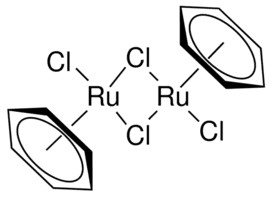
Benzeneruthenium(II) chloride dimer
Ru2(C6H6)2Cl4
Catalysis & Inorganic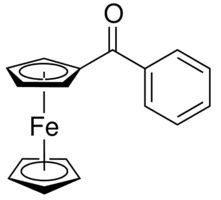
Benzoylferrocene
C17H14FeO
Catalysis & Inorganic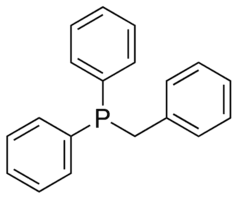
Benzyldiphenylphosphine
C6H5CH2P(C6H5)2
Catalysis & Inorganic
Beryllium
Be
Catalysis & Inorganic
Beryllium oxide
BeO
Catalysis & Inorganic![Bicyclo[2.2.1]hepta-2,5-diene-rhodium(I) chloride dimer — chemical structure, CAS 12257-42-0; Catalysis & Inorganic, fine chemical supplied by Tech Serve Solutions](/_next/image?url=https%3A%2F%2Fpub-f4d920c906024441a773a96f7098e551.r2.dev%2Fimages%2Fproducts%2F12257-42-0.png&w=3840&q=75)
Bicyclo[2.2.1]hepta-2,5-diene-rhodium(I) chloride dimer
Catalysis & Inorganic
![Bis[(10,11-η)-5-[(11bS)-dinaphtho[2,1-d:1′,2′-f][1,3,2]dioxaphosphepin-4-yl- κP4]-5H-dibenz[b,f]azepine]rhodium(I) tetrafluorobo — chemical structure, CAS 1228149-03-8; Catalysis & Inorganic, fine chemical supplied by Tech Serve Solutions](/_next/image?url=https%3A%2F%2Fpub-f4d920c906024441a773a96f7098e551.r2.dev%2Fimages%2Fproducts%2F1228149-03-8.png&w=3840&q=75)
Bis[(10,11-η)-5-[(11bS)-dinaphtho[2,1-d:1′,2′-f][1,3,2]dioxaphosphepin-4-yl- κP4]-5H-dibenz[b,f]azepine]rhodium(I) tetrafluorobo
1-d:1′
Catalysis & Inorganic![Bis[(2-dimethylamino)phenyl]amine nickel(II) chloride (C16H20ClN3Ni) — chemical structure, CAS 1033772-47-2; Catalysis & Inorganic, fine chemical supplied by Tech Serve Solutions](/_next/image?url=https%3A%2F%2Fpub-f4d920c906024441a773a96f7098e551.r2.dev%2Fimages%2Fproducts%2F1033772-47-2.png&w=3840&q=75)
Bis[(2-dimethylamino)phenyl]amine nickel(II) chloride
C16H20ClN3Ni
Catalysis & Inorganic