
Bis(4-trifluoromethylphenyl)phosphine
Bis(4-trifluoromethylphenyl)phosphine (CAS 99665-68-6) is an electron-poor secondary aryl phosphine, molecular formula C14H9F6P and molar mass 322.19 g/mol. The two para-trifluoromethyl groups lower electron density at phosphorus, making it a valued P–H building block and ligand precursor in organometallic chemistry and asymmetric catalysis. Tech Serve Solutions supplies it as a research-grade reagent (assay 97%) for synthesis and catalyst development. It is an air-sensitive, hazardous material requiring inert handling.
- Synonyms
- Bis(4-trifluoromethylphenyl)phosphineBis[4-(trifluoromethyl)phenyl]phosphineDi(4-trifluoromethylphenyl)phosphineBis(4-(trifluoromethyl)phenyl)phosphaneCAS 99665-68-6

Ligand precursor for asymmetric catalysis
Used as a reactant in preparing iron(II) chiral diimine diphosphine complexes, which serve as catalysts for the asymmetric transfer hydrogenation of ketones. The electron-withdrawing CF3 groups tune the donor properties of the resulting phosphine ligands.
Enantioselective synthesis
Applied in enantioselective decarboxylative allylation and in ring-closing metathesis chemistry, where it contributes to phosphine-based ligand frameworks for stereoselective transformations.
Secondary phosphine building block
As an Ar2PH compound, it provides a reactive P–H bond for constructing tertiary phosphines, phosphine oxides and related organophosphorus ligands through P–C and P–H functionalisation.
Electron-poor phosphorus reagent
The fluorinated aryl substituents impart strong electron-withdrawing character, making it useful where less electron-rich phosphorus centres are required in coordination and organometallic research.
Research and method development
Supplied for academic and industrial laboratories developing new catalytic systems, ligand libraries and synthetic methodologies in fine-chemical and pharmaceutical-intermediate research.
| Molecular weight | 322.19 |
|---|---|
| Empirical formula | C14H9F6P |
| Assay | 97% |
| Density | 1.317 g/mL at 25 °C |
| Refractive index | n20/D 1.512 |
| Application | Reactant for:• Preparation of iron(II) chiral diimine diphosphine complexes as catalysts for asymmetric transfer hydrogenation of ketones1• Enantioselective decarboxylative allylation and ring-closing metathesis2 |


Hazard statements
- H301Toxic if swallowed
- H318Causes serious eye damage
- H413May cause long-lasting harmful effects to aquatic life
Precautionary statements
- P280Wear protective gloves, clothing and eye/face protection
- P301IF SWALLOWED
- P305IF IN EYES
| Protective equipment | Eyeshields, Faceshields, full-face respirator (US), Gloves, multi-purpose combination respirator cartridge (US), type ABEK (EN14387) respirator filter |
|---|---|
| Transport (UN / ADR) | UN 2810 6.1 / PGIII |
| Water hazard class (WGK, DE) | 3 |
| Hazard codes (EU) | T |
| Risk statements (R) | 25-37-41 |
| Safety statements (S) | 26-39-45 |
Hazard information is provided for guidance. Always consult the product Safety Data Sheet (SDS), available on request, before handling.
Documentation
Every batch ships with a Certificate of Analysis covering assay, identity and purity; the grade is confirmed against your enquiry. Safety Data Sheets and technical data sheets are available on request.
Supply & logistics
Samples for technical evaluation; bulk MOQ by grade and packaging. In-stock material ships in 7–10 working days, worldwide, with full export documentation.
What is Bis(4-trifluoromethylphenyl)phosphine used for?
+
It is used chiefly as a secondary phosphine building block and ligand precursor in organometallic chemistry. Documented uses include preparing iron(II) chiral diimine diphosphine catalysts for the asymmetric transfer hydrogenation of ketones, and supporting enantioselective decarboxylative allylation and ring-closing metathesis. The para-CF3 groups make it an electron-poor phosphorus reagent for catalyst and ligand development.
What is the CAS number and molecular formula of Bis(4-trifluoromethylphenyl)phosphine?
+
The CAS number is 99665-68-6 and the molecular formula is C14H9F6P (Hill notation), with a molecular weight of 322.19 g/mol. The MDL number is MFCD01630793.
What grade and purity does Tech Serve Solutions supply?
+
Tech Serve Solutions supplies Bis(4-trifluoromethylphenyl)phosphine as a research/reagent grade material with a typical assay of 97%. Representative physical data include a density of 1.317 g/mL at 25 °C and refractive index n20/D 1.512. We do not represent this product as USP, BP or EP pharmacopoeial grade. A certificate of analysis is provided with each batch.
What are the safety hazards and how should it be handled?
+
This is a hazardous substance carrying GHS pictograms GHS05 and GHS06 with the signal word Danger. The hazard statements are H301 (toxic if swallowed), H318 (causes serious eye damage) and H413 (may cause long-lasting harmful effects to aquatic life). As a secondary phosphine it is also air-sensitive. Handle under inert atmosphere with eye and face protection, gloves and suitable respiratory protection (type ABEK respirator filter), and avoid release to the environment. Its German water hazard class is WGK 3.
How is Bis(4-trifluoromethylphenyl)phosphine packed, shipped and exported?
+
It is packed in appropriately sealed, often inert-purged containers with sizes matched to your requirement, and supplied with an SDS and certificate of analysis. For transport it is classified as UN 2810, Class 6.1, Packing Group III, and is shipped as a dangerous good in compliance with applicable ADR/IATA/IMDG regulations. Tech Serve Solutions exports worldwide subject to destination import rules.
How do I request a sample or quote?
+
Contact Tech Serve Solutions with your required quantity, purity and destination country, and we will respond with availability, lead time and a formal quotation. Samples can be arranged where regulations and stock permit.
▶ Related products
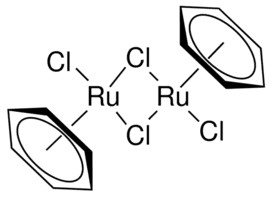
Benzeneruthenium(II) chloride dimer
Ru2(C6H6)2Cl4
Catalysis & Inorganic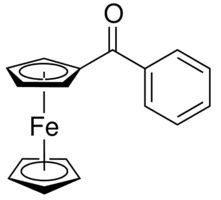
Benzoylferrocene
C17H14FeO
Catalysis & Inorganic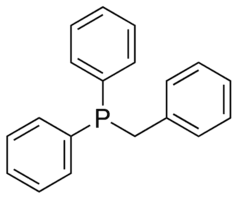
Benzyldiphenylphosphine
C6H5CH2P(C6H5)2
Catalysis & Inorganic
Beryllium
Be
Catalysis & Inorganic
Beryllium oxide
BeO
Catalysis & Inorganic![Bicyclo[2.2.1]hepta-2,5-diene-rhodium(I) chloride dimer — chemical structure, CAS 12257-42-0; Catalysis & Inorganic, fine chemical supplied by Tech Serve Solutions](/_next/image?url=https%3A%2F%2Fpub-f4d920c906024441a773a96f7098e551.r2.dev%2Fimages%2Fproducts%2F12257-42-0.png&w=3840&q=75)
Bicyclo[2.2.1]hepta-2,5-diene-rhodium(I) chloride dimer
Catalysis & Inorganic
![Bis[(10,11-η)-5-[(11bS)-dinaphtho[2,1-d:1′,2′-f][1,3,2]dioxaphosphepin-4-yl- κP4]-5H-dibenz[b,f]azepine]rhodium(I) tetrafluorobo — chemical structure, CAS 1228149-03-8; Catalysis & Inorganic, fine chemical supplied by Tech Serve Solutions](/_next/image?url=https%3A%2F%2Fpub-f4d920c906024441a773a96f7098e551.r2.dev%2Fimages%2Fproducts%2F1228149-03-8.png&w=3840&q=75)
Bis[(10,11-η)-5-[(11bS)-dinaphtho[2,1-d:1′,2′-f][1,3,2]dioxaphosphepin-4-yl- κP4]-5H-dibenz[b,f]azepine]rhodium(I) tetrafluorobo
1-d:1′
Catalysis & Inorganic![Bis[(2-dimethylamino)phenyl]amine nickel(II) chloride (C16H20ClN3Ni) — chemical structure, CAS 1033772-47-2; Catalysis & Inorganic, fine chemical supplied by Tech Serve Solutions](/_next/image?url=https%3A%2F%2Fpub-f4d920c906024441a773a96f7098e551.r2.dev%2Fimages%2Fproducts%2F1033772-47-2.png&w=3840&q=75)
Bis[(2-dimethylamino)phenyl]amine nickel(II) chloride
C16H20ClN3Ni
Catalysis & Inorganic▶ Explore more

Bis(cyclopentadienyl)cobalt(III) hexafluorophosphate
C10H10CoF6P
Catalysis & Inorganic
1-(4-Chlorophenyl)biguanide hydrochloride
ClC6H4NHC(NH)NHC(NH)NH2 · HCl
Chemical Synthesis
Bis(cyclopentadienyl)dimethylzirconium(IV)
Catalysis & Inorganic

1-(4-Chlorophenyl)ethanol
ClC6H4CH(CH3)OH
Chemical Synthesis