
Bis[4-(1H,1H,2H,2H-perfluorodecyl)phenyl]phenylphosphine
Bis[4-(1H,1H,2H,2H-perfluorodecyl)phenyl]phenylphosphine (CAS 892154-91-5, C38H21F34P, molar mass 1154.49 g/mol) is a fluorous-tagged triarylphosphine ligand. Two para-perfluorodecyl ("ponytail") chains on a triphenylphosphine framework give it high fluorophilicity, making the phosphine and its metal complexes soluble in perfluorinated media. Tech Serve Solutions supplies it as a research-grade reagent of assay ≥ 95% (GC) for fluorous-phase homogeneous catalysis, ligand studies and specialty organometallic synthesis.
- IUPAC
- Bis[4-(3,3,4,4,5,5,6,6,7,7,8,8,9,9,10,10,10-heptadecafluorodecyl)phenyl]phenylphosphine
- Synonyms
- Bis[4-(1H,1H,2H,2H-perfluorodecyl)phenyl]phenylphosphineBis[4-(3,3,4,4,5,5,6,6,7,7,8,8,9,9,10,10,10-heptadecafluorodecyl)phenyl]phenylphosphineCAS 892154-91-5C38H21F34Pfluorous triarylphosphine ligandRf-tagged phenylphosphine
![Bis[4-(1H,1H,2H,2H-perfluorodecyl)phenyl]phenylphosphine (2H) — chemical structure, CAS 892154-91-5; Chemistry, fine chemical supplied by Tech Serve Solutions](/_next/image?url=https%3A%2F%2Fpub-f4d920c906024441a773a96f7098e551.r2.dev%2Fimages%2Fproducts%2F892154-91-5.png&w=3840&q=75)
Fluorous-phase homogeneous catalysis
The two perfluoroalkyl ponytails partition this phosphine and its transition-metal complexes into the fluorous phase. This supports fluorous biphasic and thermomorphic catalysis, where catalyst and product separate cleanly on cooling, simplifying recovery and recycling.
Phosphine ligand for organometallic complexes
As an electron-rich triarylphosphine, it coordinates to palladium, rhodium, platinum and related metals. It is used to prepare Rf-tagged metal complexes for studies of cross-coupling, hydroformylation and other phosphine-supported transformations.
Catalyst recovery and recycling studies
Its fluorophilic character allows a metal catalyst to be extracted into a fluorous phase or onto fluorous supports after reaction. This is applied in research aimed at reducing metal contamination of products and reusing precious-metal catalysts.
Fluorous chemistry and ligand research
The compound serves as a defined building block for academic and industrial method development in fluorous synthesis, including comparisons of fluorous versus conventional triarylphosphine ligands.
| Molecular weight | 1154.49 |
|---|---|
| Empirical formula | C38H21F34P |
| Assay | ≥95% (GC) |
| Melting point | 65-71 °C |

Hazard statements
- H315Causes skin irritation
- H319Causes serious eye irritation
- H335May cause respiratory irritation
Precautionary statements
- P261Avoid breathing dust, fume, gas or vapours
- P305IF IN EYES
| Protective equipment | dust mask type N95 (US), Eyeshields, Gloves |
|---|---|
| Water hazard class (WGK, DE) | 3 |
| Hazard codes (EU) | Xi |
| Risk statements (R) | 36/37/38 |
| Safety statements (S) | 26-36/37 |
Hazard information is provided for guidance. Always consult the product Safety Data Sheet (SDS), available on request, before handling.
Documentation
Every batch ships with a Certificate of Analysis covering assay, identity and purity; the grade is confirmed against your enquiry. Safety Data Sheets and technical data sheets are available on request.
Supply & logistics
Samples for technical evaluation; bulk MOQ by grade and packaging. In-stock material ships in 7–10 working days, worldwide, with full export documentation.
What is Bis[4-(1H,1H,2H,2H-perfluorodecyl)phenyl]phenylphosphine used for?
+
It is used as a fluorous-tagged triarylphosphine ligand in homogeneous catalysis. The perfluorodecyl chains make the phosphine and its metal complexes soluble in perfluorinated solvents, supporting fluorous biphasic catalysis, Rf-tagged organometallic complex synthesis and catalyst recovery and recycling research.
What is the CAS number and molecular formula of Bis[4-(1H,1H,2H,2H-perfluorodecyl)phenyl]phenylphosphine?
+
The CAS number is 892154-91-5 and the empirical formula is C38H21F34P (Hill notation), with a molecular weight of 1154.49 g/mol and MDL number MFCD03788374. Its melting point is approximately 65–71 °C.
What grade and purity does Tech Serve Solutions supply?
+
Tech Serve Solutions supplies this phosphine as a research-grade reagent with an assay of ≥ 95% (GC). It is intended for research, catalysis and synthesis use; we do not represent it as USP, BP or EP pharmacopoeial grade. A certificate of analysis can be provided on request.
What are the safety and handling requirements?
+
It carries GHS07 with the signal word Warning and hazard statements H315 (causes skin irritation), H319 (causes serious eye irritation) and H335 (may cause respiratory irritation). Avoid dust formation, use gloves, eye protection and an N95-type dust mask, work with adequate ventilation, and follow P261 and P305+P351+P338. It is classified WGK 3 (highly hazardous to water), so prevent release to the environment. Always consult the SDS before use.
Is this a controlled or scheduled substance?
+
The supplied data does not indicate any drug-control, narcotic or precursor scheduling for this compound; it is offered as a standard research and catalysis reagent. Customers remain responsible for confirming any local import, export or regulatory requirements that apply in their jurisdiction.
How is Bis[4-(1H,1H,2H,2H-perfluorodecyl)phenyl]phenylphosphine packed, shipped and exported?
+
It is packed as a solid in tightly sealed containers sized to order, with full labelling and an SDS. As an established global exporter, Tech Serve Solutions arranges compliant documentation and international freight; packaging and transport follow the applicable dangerous-goods and destination-country regulations.
How do I request a sample or quote?
+
Contact Tech Serve Solutions with your required quantity, purity and destination, quoting CAS 892154-91-5. We will respond with availability, lead time, packaging options and a formal quotation, and can supply a certificate of analysis and SDS to support evaluation.
▶ Related products
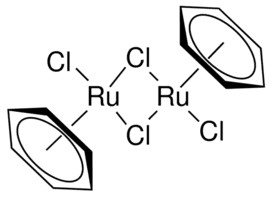
Benzeneruthenium(II) chloride dimer
Ru2(C6H6)2Cl4
Catalysis & Inorganic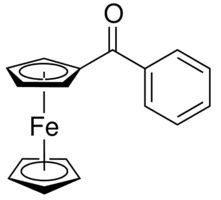
Benzoylferrocene
C17H14FeO
Catalysis & Inorganic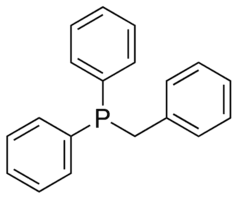
Benzyldiphenylphosphine
C6H5CH2P(C6H5)2
Catalysis & Inorganic
Beryllium
Be
Catalysis & Inorganic
Beryllium oxide
BeO
Catalysis & Inorganic![Bicyclo[2.2.1]hepta-2,5-diene-rhodium(I) chloride dimer — chemical structure, CAS 12257-42-0; Catalysis & Inorganic, fine chemical supplied by Tech Serve Solutions](/_next/image?url=https%3A%2F%2Fpub-f4d920c906024441a773a96f7098e551.r2.dev%2Fimages%2Fproducts%2F12257-42-0.png&w=3840&q=75)
Bicyclo[2.2.1]hepta-2,5-diene-rhodium(I) chloride dimer
Catalysis & Inorganic
![Bis[(10,11-η)-5-[(11bS)-dinaphtho[2,1-d:1′,2′-f][1,3,2]dioxaphosphepin-4-yl- κP4]-5H-dibenz[b,f]azepine]rhodium(I) tetrafluorobo — chemical structure, CAS 1228149-03-8; Catalysis & Inorganic, fine chemical supplied by Tech Serve Solutions](/_next/image?url=https%3A%2F%2Fpub-f4d920c906024441a773a96f7098e551.r2.dev%2Fimages%2Fproducts%2F1228149-03-8.png&w=3840&q=75)
Bis[(10,11-η)-5-[(11bS)-dinaphtho[2,1-d:1′,2′-f][1,3,2]dioxaphosphepin-4-yl- κP4]-5H-dibenz[b,f]azepine]rhodium(I) tetrafluorobo
1-d:1′
Catalysis & Inorganic![Bis[(2-dimethylamino)phenyl]amine nickel(II) chloride (C16H20ClN3Ni) — chemical structure, CAS 1033772-47-2; Catalysis & Inorganic, fine chemical supplied by Tech Serve Solutions](/_next/image?url=https%3A%2F%2Fpub-f4d920c906024441a773a96f7098e551.r2.dev%2Fimages%2Fproducts%2F1033772-47-2.png&w=3840&q=75)
Bis[(2-dimethylamino)phenyl]amine nickel(II) chloride
C16H20ClN3Ni
Catalysis & Inorganic▶ Explore more

Bis(cyclopentadienyl)cobalt(III) hexafluorophosphate
C10H10CoF6P
Catalysis & Inorganic
1-(4-Chlorophenyl)biguanide hydrochloride
ClC6H4NHC(NH)NHC(NH)NH2 · HCl
Chemical Synthesis
Bis(cyclopentadienyl)dimethylzirconium(IV)
Catalysis & Inorganic

1-(4-Chlorophenyl)ethanol
ClC6H4CH(CH3)OH
Chemical Synthesis