
Bis(3,5-dimethylphenyl)chlorophosphine
Bis(3,5-dimethylphenyl)chlorophosphine (CAS 74289-57-9; C16H18ClP; molar mass 276.74 g/mol) is an air-sensitive, moisture-sensitive organophosphorus(III) reagent bearing a reactive phosphorus-chlorine bond flanked by two 3,5-dimethylphenyl (3,5-xylyl) groups. Supplied as a corrosive liquid (density 1.102 g/mL at 25 °C, refractive index n20/D 1.606), it serves chiefly as an electrophilic phosphine precursor for constructing tertiary phosphine ligands used in transition-metal catalysis and fine-chemical synthesis.
- IUPAC
- Bis(3,5-dimethylphenyl)phosphinous chloride,Chlorobis(3,5-dimethylphenyl)phosphine
- Synonyms
- Bis(3,5-dimethylphenyl)chlorophosphineBis(3,5-dimethylphenyl)phosphinous chlorideChlorobis(3,5-dimethylphenyl)phosphineBis(3,5-xylyl)chlorophosphineCAS 74289-57-9

Phosphine ligand synthesis
The reactive P-Cl bond is readily displaced by organometallic nucleophiles such as Grignard and organolithium reagents, forming new phosphorus-carbon bonds. This makes it a building block for tertiary phosphines bearing the 3,5-dimethylphenyl (xylyl) motif.
Ligand precursor for catalysis
Phosphines derived from this chlorophosphine act as supporting ligands for transition-metal complexes used in homogeneous catalysis. The methyl-substituted aryl groups influence the steric and electronic profile of the resulting ligand.
Organophosphorus building block
As an electrophilic phosphorus(III) reagent, it is used in chemical synthesis to introduce a bis(3,5-dimethylphenyl)phosphino unit onto suitable substrates and nucleophiles.
Research and method development
It is employed in academic and industrial laboratories developing new ligands, phosphine derivatives and catalytic methodologies. It is supplied for research and manufacturing use, not for clinical or consumer applications.
| Molecular weight | 276.74 |
|---|---|
| Empirical formula | C16H18ClP |
| Density | 1.102 g/mL at 25 °C |
| Refractive index | n20/D 1.606 |

Hazard statements
- H314Causes severe skin burns and eye damage
Precautionary statements
- P280Wear protective gloves, clothing and eye/face protection
- P305IF IN EYES
- P310Immediately call a POISON CENTER or doctor
| Protective equipment | Faceshields, full-face respirator (US), Gloves, Goggles, multi-purpose combination respirator cartridge (US), type ABEK (EN14387) respirator filter |
|---|---|
| Flash point | >110 °C / >230 °F |
| Transport (UN / ADR) | UN 1760 8 / PGIII |
| Water hazard class (WGK, DE) | 3 |
| Hazard codes (EU) | C |
| Risk statements (R) | 34 |
| Safety statements (S) | 26-36/37/39-43-45 |
Hazard information is provided for guidance. Always consult the product Safety Data Sheet (SDS), available on request, before handling.
Documentation
Every batch ships with a Certificate of Analysis covering assay, identity and purity; the grade is confirmed against your enquiry. Safety Data Sheets and technical data sheets are available on request.
Supply & logistics
Samples for technical evaluation; bulk MOQ by grade and packaging. In-stock material ships in 7–10 working days, worldwide, with full export documentation.
What is Bis(3,5-dimethylphenyl)chlorophosphine used for?
+
It is used mainly as an electrophilic phosphine precursor. Its reactive phosphorus-chlorine bond reacts with organometallic reagents (for example Grignard or organolithium compounds) to form tertiary phosphines, which serve as ligands in transition-metal catalysis and as building blocks in organophosphorus synthesis.
What is the CAS number and molecular formula of Bis(3,5-dimethylphenyl)chlorophosphine?
+
Its CAS number is 74289-57-9 and its empirical formula is C16H18ClP (Hill notation), with a molecular weight of 276.74 g/mol. Reported physical data include a density of 1.102 g/mL at 25 °C and a refractive index n20/D of 1.606.
What grade and purity does Tech Serve Solutions supply?
+
Tech Serve Solutions supplies this compound as a research and laboratory reagent for synthesis and catalysis. Exact assay and lot-specific purity are confirmed on the certificate of analysis at the time of quotation; we do not represent it as USP, BP or EP pharmacopoeial grade.
What are the safety and handling requirements?
+
It is classified GHS05, signal word Danger, with hazard statement H314 (causes severe skin burns and eye damage); it is corrosive and reacts with moisture. Handle under inert, dry conditions with gloves, goggles or faceshield and suitable respiratory protection, following the precautionary measures P280, P305+P351+P338 and P310. Always consult the Safety Data Sheet before use.
How is Bis(3,5-dimethylphenyl)chlorophosphine packed, shipped and exported?
+
As a moisture-sensitive, corrosive material it is packed in sealed, inert-atmosphere containers appropriate to the order quantity. It is classified for transport as UN 1760, Class 8 (corrosive), Packing Group III, and is shipped worldwide in line with applicable dangerous-goods regulations and destination import requirements.
How do I request a sample or quote?
+
Contact Tech Serve Solutions with the product name, CAS number 74289-57-9, the quantity required and your destination country. Our team will respond with availability, packing options, lead time, current documentation and a formal quotation.
▶ Related products

Benzeneruthenium(II) chloride dimer
Ru2(C6H6)2Cl4
Catalysis & Inorganic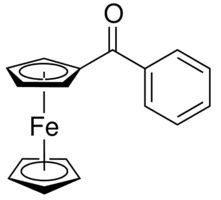
Benzoylferrocene
C17H14FeO
Catalysis & Inorganic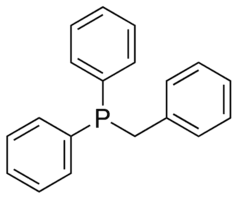
Benzyldiphenylphosphine
C6H5CH2P(C6H5)2
Catalysis & Inorganic
Beryllium
Be
Catalysis & Inorganic
Beryllium oxide
BeO
Catalysis & Inorganic![Bicyclo[2.2.1]hepta-2,5-diene-rhodium(I) chloride dimer — chemical structure, CAS 12257-42-0; Catalysis & Inorganic, fine chemical supplied by Tech Serve Solutions](/_next/image?url=https%3A%2F%2Fpub-f4d920c906024441a773a96f7098e551.r2.dev%2Fimages%2Fproducts%2F12257-42-0.png&w=3840&q=75)
Bicyclo[2.2.1]hepta-2,5-diene-rhodium(I) chloride dimer
Catalysis & Inorganic
![Bis[(10,11-η)-5-[(11bS)-dinaphtho[2,1-d:1′,2′-f][1,3,2]dioxaphosphepin-4-yl- κP4]-5H-dibenz[b,f]azepine]rhodium(I) tetrafluorobo — chemical structure, CAS 1228149-03-8; Catalysis & Inorganic, fine chemical supplied by Tech Serve Solutions](/_next/image?url=https%3A%2F%2Fpub-f4d920c906024441a773a96f7098e551.r2.dev%2Fimages%2Fproducts%2F1228149-03-8.png&w=3840&q=75)
Bis[(10,11-η)-5-[(11bS)-dinaphtho[2,1-d:1′,2′-f][1,3,2]dioxaphosphepin-4-yl- κP4]-5H-dibenz[b,f]azepine]rhodium(I) tetrafluorobo
1-d:1′
Catalysis & Inorganic![Bis[(2-dimethylamino)phenyl]amine nickel(II) chloride (C16H20ClN3Ni) — chemical structure, CAS 1033772-47-2; Catalysis & Inorganic, fine chemical supplied by Tech Serve Solutions](/_next/image?url=https%3A%2F%2Fpub-f4d920c906024441a773a96f7098e551.r2.dev%2Fimages%2Fproducts%2F1033772-47-2.png&w=3840&q=75)
Bis[(2-dimethylamino)phenyl]amine nickel(II) chloride
C16H20ClN3Ni
Catalysis & Inorganic▶ Explore more

Bis(cyclopentadienyl)cobalt(III) hexafluorophosphate
C10H10CoF6P
Catalysis & Inorganic
1-(4-Chlorophenyl)biguanide hydrochloride
ClC6H4NHC(NH)NHC(NH)NH2 · HCl
Chemical Synthesis
Bis(cyclopentadienyl)dimethylzirconium(IV)
Catalysis & Inorganic

1-(4-Chlorophenyl)ethanol
ClC6H4CH(CH3)OH
Chemical Synthesis