
Bis(3,5-di-tert-butyl-4-methoxyphenyl)chlorophosphine
Bis(3,5-di-tert-butyl-4-methoxyphenyl)chlorophosphine (CAS 212713-08-1) is an organophosphorus building block with the empirical formula C30H46ClO2P and a molecular weight of 505.11. Also known as bis[3,5-bis(1,1-dimethylethyl)-4-methoxyphenyl]phosphinous chloride, this sterically hindered phosphinous chloride is a solid (melting point 116-120 °C) used chiefly as a reactant for preparing chiral phosphine ligands in asymmetric catalysis and chemical synthesis. Tech Serve Solutions supplies it as a research-grade reagent to laboratories and fine-chemical manufacturers worldwide.
- IUPAC
- Bis[3,5-bis(1,1-dimethylethyl)-4-methoxyphenyl]phosphinous chloride
- Synonyms
- Bis(3,5-di-tert-butyl-4-methoxyphenyl)chlorophosphineBis[3,5-bis(1,1-dimethylethyl)-4-methoxyphenyl]phosphinous chlorideBis(3,5-di-tert-butyl-4-methoxyphenyl)phosphinous chlorideChlorobis(3,5-di-tert-butyl-4-methoxyphenyl)phosphineCAS 212713-08-1
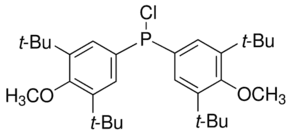
Chiral phosphine ligand synthesis
The reactive P-Cl bond makes this phosphinous chloride a convenient precursor for installing a bulky, electron-rich diarylphosphino group, supporting the construction of phosphine ligands used in homogeneous catalysis.
Asymmetric hydrogenation
It serves as a reactant in routes toward ligands for asymmetric hydrogenation, including systems employed with iridium catalysts.
Phosphine-containing amino acids and peptide-based ligands
The compound is used to prepare phosphine-containing amino acids and peptide-based catalyst ligands, including nonracemic variants applied in palladium-catalysed asymmetric allylic substitution reactions.
Reactions with chiral alcohols and amides
It undergoes condensations with optically active diols and chemoselective reaction with deprotonated 2-hydroxy-3,3,N-trimethylbutanamide, giving access to defined phosphorus-containing intermediates.
Research and method development
As a defined phosphorus precursor, it is suited to laboratory-scale organophosphorus chemistry and the development of new catalytic methods.
| Molecular weight | 505.11 |
|---|---|
| Empirical formula | C30H46ClO2P |
| Application | Reactant for:• Asymmetric hydrogenation with iridium catalysts1• Condensations with optically active diols2• Chemoselective reaction with deprotonated 2-hydoxy-3,3,N-trimethylbutanamide3Reactant for synthesis of:• Phosphine-containing amino acids and peptide-based catalyst ligands4• Nonracemic phosphine-containing amino acids for palladium-catalyzed asymmetric allylic substitution reactions5 |
| Melting point | 116-120 °C |

Hazard statements
- H228Flammable solid
Precautionary statements
- P210Keep away from heat, sparks and open flames. No smoking
| Protective equipment | Eyeshields, full-face particle respirator type N100 (US), Gloves, respirator cartridge type N100 (US), type P1 (EN143) respirator filter, type P3 (EN 143) respirator cartridges |
|---|---|
| Transport (UN / ADR) | UN 1325 4.1 / PGIII |
| Water hazard class (WGK, DE) | 3 |
| Hazard codes (EU) | F |
| Risk statements (R) | 11 |
Hazard information is provided for guidance. Always consult the product Safety Data Sheet (SDS), available on request, before handling.
Documentation
Every batch ships with a Certificate of Analysis covering assay, identity and purity; the grade is confirmed against your enquiry. Safety Data Sheets and technical data sheets are available on request.
Supply & logistics
Samples for technical evaluation; bulk MOQ by grade and packaging. In-stock material ships in 7–10 working days, worldwide, with full export documentation.
What is Bis(3,5-di-tert-butyl-4-methoxyphenyl)chlorophosphine used for?
+
It is used mainly as a reactant for synthesising chiral phosphine ligands. Documented uses include asymmetric hydrogenation with iridium catalysts, condensations with optically active diols, and the preparation of phosphine-containing amino acids and peptide-based ligands for palladium-catalysed asymmetric allylic substitution.
What is the CAS number and molecular formula of Bis(3,5-di-tert-butyl-4-methoxyphenyl)chlorophosphine?
+
The CAS number is 212713-08-1. Its empirical formula is C30H46ClO2P (Hill notation), with a molecular weight of 505.11. It is also known as bis[3,5-bis(1,1-dimethylethyl)-4-methoxyphenyl]phosphinous chloride.
What grade and purity does Tech Serve Solutions supply?
+
We supply this compound as a research-grade reagent for synthesis and laboratory use, with a melting point of 116-120 °C. We do not represent it as USP, BP or EP pharmacopoeial grade. A current specification and certificate of analysis are provided on request so you can confirm suitability for your application.
What are the safety and handling requirements?
+
The material is classified as a flammable solid (GHS02; signal word Warning; H228). Keep it away from heat, sparks, open flames and hot surfaces (P210). As a phosphinous chloride it is moisture-sensitive and should be handled under dry, inert conditions using suitable eye protection, gloves and respiratory protection. Always consult the Safety Data Sheet before use.
How is Bis(3,5-di-tert-butyl-4-methoxyphenyl)chlorophosphine packed, shipped and exported?
+
It is packed in tightly sealed, moisture-protected containers appropriate to the order quantity and labelled to GHS requirements. For transport it is classified as UN 1325, Class 4.1 (flammable solid), Packing Group III, and is shipped in line with applicable dangerous-goods regulations. We export worldwide with full documentation.
How do I request a sample or quote?
+
Contact Tech Serve Solutions with your required quantity, packaging and destination, and we will provide a quotation, current specification and lead time. Samples can be arranged subject to availability and dangerous-goods shipping requirements.
▶ Related products
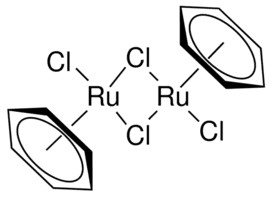
Benzeneruthenium(II) chloride dimer
Ru2(C6H6)2Cl4
Catalysis & Inorganic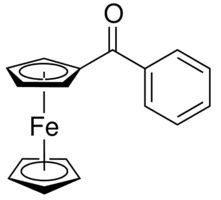
Benzoylferrocene
C17H14FeO
Catalysis & Inorganic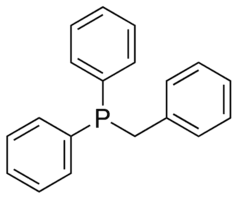
Benzyldiphenylphosphine
C6H5CH2P(C6H5)2
Catalysis & Inorganic
Beryllium
Be
Catalysis & Inorganic
Beryllium oxide
BeO
Catalysis & Inorganic![Bicyclo[2.2.1]hepta-2,5-diene-rhodium(I) chloride dimer — chemical structure, CAS 12257-42-0; Catalysis & Inorganic, fine chemical supplied by Tech Serve Solutions](/_next/image?url=https%3A%2F%2Fpub-f4d920c906024441a773a96f7098e551.r2.dev%2Fimages%2Fproducts%2F12257-42-0.png&w=3840&q=75)
Bicyclo[2.2.1]hepta-2,5-diene-rhodium(I) chloride dimer
Catalysis & Inorganic
![Bis[(10,11-η)-5-[(11bS)-dinaphtho[2,1-d:1′,2′-f][1,3,2]dioxaphosphepin-4-yl- κP4]-5H-dibenz[b,f]azepine]rhodium(I) tetrafluorobo — chemical structure, CAS 1228149-03-8; Catalysis & Inorganic, fine chemical supplied by Tech Serve Solutions](/_next/image?url=https%3A%2F%2Fpub-f4d920c906024441a773a96f7098e551.r2.dev%2Fimages%2Fproducts%2F1228149-03-8.png&w=3840&q=75)
Bis[(10,11-η)-5-[(11bS)-dinaphtho[2,1-d:1′,2′-f][1,3,2]dioxaphosphepin-4-yl- κP4]-5H-dibenz[b,f]azepine]rhodium(I) tetrafluorobo
1-d:1′
Catalysis & Inorganic![Bis[(2-dimethylamino)phenyl]amine nickel(II) chloride (C16H20ClN3Ni) — chemical structure, CAS 1033772-47-2; Catalysis & Inorganic, fine chemical supplied by Tech Serve Solutions](/_next/image?url=https%3A%2F%2Fpub-f4d920c906024441a773a96f7098e551.r2.dev%2Fimages%2Fproducts%2F1033772-47-2.png&w=3840&q=75)
Bis[(2-dimethylamino)phenyl]amine nickel(II) chloride
C16H20ClN3Ni
Catalysis & Inorganic▶ Explore more

Bis(cyclopentadienyl)cobalt(III) hexafluorophosphate
C10H10CoF6P
Catalysis & Inorganic
1-(4-Chlorophenyl)biguanide hydrochloride
ClC6H4NHC(NH)NHC(NH)NH2 · HCl
Chemical Synthesis
Bis(cyclopentadienyl)dimethylzirconium(IV)
Catalysis & Inorganic

1-(4-Chlorophenyl)ethanol
ClC6H4CH(CH3)OH
Chemical Synthesis