
Bis(2-methylallyl)(1,5-cyclooctadiene)ruthenium(II)
Bis(2-methylallyl)(1,5-cyclooctadiene)ruthenium(II) (CAS 12289-94-0; linear formula Ru(methylallyl)2(COD); molecular weight 319.45) is an organoruthenium(II) complex bearing two 2-methylallyl ligands and a chelating 1,5-cyclooctadiene ligand. Supplied as a defined-stoichiometry coordination compound, it is used principally as a versatile ruthenium precatalyst and precursor in homogeneous catalysis, including asymmetric and cross-coupling chemistry and the in situ generation of active ruthenium species for organic synthesis.
- IUPAC
- (1,5-Cyclooctadiene)bis(2-methylallyl)ruthenium,Bis(2-methallyl)(1,5-cyclooctadiene)ruthenium,Ru(Me-allyl)2(COD),Ruthenium(II) bis(2-methylallyl) 1,5-cyclooctadiene complex
- Synonyms
- Bis(2-methylallyl)(1,5-cyclooctadiene)ruthenium(II)(1,5-Cyclooctadiene)bis(2-methylallyl)rutheniumBis(2-methallyl)(1,5-cyclooctadiene)rutheniumRu(methylallyl)2(COD)Ru(Me-allyl)2(COD)Ruthenium(II) bis(2-methylallyl) 1,5-cyclooctadiene complex
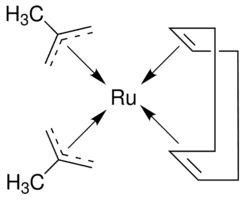
Ruthenium precatalyst for homogeneous catalysis
Acts as a well-defined ruthenium(II) source that combines with chiral or achiral ligands to generate active catalysts in situ. It is associated with precatalyst platforms for asymmetric and cross-coupling catalysis.
Asymmetric hydrogenation catalyst synthesis
Serves as a convenient precursor for preparing chiral ruthenium complexes used in enantioselective transformations. The labile methylallyl and cyclooctadiene ligands are readily displaced to install the desired ligand set.
Catalyst and ligand research
Used in academic and industrial laboratories to study ruthenium-mediated reactivity and to develop new catalytic systems. The defined structure supports reproducible catalyst preparation and screening.
Precursor to supported and molecular ruthenium species
Functions as a clean organometallic source of ruthenium for the controlled generation of molecular and nanostructured ruthenium materials in synthetic and materials chemistry.
| Molecular weight | 319.45 |
|---|---|
| Linear formula | Ru(methylallyl)2(COD) |
| Storage temperature | −20°C |
| Application | Umicore Precatalysts for Asymmetric and Cross-Coupling Catalysis |
| Melting point | 81.7-82.4 °C(lit.) |

Hazard statements
- H261In contact with water releases flammable gas
Precautionary statements
- P231Handle under inert gas
- P422
| Protective equipment | Eyeshields, full-face particle respirator type N100 (US), Gloves, respirator cartridge type N100 (US), type P1 (EN143) respirator filter, type P3 (EN 143) respirator cartridges |
|---|---|
| Transport (UN / ADR) | UN 3395 4.3 / PGIII |
| Water hazard class (WGK, DE) | 3 |
| Hazard codes (EU) | F |
| Risk statements (R) | 15 |
| Safety statements (S) | 43 |
Hazard information is provided for guidance. Always consult the product Safety Data Sheet (SDS), available on request, before handling.
| Greener Alternative Product Characteristics | Catalysis |
|---|
Documentation
Every batch ships with a Certificate of Analysis covering assay, identity and purity; the grade is confirmed against your enquiry. Safety Data Sheets and technical data sheets are available on request.
Supply & logistics
Samples for technical evaluation; bulk MOQ by grade and packaging. In-stock material ships in 7–10 working days, worldwide, with full export documentation.
What is Bis(2-methylallyl)(1,5-cyclooctadiene)ruthenium(II) used for?
+
It is used principally as a ruthenium(II) precatalyst and precursor in homogeneous catalysis. The labile 2-methylallyl and 1,5-cyclooctadiene ligands are readily displaced, allowing chemists to generate active ruthenium catalysts in situ for asymmetric and cross-coupling reactions and related synthetic work.
What is the CAS number and molecular formula of Bis(2-methylallyl)(1,5-cyclooctadiene)ruthenium(II)?
+
Its CAS number is 12289-94-0 and its linear formula is Ru(methylallyl)2(COD), corresponding to a molecular weight of 319.45. The MDL number is MFCD00216965. It is an organoruthenium(II) coordination complex.
What grade and purity does Tech Serve Solutions supply?
+
We supply this compound as a research and catalysis grade organometallic reagent against an agreed specification. We do not represent it as USP, BP or EP grade. Exact assay and analytical details for each lot are confirmed on the certificate of analysis at the time of enquiry or order.
What are the safety and handling requirements for this compound?
+
It is classified GHS02 with the signal word Warning and hazard statement H261 (in contact with water releases flammable gas); the EU classification is F (R15). It must be kept dry and away from moisture, handled under inert conditions where appropriate, and stored at approximately minus 20 degrees Celsius. Always consult the Safety Data Sheet and use the indicated personal protective equipment before handling.
How is Bis(2-methylallyl)(1,5-cyclooctadiene)ruthenium(II) packed, shipped and exported?
+
It is packed in tightly sealed, moisture-protected containers suitable for an air- and water-sensitive solid and is typically cold-chain or temperature-controlled where required. For transport it is classified under UN 3395, class 4.3, packing group III, and is shipped with full dangerous-goods documentation in line with applicable regulations for export.
How do I request a sample or quote?
+
Contact Tech Serve Solutions with your required quantity, packaging and destination, and our team will respond with availability, specification, lead time and a formal quotation. Samples can be arranged for qualification subject to availability and the relevant transport requirements for this water-reactive material.
▶ Related products
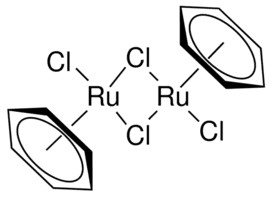
Benzeneruthenium(II) chloride dimer
Ru2(C6H6)2Cl4
Catalysis & Inorganic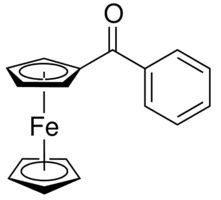
Benzoylferrocene
C17H14FeO
Catalysis & Inorganic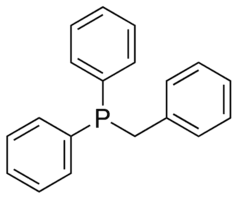
Benzyldiphenylphosphine
C6H5CH2P(C6H5)2
Catalysis & Inorganic
Beryllium
Be
Catalysis & Inorganic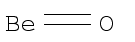
Beryllium oxide
BeO
Catalysis & Inorganic![Bicyclo[2.2.1]hepta-2,5-diene-rhodium(I) chloride dimer — chemical structure, CAS 12257-42-0; Catalysis & Inorganic, fine chemical supplied by Tech Serve Solutions](/_next/image?url=https%3A%2F%2Fpub-f4d920c906024441a773a96f7098e551.r2.dev%2Fimages%2Fproducts%2F12257-42-0.png&w=3840&q=75)
Bicyclo[2.2.1]hepta-2,5-diene-rhodium(I) chloride dimer
Catalysis & Inorganic
![Bis[(10,11-η)-5-[(11bS)-dinaphtho[2,1-d:1′,2′-f][1,3,2]dioxaphosphepin-4-yl- κP4]-5H-dibenz[b,f]azepine]rhodium(I) tetrafluorobo — chemical structure, CAS 1228149-03-8; Catalysis & Inorganic, fine chemical supplied by Tech Serve Solutions](/_next/image?url=https%3A%2F%2Fpub-f4d920c906024441a773a96f7098e551.r2.dev%2Fimages%2Fproducts%2F1228149-03-8.png&w=3840&q=75)
Bis[(10,11-η)-5-[(11bS)-dinaphtho[2,1-d:1′,2′-f][1,3,2]dioxaphosphepin-4-yl- κP4]-5H-dibenz[b,f]azepine]rhodium(I) tetrafluorobo
1-d:1′
Catalysis & Inorganic![Bis[(2-dimethylamino)phenyl]amine nickel(II) chloride (C16H20ClN3Ni) — chemical structure, CAS 1033772-47-2; Catalysis & Inorganic, fine chemical supplied by Tech Serve Solutions](/_next/image?url=https%3A%2F%2Fpub-f4d920c906024441a773a96f7098e551.r2.dev%2Fimages%2Fproducts%2F1033772-47-2.png&w=3840&q=75)
Bis[(2-dimethylamino)phenyl]amine nickel(II) chloride
C16H20ClN3Ni
Catalysis & Inorganic▶ Explore more

Bis(cyclopentadienyl)cobalt(III) hexafluorophosphate
C10H10CoF6P
Catalysis & Inorganic
1-(4-Chlorophenyl)biguanide hydrochloride
ClC6H4NHC(NH)NHC(NH)NH2 · HCl
Chemical Synthesis
Bis(cyclopentadienyl)dimethylzirconium(IV)
Catalysis & Inorganic

1-(4-Chlorophenyl)ethanol
ClC6H4CH(CH3)OH
Chemical Synthesis