
Bis(2-methoxyphenyl)phosphine
Bis(2-methoxyphenyl)phosphine (CAS 10177-79-4; C14H15O2P; molar mass 246.24 g/mol), also known as di-o-anisylphosphine, is a secondary aryl phosphine supplied as a low-melting solid (m.p. 86-90 degC). The two ortho-methoxy aryl groups make it a versatile ligand precursor and reactant in organometallic and catalytic chemistry. Tech Serve Solutions supplies it at 97% assay as a research-grade reagent for ligand synthesis, palladium and rhodium catalysis, and related coordination studies.
- IUPAC
- Di-o-anisylphosphine
- Synonyms
- Bis(2-methoxyphenyl)phosphineDi-o-anisylphosphineBis(o-anisyl)phosphineBis(2-methoxyphenyl)phosphaneCAS 10177-79-4
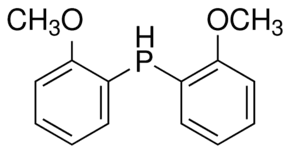
Phosphine ligand synthesis
As a secondary aryl phosphine bearing two ortho-anisyl groups, it serves as a building block for tertiary phosphines and polydentate ligands. It is reported in the preparation of bis-bidentate tetraphos ligands used to assemble dinuclear palladium(II) complexes.
Rhodium and palladium coordination chemistry
The compound is used to prepare neutral rhodium(I) complexes and related metal complexes, supporting research into homogeneous catalysts and structure-reactivity studies.
Cross-coupling and P-O ligand chemistry
It is employed in Suzuki-Miyaura coupling routes towards alkyl-derivatised phosphine sulfonate (P-O) ligands, which are of interest in palladium-catalysed reactions.
Olefin and CO copolymerisation
Phosphine ligands derived from this reagent feature in CO-ethylene copolymerisation chemistry, where the donor properties of the ligand influence catalyst behaviour.
Allylation of phenols
The reagent is documented as a reactant in the allylation of phenols, illustrating its broader role in synthetic and catalytic transformations.
| Molecular weight | 246.24 |
|---|---|
| Empirical formula | C14H15O2P |
| Assay | 97% |
| Application | Reactant for:• Allylation of phenols1• Synthesis of neutral rhodium(I) complexes2• Dinuclear Pd(II) complexes bearing bis-bidentate tetraphos ligands3• CO-ethylene copolymerization reactions4• Suzuki-Miyaura reaction for synthesis of alkyl derivatives phosphine sulfonate (P-O) ligands5 |
| Melting point | 86-90 °C |


Hazard statements
- H228Flammable solid
- H315Causes skin irritation
- H319Causes serious eye irritation
- H335May cause respiratory irritation
Precautionary statements
- P210Keep away from heat, sparks and open flames. No smoking
- P261Avoid breathing dust, fume, gas or vapours
- P305IF IN EYES
| Transport (UN / ADR) | UN 1325 4.1 / PGII |
|---|---|
| Water hazard class (WGK, DE) | 3 |
| Hazard codes (EU) | F,Xi |
| Risk statements (R) | 11-36/37/38 |
| Safety statements (S) | 26 |
Hazard information is provided for guidance. Always consult the product Safety Data Sheet (SDS), available on request, before handling.
Documentation
Every batch ships with a Certificate of Analysis covering assay, identity and purity; the grade is confirmed against your enquiry. Safety Data Sheets and technical data sheets are available on request.
Supply & logistics
Samples for technical evaluation; bulk MOQ by grade and packaging. In-stock material ships in 7–10 working days, worldwide, with full export documentation.
What is Bis(2-methoxyphenyl)phosphine used for?
+
It is used principally as a ligand precursor and reactant in organometallic and catalytic chemistry. Documented uses include the synthesis of phosphine and tetraphos ligands, preparation of rhodium(I) and palladium(II) complexes, Suzuki-Miyaura routes to phosphine sulfonate (P-O) ligands, CO-ethylene copolymerisation, and the allylation of phenols.
What is the CAS number and molecular formula of Bis(2-methoxyphenyl)phosphine?
+
The CAS number is 10177-79-4 and the molecular formula is C14H15O2P, with a molecular weight of 246.24 g/mol. It is a secondary aryl phosphine, also called di-o-anisylphosphine, and melts at about 86-90 degC.
What grade and purity does Tech Serve Solutions supply?
+
We supply Bis(2-methoxyphenyl)phosphine at 97% assay as a research and reagent grade material for synthesis and catalysis. We do not represent it as a USP, BP or EP pharmacopoeial grade. A certificate of analysis is provided with each batch, and full specifications are available on request.
What are the safety and handling requirements?
+
It is classified under GHS02 and GHS07 with signal word Warning. The hazard statements are H228 (flammable solid), H315 (causes skin irritation), H319 (causes serious eye irritation) and H335 (may cause respiratory irritation). Keep away from heat and ignition sources, avoid dust formation, wear suitable gloves and eye protection, and use adequate ventilation (P210, P261, P305+P351+P338). Always consult the Safety Data Sheet before use.
How is Bis(2-methoxyphenyl)phosphine packed, shipped and exported?
+
It is packed in tightly sealed containers appropriate to the order quantity and labelled to GHS requirements. As a flammable solid it is classified for transport under UN 1325, Class 4.1, Packing Group II, and is shipped in compliant packaging with the relevant dangerous-goods documentation. We export worldwide with full export paperwork.
How do I request a sample or quote?
+
Contact Tech Serve Solutions with your required quantity, purity and destination, and our team will respond with availability, lead time and documentation. Samples may be available subject to dangerous-goods shipping requirements.
▶ Related products
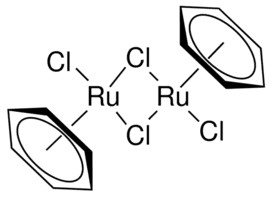
Benzeneruthenium(II) chloride dimer
Ru2(C6H6)2Cl4
Catalysis & Inorganic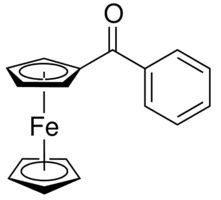
Benzoylferrocene
C17H14FeO
Catalysis & Inorganic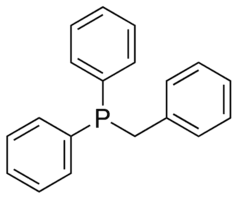
Benzyldiphenylphosphine
C6H5CH2P(C6H5)2
Catalysis & Inorganic
Beryllium
Be
Catalysis & Inorganic
Beryllium oxide
BeO
Catalysis & Inorganic![Bicyclo[2.2.1]hepta-2,5-diene-rhodium(I) chloride dimer — chemical structure, CAS 12257-42-0; Catalysis & Inorganic, fine chemical supplied by Tech Serve Solutions](/_next/image?url=https%3A%2F%2Fpub-f4d920c906024441a773a96f7098e551.r2.dev%2Fimages%2Fproducts%2F12257-42-0.png&w=3840&q=75)
Bicyclo[2.2.1]hepta-2,5-diene-rhodium(I) chloride dimer
Catalysis & Inorganic
![Bis[(10,11-η)-5-[(11bS)-dinaphtho[2,1-d:1′,2′-f][1,3,2]dioxaphosphepin-4-yl- κP4]-5H-dibenz[b,f]azepine]rhodium(I) tetrafluorobo — chemical structure, CAS 1228149-03-8; Catalysis & Inorganic, fine chemical supplied by Tech Serve Solutions](/_next/image?url=https%3A%2F%2Fpub-f4d920c906024441a773a96f7098e551.r2.dev%2Fimages%2Fproducts%2F1228149-03-8.png&w=3840&q=75)
Bis[(10,11-η)-5-[(11bS)-dinaphtho[2,1-d:1′,2′-f][1,3,2]dioxaphosphepin-4-yl- κP4]-5H-dibenz[b,f]azepine]rhodium(I) tetrafluorobo
1-d:1′
Catalysis & Inorganic![Bis[(2-dimethylamino)phenyl]amine nickel(II) chloride (C16H20ClN3Ni) — chemical structure, CAS 1033772-47-2; Catalysis & Inorganic, fine chemical supplied by Tech Serve Solutions](/_next/image?url=https%3A%2F%2Fpub-f4d920c906024441a773a96f7098e551.r2.dev%2Fimages%2Fproducts%2F1033772-47-2.png&w=3840&q=75)
Bis[(2-dimethylamino)phenyl]amine nickel(II) chloride
C16H20ClN3Ni
Catalysis & Inorganic▶ Explore more

Bis(cyclopentadienyl)cobalt(III) hexafluorophosphate
C10H10CoF6P
Catalysis & Inorganic
1-(4-Chlorophenyl)biguanide hydrochloride
ClC6H4NHC(NH)NHC(NH)NH2 · HCl
Chemical Synthesis
Bis(cyclopentadienyl)dimethylzirconium(IV)
Catalysis & Inorganic

1-(4-Chlorophenyl)ethanol
ClC6H4CH(CH3)OH
Chemical Synthesis