
Bis(2-furyl)phosphine chloride
Bis(2-furyl)phosphine chloride (CAS 181257-35-2; C8H6ClO2P; molar mass 200.56 g/mol) is a trivalent organophosphorus building block, a phosphinous chloride bearing two 2-furyl groups on a P-Cl centre. It is a moisture-sensitive, water-reactive and corrosive liquid used in research-scale synthesis as a precursor to furyl-substituted phosphines and chiral diphosphine ligands. Tech Serve Solutions supplies it as a research-grade reagent (assay 85%) to laboratories worldwide.
- IUPAC
- Di-2-furanylphosphinous chloride
- Synonyms
- Bis(2-furyl)phosphine chlorideDi-2-furanylphosphinous chlorideDi(2-furyl)phosphinous chlorideBis(2-furyl)phosphinous chlorideChlorobis(2-furyl)phosphineChlorodi(2-furyl)phosphineCAS 181257-35-2

Chiral diphosphine ligand synthesis
Used as a reactant in the preparation of ferrocene-based chiral diphosphines and centrostereogenic 1,3-bidentate ferrocenyldiphosphane ligands. The reactive P-Cl bond allows the bis(2-furyl)phosphino group to be installed onto chiral scaffolds for asymmetric catalysis.
Phosphine-containing amino acids
Serves as a phosphorus precursor for the synthesis of phosphine-containing amino acids, introducing a furyl-bearing phosphino moiety into functionalised building blocks for further study.
Hydrophosphination and P-C bond formation
Acts as a reagent for the hydrophosphination of functionalised alkenes, providing a route to new carbon-phosphorus bonds. The electron-rich 2-furyl substituents influence the steric and electronic character of the resulting phosphine.
Sigmatropic rearrangement and allylic phosphinites
Employed in the stereoselective [2,3] sigmatropic rearrangement of acyclic allylic phosphinites, a transformation of interest in stereocontrolled organophosphorus chemistry.
alpha-Arylation of aldehydes
Used as a reactant in the alpha-arylation of aldehydes, contributing to the development of phosphine reagents and ligands for synthetic methodology.
| Molecular weight | 200.56 |
|---|---|
| Empirical formula | C8H6ClO2P |
| Assay | 85% |
| Density | 1.287 g/mL at 25 °C |
| Refractive index | n20/D 1.593 |
| Application | Reactant for synthesis of:• Centrostereogenic 1,3-bidentate ferrocenyldiphosphane ligands1• Ferrocene-based chiral diphosphine2• Phosphine containing amino acids3Reactant for:• α-Arylation of aldehydes4• Stereoselective [2,3] tropic rearrangement of acyclic allylic phosphinites5• Hydrophosphination of functionalized alkenes6 |


Hazard statements
- H261In contact with water releases flammable gas
- H314Causes severe skin burns and eye damage
Precautionary statements
- P231Handle under inert gas
- P280Wear protective gloves, clothing and eye/face protection
- P305IF IN EYES
- P310Immediately call a POISON CENTER or doctor
- P422
| Flash point | >110 °C / >230 °F |
|---|---|
| Transport (UN / ADR) | UN 3129 4.3/PG 2 |
| Water hazard class (WGK, DE) | 3 |
| Hazard codes (EU) | C |
| Risk statements (R) | 14-34 |
| Safety statements (S) | 26-36/37/39-45 |
Hazard information is provided for guidance. Always consult the product Safety Data Sheet (SDS), available on request, before handling.
Documentation
Every batch ships with a Certificate of Analysis covering assay, identity and purity; the grade is confirmed against your enquiry. Safety Data Sheets and technical data sheets are available on request.
Supply & logistics
Samples for technical evaluation; bulk MOQ by grade and packaging. In-stock material ships in 7–10 working days, worldwide, with full export documentation.
What is Bis(2-furyl)phosphine chloride used for?
+
It is a research-scale organophosphorus reagent used mainly as a phosphorus building block. Typical uses include the synthesis of furyl-substituted phosphines, ferrocene-based chiral diphosphine ligands and phosphine-containing amino acids, and as a reactant in hydrophosphination of alkenes and [2,3] sigmatropic rearrangements of allylic phosphinites.
What is the CAS number and molecular formula of Bis(2-furyl)phosphine chloride?
+
The CAS number is 181257-35-2 and the molecular formula is C8H6ClO2P (Hill notation), with a molecular weight of 200.56 g/mol. Its MDL number is MFCD01630851. It is also known as di-2-furanylphosphinous chloride.
What grade and purity does Tech Serve Solutions supply?
+
Tech Serve Solutions supplies Bis(2-furyl)phosphine chloride as a research-grade reagent with an assay of approximately 85%. We do not represent it as USP, BP or EP / pharmacopoeia grade. A current Certificate of Analysis can be provided with each batch, and additional specification details are available on request.
What are the safety and handling hazards of Bis(2-furyl)phosphine chloride?
+
It is classified as Danger (GHS02, GHS05): H261 - in contact with water releases flammable gas; and H314 - causes severe skin burns and eye damage. It is moisture-sensitive and water-reactive. Handle under dry, inert conditions away from water and ignition sources, wearing suitable eye, face and skin protection, and consult the Safety Data Sheet before use.
How is Bis(2-furyl)phosphine chloride classified for transport?
+
It is assigned UN 3129, Transport Class 4.3 (substances which in contact with water emit flammable gases), Packing Group II. It is shipped in appropriate moisture-tight, regulation-compliant packaging with full dangerous-goods documentation. Its water hazard class is WGK 3 (severe hazard to waters).
How is Bis(2-furyl)phosphine chloride packed, shipped and exported?
+
It is supplied in sealed, moisture-tight containers sized to the order, with tamper-evident packaging and full labelling. As a water-reactive Class 4.3 dangerous good it is exported with the required UN 3129 transport documentation and Safety Data Sheet, and shipped worldwide through established freight channels in line with applicable regulations.
How do I request a sample or quote?
+
Contact Tech Serve Solutions with your required quantity, purity and packaging preferences, and we will confirm availability, lead time and export terms. Sample and bulk enquiries are both welcome; please reference CAS 181257-35-2 when making your request.
▶ Related products
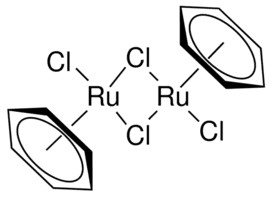
Benzeneruthenium(II) chloride dimer
Ru2(C6H6)2Cl4
Catalysis & Inorganic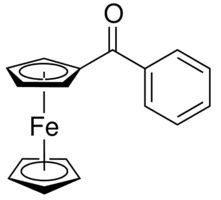
Benzoylferrocene
C17H14FeO
Catalysis & Inorganic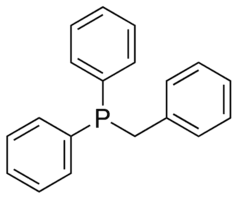
Benzyldiphenylphosphine
C6H5CH2P(C6H5)2
Catalysis & Inorganic
Beryllium
Be
Catalysis & Inorganic
Beryllium oxide
BeO
Catalysis & Inorganic![Bicyclo[2.2.1]hepta-2,5-diene-rhodium(I) chloride dimer — chemical structure, CAS 12257-42-0; Catalysis & Inorganic, fine chemical supplied by Tech Serve Solutions](/_next/image?url=https%3A%2F%2Fpub-f4d920c906024441a773a96f7098e551.r2.dev%2Fimages%2Fproducts%2F12257-42-0.png&w=3840&q=75)
Bicyclo[2.2.1]hepta-2,5-diene-rhodium(I) chloride dimer
Catalysis & Inorganic
![Bis[(10,11-η)-5-[(11bS)-dinaphtho[2,1-d:1′,2′-f][1,3,2]dioxaphosphepin-4-yl- κP4]-5H-dibenz[b,f]azepine]rhodium(I) tetrafluorobo — chemical structure, CAS 1228149-03-8; Catalysis & Inorganic, fine chemical supplied by Tech Serve Solutions](/_next/image?url=https%3A%2F%2Fpub-f4d920c906024441a773a96f7098e551.r2.dev%2Fimages%2Fproducts%2F1228149-03-8.png&w=3840&q=75)
Bis[(10,11-η)-5-[(11bS)-dinaphtho[2,1-d:1′,2′-f][1,3,2]dioxaphosphepin-4-yl- κP4]-5H-dibenz[b,f]azepine]rhodium(I) tetrafluorobo
1-d:1′
Catalysis & Inorganic![Bis[(2-dimethylamino)phenyl]amine nickel(II) chloride (C16H20ClN3Ni) — chemical structure, CAS 1033772-47-2; Catalysis & Inorganic, fine chemical supplied by Tech Serve Solutions](/_next/image?url=https%3A%2F%2Fpub-f4d920c906024441a773a96f7098e551.r2.dev%2Fimages%2Fproducts%2F1033772-47-2.png&w=3840&q=75)
Bis[(2-dimethylamino)phenyl]amine nickel(II) chloride
C16H20ClN3Ni
Catalysis & Inorganic▶ Explore more

Bis(cyclopentadienyl)cobalt(III) hexafluorophosphate
C10H10CoF6P
Catalysis & Inorganic
1-(4-Chlorophenyl)biguanide hydrochloride
ClC6H4NHC(NH)NHC(NH)NH2 · HCl
Chemical Synthesis
Bis(cyclopentadienyl)dimethylzirconium(IV)
Catalysis & Inorganic

1-(4-Chlorophenyl)ethanol
ClC6H4CH(CH3)OH
Chemical Synthesis