
Bis(2,6-diphenylphenoxy)niobium(V) chloride, benzene complex (2:1)
Bis(2,6-diphenylphenoxy)niobium(V) chloride, benzene complex (2:1) (CAS 699012-35-6) is an organometallic niobium(V) aryloxide complex with the empirical formula C42H58Cl6Nb2O4 and a molecular weight of 1025.44. The bulky 2,6-diphenylphenoxide ligands make it a sterically hindered, moisture-sensitive Lewis-acidic reagent used chiefly in catalysis, inorganic chemistry and organic synthesis research. Tech Serve Solutions supplies it as a specialist research-grade reagent for laboratory and process-development use.
- Synonyms
- Bis(2,6-diphenylphenoxy)niobium(V) chloride, benzene complex (2:1)CAS 699012-35-6C42H58Cl6Nb2O4niobium(V) bis(2,6-diphenylphenoxide) chloride benzene complexMFCD03093930
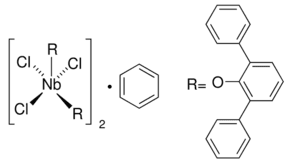
Lewis-acid catalysis
The electrophilic niobium(V) centre, supported by bulky aryloxide ligands, can act as a Lewis-acid catalyst in selected organic transformations. Reaction selection should be confirmed against the user's own conditions.
Organometallic and coordination chemistry research
It serves as a well-defined niobium aryloxide building block for studying metal-ligand bonding, reactivity and the chemistry of early-transition-metal complexes.
Chemical synthesis reagent
The complex is used as a specialist reagent in laboratory-scale synthesis and methodology development where a sterically demanding, oxophilic niobium source is required.
Catalyst and precursor development
As a defined molecular niobium precursor, it supports exploratory work on new catalytic systems and on the preparation of related niobium species under controlled, anhydrous conditions.
| Molecular weight | 1025.44 |
|---|---|
| Empirical formula | C42H58Cl6Nb2O4 |


Hazard statements
- H314Causes severe skin burns and eye damage
- H340May cause genetic defects
- H350May cause cancer
- H373May cause damage to organs through prolonged exposure
Precautionary statements
- P201Obtain special instructions before use
- P280Wear protective gloves, clothing and eye/face protection
- P305IF IN EYES
- P310Immediately call a POISON CENTER or doctor
| Protective equipment | Eyeshields, Faceshields, Gloves, type P2 (EN 143) respirator cartridges |
|---|---|
| Flash point | 66 °C / 150.8 °F |
| Transport (UN / ADR) | UN 1759 8 / PGII |
| Water hazard class (WGK, DE) | 3 |
| Hazard codes (EU) | T |
| Risk statements (R) | 45-46-34-48/20/21/22 |
| Safety statements (S) | 53-26-36/37/39-45 |
Hazard information is provided for guidance. Always consult the product Safety Data Sheet (SDS), available on request, before handling.
Documentation
Every batch ships with a Certificate of Analysis covering assay, identity and purity; the grade is confirmed against your enquiry. Safety Data Sheets and technical data sheets are available on request.
Supply & logistics
Samples for technical evaluation; bulk MOQ by grade and packaging. In-stock material ships in 7–10 working days, worldwide, with full export documentation.
What is Bis(2,6-diphenylphenoxy)niobium(V) chloride, benzene complex (2:1) used for?
+
It is used mainly as a research reagent in catalysis, inorganic chemistry and organic synthesis. The sterically hindered, Lewis-acidic niobium(V) aryloxide centre makes it of interest for organometallic studies and for exploratory catalyst and precursor development. Specific suitability should always be verified for the intended reaction.
What is the CAS number and molecular formula of Bis(2,6-diphenylphenoxy)niobium(V) chloride, benzene complex (2:1)?
+
The CAS number is 699012-35-6 and the empirical formula (Hill notation) is C42H58Cl6Nb2O4, corresponding to a molecular weight of 1025.44. The MDL number is MFCD03093930.
What grade and purity does Tech Serve Solutions supply?
+
Tech Serve Solutions supplies this material as a specialist research-grade reagent for laboratory and process-development use. We do not represent it as USP, BP or EP grade. Current assay, batch specifications and a certificate of analysis are provided on request so you can confirm suitability before ordering.
What are the safety and handling hazards?
+
This is a hazardous material. It is classified under GHS with signal word Danger and pictograms GHS05 and GHS08. The hazard statements are H314 (causes severe skin burns and eye damage), H340 (may cause genetic defects), H350 (may cause cancer) and H373 (may cause damage to organs through prolonged or repeated exposure). It is also moisture-sensitive. Handle only with suitable engineering controls and personal protective equipment, including eye and face protection, gloves and a type P2 (EN 143) respirator, and consult the Safety Data Sheet before use.
How is this product packed, shipped and exported?
+
The complex is packed under inert, moisture-excluding conditions in appropriately labelled containers sized to your requirement. For transport it is classified as UN 1759, Class 8 (corrosive solid), Packing Group II, and is shipped in compliance with applicable dangerous-goods regulations. Tech Serve Solutions arranges export documentation and a Safety Data Sheet with each consignment.
How do I request a sample or quote?
+
Contact Tech Serve Solutions with your required quantity, packaging and destination, and our team will respond with availability, lead time and a formal quotation. Specification documents and a certificate of analysis can be supplied to support your evaluation.
▶ Related products
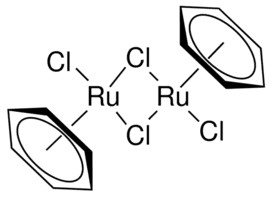
Benzeneruthenium(II) chloride dimer
Ru2(C6H6)2Cl4
Catalysis & Inorganic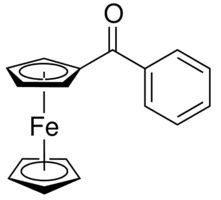
Benzoylferrocene
C17H14FeO
Catalysis & Inorganic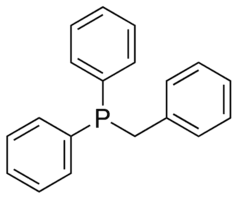
Benzyldiphenylphosphine
C6H5CH2P(C6H5)2
Catalysis & Inorganic
Beryllium
Be
Catalysis & Inorganic
Beryllium oxide
BeO
Catalysis & Inorganic![Bicyclo[2.2.1]hepta-2,5-diene-rhodium(I) chloride dimer — chemical structure, CAS 12257-42-0; Catalysis & Inorganic, fine chemical supplied by Tech Serve Solutions](/_next/image?url=https%3A%2F%2Fpub-f4d920c906024441a773a96f7098e551.r2.dev%2Fimages%2Fproducts%2F12257-42-0.png&w=3840&q=75)
Bicyclo[2.2.1]hepta-2,5-diene-rhodium(I) chloride dimer
Catalysis & Inorganic
![Bis[(10,11-η)-5-[(11bS)-dinaphtho[2,1-d:1′,2′-f][1,3,2]dioxaphosphepin-4-yl- κP4]-5H-dibenz[b,f]azepine]rhodium(I) tetrafluorobo — chemical structure, CAS 1228149-03-8; Catalysis & Inorganic, fine chemical supplied by Tech Serve Solutions](/_next/image?url=https%3A%2F%2Fpub-f4d920c906024441a773a96f7098e551.r2.dev%2Fimages%2Fproducts%2F1228149-03-8.png&w=3840&q=75)
Bis[(10,11-η)-5-[(11bS)-dinaphtho[2,1-d:1′,2′-f][1,3,2]dioxaphosphepin-4-yl- κP4]-5H-dibenz[b,f]azepine]rhodium(I) tetrafluorobo
1-d:1′
Catalysis & Inorganic![Bis[(2-dimethylamino)phenyl]amine nickel(II) chloride (C16H20ClN3Ni) — chemical structure, CAS 1033772-47-2; Catalysis & Inorganic, fine chemical supplied by Tech Serve Solutions](/_next/image?url=https%3A%2F%2Fpub-f4d920c906024441a773a96f7098e551.r2.dev%2Fimages%2Fproducts%2F1033772-47-2.png&w=3840&q=75)
Bis[(2-dimethylamino)phenyl]amine nickel(II) chloride
C16H20ClN3Ni
Catalysis & Inorganic▶ Explore more

Bis(cyclopentadienyl)cobalt(III) hexafluorophosphate
C10H10CoF6P
Catalysis & Inorganic
1-(4-Chlorophenyl)biguanide hydrochloride
ClC6H4NHC(NH)NHC(NH)NH2 · HCl
Chemical Synthesis
Bis(cyclopentadienyl)dimethylzirconium(IV)
Catalysis & Inorganic

1-(4-Chlorophenyl)ethanol
ClC6H4CH(CH3)OH
Chemical Synthesis