
Bis(1,5-cyclooctadiene)rhodium(I) hexafluoroantimonate
Bis(1,5-cyclooctadiene)rhodium(I) hexafluoroantimonate (CAS 130296-28-5; C16H24F6RhSb; molar mass 555.02 g/mol) is a cationic rhodium(I) complex, [Rh(COD)2]SbF6, supplied as a solid of 97% assay. The two labile 1,5-cyclooctadiene ligands and weakly coordinating hexafluoroantimonate counter-ion make it a convenient cationic rhodium precursor for homogeneous catalysis, including asymmetric hydrogenation, C-C bond-forming reactions and ligand-exchange chemistry. Tech Serve Solutions supplies it as a research-grade reagent to laboratories worldwide.
- Synonyms
- Bis(1,5-cyclooctadiene)rhodium(I) hexafluoroantimonateBis(1,5-cyclooctadiene)rhodium(I) hexafluoroantimonate(V)[Rh(COD)2]SbF6Bis(cycloocta-1,5-diene)rhodium(I) hexafluoroantimonateRhodium(I) bis(1,5-cyclooctadiene) hexafluoroantimonateCAS 130296-28-5
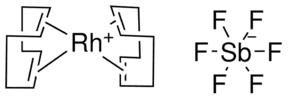
Cationic rhodium catalyst precursor
Serves as a source of the [Rh(COD)2]+ cation, in which the two 1,5-cyclooctadiene ligands are readily displaced and the hexafluoroantimonate ion is weakly coordinating. This makes it a versatile precatalyst for homogeneous rhodium-catalysed transformations.
Asymmetric metallocomplex catalysis
Used in the preparation and study of rhodium complexes bearing chiral phosphorus mono- and bidentate ligands, such as diamidophosphite ligands, for asymmetric catalysis. Combination with a chiral ligand generates the active enantioselective catalyst in situ.
C-C bond-forming hydrogenation
Applied as a catalyst in C-C bond-forming hydrogenation chemistry, where rhodium mediates coupling under a hydrogen atmosphere or transfer-hydrogenation conditions to build new carbon-carbon bonds.
[3+2] cycloaddition catalysis
Employed as a rhodium catalyst for [3+2] cycloaddition reactions used in the construction of carbocyclic and heterocyclic ring systems in synthetic chemistry.
Research and method development
Used in academic and industrial laboratories for the development of new homogeneous catalytic methods, ligand screening and mechanistic studies in organometallic chemistry.
| Molecular weight | 555.02 |
|---|---|
| Empirical formula | C16H24F6RhSb |
| Assay | 97% |
| Storage temperature | −20°C |
| Application | Catalyst for:• [3+2] Cycloaddition1• Preparation of diastereomeric chiral phosphorus mon- and bidentate diamidophosphite ligands based on dianydromannitol and their use in asymmetric metallocomplex catalysis2• C-C bond-forming hydrogenation3,4 |
| Melting point | 58-60 °C |
| Protective equipment | Eyeshields, Gloves, type N95 (US), type P1 (EN143) respirator filter |
|---|---|
| Water hazard class (WGK, DE) | 3 |
Hazard information is provided for guidance. Always consult the product Safety Data Sheet (SDS), available on request, before handling.
Documentation
Every batch ships with a Certificate of Analysis covering assay, identity and purity; the grade is confirmed against your enquiry. Safety Data Sheets and technical data sheets are available on request.
Supply & logistics
Samples for technical evaluation; bulk MOQ by grade and packaging. In-stock material ships in 7–10 working days, worldwide, with full export documentation.
What is Bis(1,5-cyclooctadiene)rhodium(I) hexafluoroantimonate used for?
+
It is used as a cationic rhodium(I) catalyst precursor in homogeneous catalysis. Documented uses for this compound include asymmetric metallocomplex catalysis with chiral phosphorus ligands, C-C bond-forming hydrogenation and [3+2] cycloaddition reactions, where the labile cyclooctadiene ligands are exchanged for the ligands and substrates of interest.
What is the CAS number and molecular formula of Bis(1,5-cyclooctadiene)rhodium(I) hexafluoroantimonate?
+
Its CAS number is 130296-28-5 and its empirical formula in Hill notation is C16H24F6RhSb, corresponding to a molecular weight of 555.02 g/mol. It is the cationic complex commonly written as [Rh(COD)2]SbF6.
What grade and purity does Tech Serve Solutions supply?
+
Tech Serve Solutions supplies this compound as a research-grade reagent with a typical assay of 97%, presented as a solid (melting point 58-60 °C). We do not represent it as USP, BP or EP pharmacopoeia grade. Batch-specific assay details can be confirmed on the certificate of analysis at the time of order.
How should Bis(1,5-cyclooctadiene)rhodium(I) hexafluoroantimonate be handled and stored?
+
Handle it as an air- and moisture-sensitive organometallic reagent under an inert atmosphere where appropriate, and store it cold at around -20 °C. Use eye protection and gloves, and an N95 (US) or P1 (EN143) respirator filter to avoid inhalation of dust. It carries German Water Hazard Class WGK 3 (severely hazardous to water), so prevent any release to drains or watercourses. Always consult the current Safety Data Sheet before use.
How is Bis(1,5-cyclooctadiene)rhodium(I) hexafluoroantimonate packed, shipped and exported?
+
It is supplied in sealed, inert containers appropriate to the order quantity, with cold storage conditions maintained where required. As a specialist exporter, Tech Serve Solutions arranges compliant international documentation and labelling and ships against the relevant Safety Data Sheet. Packaging and transport details are confirmed per order and destination.
How do I request a sample or quote?
+
Contact Tech Serve Solutions with your required quantity, grade and destination, and our team will respond with availability, lead time and a formal quotation. Sample requests can be accommodated subject to availability and applicable handling requirements.
▶ Related products
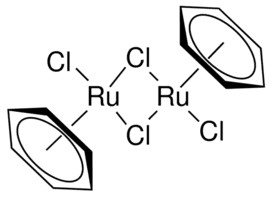
Benzeneruthenium(II) chloride dimer
Ru2(C6H6)2Cl4
Catalysis & Inorganic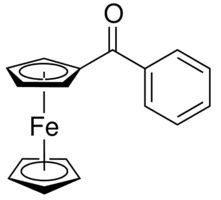
Benzoylferrocene
C17H14FeO
Catalysis & Inorganic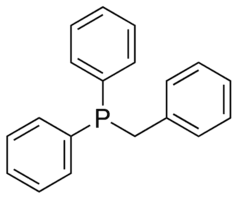
Benzyldiphenylphosphine
C6H5CH2P(C6H5)2
Catalysis & Inorganic
Beryllium
Be
Catalysis & Inorganic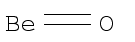
Beryllium oxide
BeO
Catalysis & Inorganic![Bicyclo[2.2.1]hepta-2,5-diene-rhodium(I) chloride dimer — chemical structure, CAS 12257-42-0; Catalysis & Inorganic, fine chemical supplied by Tech Serve Solutions](/_next/image?url=https%3A%2F%2Fpub-f4d920c906024441a773a96f7098e551.r2.dev%2Fimages%2Fproducts%2F12257-42-0.png&w=3840&q=75)
Bicyclo[2.2.1]hepta-2,5-diene-rhodium(I) chloride dimer
Catalysis & Inorganic
![Bis[(10,11-η)-5-[(11bS)-dinaphtho[2,1-d:1′,2′-f][1,3,2]dioxaphosphepin-4-yl- κP4]-5H-dibenz[b,f]azepine]rhodium(I) tetrafluorobo — chemical structure, CAS 1228149-03-8; Catalysis & Inorganic, fine chemical supplied by Tech Serve Solutions](/_next/image?url=https%3A%2F%2Fpub-f4d920c906024441a773a96f7098e551.r2.dev%2Fimages%2Fproducts%2F1228149-03-8.png&w=3840&q=75)
Bis[(10,11-η)-5-[(11bS)-dinaphtho[2,1-d:1′,2′-f][1,3,2]dioxaphosphepin-4-yl- κP4]-5H-dibenz[b,f]azepine]rhodium(I) tetrafluorobo
1-d:1′
Catalysis & Inorganic![Bis[(2-dimethylamino)phenyl]amine nickel(II) chloride (C16H20ClN3Ni) — chemical structure, CAS 1033772-47-2; Catalysis & Inorganic, fine chemical supplied by Tech Serve Solutions](/_next/image?url=https%3A%2F%2Fpub-f4d920c906024441a773a96f7098e551.r2.dev%2Fimages%2Fproducts%2F1033772-47-2.png&w=3840&q=75)
Bis[(2-dimethylamino)phenyl]amine nickel(II) chloride
C16H20ClN3Ni
Catalysis & Inorganic▶ Explore more

Bis(cyclopentadienyl)cobalt(III) hexafluorophosphate
C10H10CoF6P
Catalysis & Inorganic
1-(4-Chlorophenyl)biguanide hydrochloride
ClC6H4NHC(NH)NHC(NH)NH2 · HCl
Chemical Synthesis
Bis(cyclopentadienyl)dimethylzirconium(IV)
Catalysis & Inorganic

1-(4-Chlorophenyl)ethanol
ClC6H4CH(CH3)OH
Chemical Synthesis