Bis(1,5-cyclooctadiene)dirhodium(I) dichloride
Bis(1,5-cyclooctadiene)dirhodium(I) dichloride (CAS 12092-47-6), formula C16H24Cl2Rh2 and molar mass 493.08 g/mol, is an organorhodium(I) coordination complex commonly written as [RhCl(COD)]2. This air-stable chloro-bridged dimer, in which each rhodium centre carries a 1,5-cyclooctadiene ligand, is a widely used precatalyst and starting material in homogeneous catalysis and organometallic synthesis. Tech Serve Solutions supplies it as a research-grade reagent (assay 98%) to laboratories and process chemists worldwide.
- IUPAC
- 1,5-Cyclooctadienerhodium(I) chloride dimer,Chloro(1,5-cyclooctadiene)rhodium(I) dimer,Rhodium(I) chloride 1,5-Cyclooctadiene complex dimer
- Synonyms
- Bis(1,5-cyclooctadiene)dirhodium(I) dichloride1,5-Cyclooctadienerhodium(I) chloride dimerChloro(1,5-cyclooctadiene)rhodium(I) dimerRhodium(I) chloride 1,5-cyclooctadiene complex dimerDi-mu-chlorobis(1,5-cyclooctadiene)dirhodium(I)[RhCl(COD)]2Chlorobis(1,5-cyclooctadiene)dirhodium

Homogeneous catalysis precatalyst
Serves as a convenient rhodium(I) source for homogeneous catalytic systems. The labile cyclooctadiene ligands are readily displaced, generating active rhodium species in solution.
Precursor to phosphine and chiral rhodium complexes
Reacts with phosphine, diphosphine and other donor ligands to form defined Rh(I) catalysts. It is a standard entry point for preparing complexes used in asymmetric catalysis research.
Hydrogenation and related reductions
Used to generate rhodium catalysts for the hydrogenation of alkenes and other unsaturated substrates under laboratory conditions. Performance depends on the supporting ligands chosen by the user.
Organometallic and methodology research
Employed in academic and industrial method development for carbon-carbon and carbon-heteroatom bond formation, including 1,4-additions and various rhodium-catalysed transformations.
Catalyst and materials development
Acts as a soluble molecular rhodium source for screening, ligand evaluation and supported-catalyst studies in chemical synthesis programmes.
| Molecular weight | 493.08 |
|---|---|
| Empirical formula | C16H24Cl2Rh2 |
| Assay | 98% |
| Storage temperature | 2-8°C |
| Melting point | ~255 °C (dec.)(lit.) |
Precautionary statements
- P261Avoid breathing dust, fume, gas or vapours
- P305IF IN EYES
| Water hazard class (WGK, DE) | 3 |
|---|---|
| Hazard codes (EU) | Xi |
| Risk statements (R) | 36/37/38 |
| Safety statements (S) | 26 |
Hazard information is provided for guidance. Always consult the product Safety Data Sheet (SDS), available on request, before handling.
Documentation
Every batch ships with a Certificate of Analysis covering assay, identity and purity; the grade is confirmed against your enquiry. Safety Data Sheets and technical data sheets are available on request.
Supply & logistics
Samples for technical evaluation; bulk MOQ by grade and packaging. In-stock material ships in 7–10 working days, worldwide, with full export documentation.
What is Bis(1,5-cyclooctadiene)dirhodium(I) dichloride used for?
+
It is used primarily as a rhodium(I) precatalyst and precursor in homogeneous catalysis and organometallic synthesis. Chemists combine it with phosphine or chiral ligands to build active rhodium catalysts for hydrogenation, conjugate additions and other rhodium-catalysed transformations.
What is the CAS number and molecular formula of Bis(1,5-cyclooctadiene)dirhodium(I) dichloride?
+
The CAS number is 12092-47-6 and the empirical formula is C16H24Cl2Rh2 (Hill notation), with a molecular weight of 493.08 g/mol. The MDL number is MFCD00012415 and the EC number is 235-157-6. It is the chloro-bridged dimer commonly written as [RhCl(COD)]2.
What grade and purity does Tech Serve Solutions supply?
+
Tech Serve Solutions supplies this compound as a research/reagent-grade material with a typical assay of 98%. We do not represent it as USP, BP or EP pharmacopoeial grade. A certificate of analysis can be provided with each consignment on request.
What are the safety and handling requirements?
+
The material is classified as an irritant (EU class Xi): it is irritating to eyes, the respiratory system and skin. Avoid contact and inhalation, wear suitable eye and skin protection, and in case of eye contact rinse cautiously with water for several minutes and remove contact lenses if present. It carries water hazard class WGK 3, so prevent release to drains and watercourses. Always consult the current Safety Data Sheet before use.
How should it be stored?
+
Store the compound refrigerated at 2-8 C in a tightly closed container, kept dry and away from incompatible materials. The reported melting point is approximately 255 C with decomposition.
How is it packed, shipped and exported?
+
It is supplied in sealed, clearly labelled containers with sizes selected to suit laboratory and bulk requirements. Each shipment is accompanied by the relevant documentation and Safety Data Sheet, and Tech Serve Solutions arranges compliant export packaging and global despatch in line with applicable transport regulations.
How do I request a sample or quote?
+
Contact Tech Serve Solutions with your required quantity, purity and destination, and our team will respond with availability, packaging options and a formal quotation. Sample requests for evaluation can be accommodated where appropriate.
▶ Related products
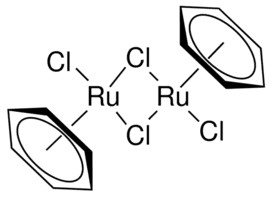
Benzeneruthenium(II) chloride dimer
Ru2(C6H6)2Cl4
Catalysis & Inorganic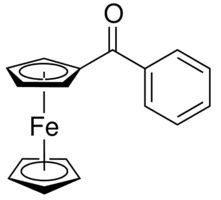
Benzoylferrocene
C17H14FeO
Catalysis & Inorganic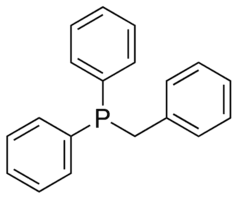
Benzyldiphenylphosphine
C6H5CH2P(C6H5)2
Catalysis & Inorganic
Beryllium
Be
Catalysis & Inorganic
Beryllium oxide
BeO
Catalysis & Inorganic![Bicyclo[2.2.1]hepta-2,5-diene-rhodium(I) chloride dimer — chemical structure, CAS 12257-42-0; Catalysis & Inorganic, fine chemical supplied by Tech Serve Solutions](/_next/image?url=https%3A%2F%2Fpub-f4d920c906024441a773a96f7098e551.r2.dev%2Fimages%2Fproducts%2F12257-42-0.png&w=3840&q=75)
Bicyclo[2.2.1]hepta-2,5-diene-rhodium(I) chloride dimer
Catalysis & Inorganic
![Bis[(10,11-η)-5-[(11bS)-dinaphtho[2,1-d:1′,2′-f][1,3,2]dioxaphosphepin-4-yl- κP4]-5H-dibenz[b,f]azepine]rhodium(I) tetrafluorobo — chemical structure, CAS 1228149-03-8; Catalysis & Inorganic, fine chemical supplied by Tech Serve Solutions](/_next/image?url=https%3A%2F%2Fpub-f4d920c906024441a773a96f7098e551.r2.dev%2Fimages%2Fproducts%2F1228149-03-8.png&w=3840&q=75)
Bis[(10,11-η)-5-[(11bS)-dinaphtho[2,1-d:1′,2′-f][1,3,2]dioxaphosphepin-4-yl- κP4]-5H-dibenz[b,f]azepine]rhodium(I) tetrafluorobo
1-d:1′
Catalysis & Inorganic![Bis[(2-dimethylamino)phenyl]amine nickel(II) chloride (C16H20ClN3Ni) — chemical structure, CAS 1033772-47-2; Catalysis & Inorganic, fine chemical supplied by Tech Serve Solutions](/_next/image?url=https%3A%2F%2Fpub-f4d920c906024441a773a96f7098e551.r2.dev%2Fimages%2Fproducts%2F1033772-47-2.png&w=3840&q=75)
Bis[(2-dimethylamino)phenyl]amine nickel(II) chloride
C16H20ClN3Ni
Catalysis & Inorganic