Allyl[1,3-bis(2,6-diisopropylphenyl)imidazol-2-ylidene]chloropalladium(II)
Allyl[1,3-bis(2,6-diisopropylphenyl)imidazol-2-ylidene]chloropalladium(II) (CAS: 478980-03-9) is a palladium(II) complex featuring an N-heterocyclic carbene (NHC) ligand. With a molecular weight of 572.54 g/mol, this compound is a highly effective catalyst. It is primarily employed in homogeneous catalysis for various organic transformations, including coupling reactions and oxidation processes.
- IUPAC
- (NHC)Pd(allyl)Cl,Allylchloro[1,3-bis(2,6-diisopropylphenyl)imidazol-2-ylidene]palladium(II), CX 21
- Synonyms
- 478980-03-9C30H42ClN2Pd(NHC)Pd(allyl)ClAllylchloro[1,3-bis(2,6-diisopropylphenyl)imidazol-2-ylidene]palladium(II)CX 21
![Allyl[1,3-bis(2,6-diisopropylphenyl)imidazol-2-ylidene]chloropalladium(II) (C30H42ClN2Pd) — chemical structure, CAS 478980-03-9; Chemistry, fine chemical supplied by Tech Serve Solutions](/_next/image?url=https%3A%2F%2Fpub-f4d920c906024441a773a96f7098e551.r2.dev%2Fimages%2Fproducts%2F478980-03-9.png&w=3840&q=75)
Suzuki Coupling Reactions
This palladium complex catalyses Suzuki coupling reactions, facilitating the formation of carbon-carbon bonds by coupling organoboron compounds with organic halides.
Buchwald-Hartwig Amination
It serves as a catalyst for the Buchwald-Hartwig amination, enabling the synthesis of aryl amines through the coupling of amines with aryl halides or pseudohalides.
Arylation of Ketones
The catalyst is effective for the arylation of ketones, a key transformation for introducing aryl groups adjacent to carbonyl functionalities.
Dehalogenation Reactions
This palladium complex can be utilised for the dehalogenation of aryl chlorides, removing halogen substituents from aromatic rings.
Oxidation of Alcohols
It functions as a catalyst in the oxidation of secondary alcohols to their corresponding ketones, offering a mild and efficient synthetic route.
| Molecular weight | 572.54 |
|---|---|
| Empirical formula | C30H42ClN2Pd |
| Assay | 98% |
| Application | Catalyst for the arylation of ketones, Suzuki coupling reaction, Buchwald-Hartwig amination reaction, dehalogenation of aryl chlorides, and oxidation of secondary alcohols. |
| Melting point | >300 °C |

Hazard statements
- H315Causes skin irritation
- H319Causes serious eye irritation
- H335May cause respiratory irritation
Precautionary statements
- P261Avoid breathing dust, fume, gas or vapours
- P305IF IN EYES
| Protective equipment | dust mask type N95 (US), Eyeshields, Gloves |
|---|---|
| Water hazard class (WGK, DE) | 3 |
| Hazard codes (EU) | Xi |
| Risk statements (R) | 36/37/38 |
| Safety statements (S) | 26-36/37 |
Hazard information is provided for guidance. Always consult the product Safety Data Sheet (SDS), available on request, before handling.
Documentation
Every batch ships with a Certificate of Analysis covering assay, identity and purity; the grade is confirmed against your enquiry. Safety Data Sheets and technical data sheets are available on request.
Supply & logistics
Samples for technical evaluation; bulk MOQ by grade and packaging. In-stock material ships in 7–10 working days, worldwide, with full export documentation.
What is Allyl[1,3-bis(2,6-diisopropylphenyl)imidazol-2-ylidene]chloropalladium(II) used for?
+
This compound is used as a catalyst in various organic synthesis reactions, including Suzuki coupling, Buchwald-Hartwig amination, arylation of ketones, dehalogenation of aryl chlorides, and oxidation of secondary alcohols.
What is the CAS number and formula for this chemical?
+
The CAS number is 478980-03-9, and the empirical formula (Hill notation) is C30H42ClN2Pd.
What grade and purity does Tech Serve Solutions supply?
+
Tech Serve Solutions supplies this product with an assay of 98%. It is supplied as a research or technical grade material and is not represented as USP, BP, EP, or pharmaceutical grade.
How should I safely handle Allyl[1,3-bis(2,6-diisopropylphenyl)imidazol-2-ylidene]chloropalladium(II)?
+
This compound is a Warning substance, causing skin irritation (H315), serious eye irritation (H319), and respiratory irritation (H335). Handle with appropriate personal protective equipment, including a dust mask type N95 (US), eyeshields, and gloves. Ensure adequate ventilation and avoid breathing dust.
Is this chemical available for export?
+
Yes, Tech Serve Solutions specialises in supplying and exporting fine chemicals globally.
How can I request a sample or quote?
+
Please contact our sales team directly via phone or email to request a sample or a quotation for this product.
▶ Related products
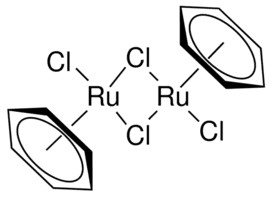
Benzeneruthenium(II) chloride dimer
Ru2(C6H6)2Cl4
Catalysis & Inorganic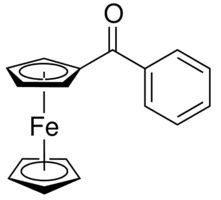
Benzoylferrocene
C17H14FeO
Catalysis & Inorganic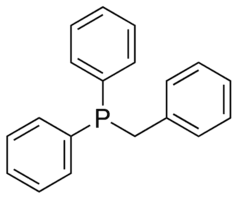
Benzyldiphenylphosphine
C6H5CH2P(C6H5)2
Catalysis & Inorganic
Beryllium
Be
Catalysis & Inorganic
Beryllium oxide
BeO
Catalysis & Inorganic![Bicyclo[2.2.1]hepta-2,5-diene-rhodium(I) chloride dimer — chemical structure, CAS 12257-42-0; Catalysis & Inorganic, fine chemical supplied by Tech Serve Solutions](/_next/image?url=https%3A%2F%2Fpub-f4d920c906024441a773a96f7098e551.r2.dev%2Fimages%2Fproducts%2F12257-42-0.png&w=3840&q=75)
Bicyclo[2.2.1]hepta-2,5-diene-rhodium(I) chloride dimer
Catalysis & Inorganic
![Bis[(10,11-η)-5-[(11bS)-dinaphtho[2,1-d:1′,2′-f][1,3,2]dioxaphosphepin-4-yl- κP4]-5H-dibenz[b,f]azepine]rhodium(I) tetrafluorobo — chemical structure, CAS 1228149-03-8; Catalysis & Inorganic, fine chemical supplied by Tech Serve Solutions](/_next/image?url=https%3A%2F%2Fpub-f4d920c906024441a773a96f7098e551.r2.dev%2Fimages%2Fproducts%2F1228149-03-8.png&w=3840&q=75)
Bis[(10,11-η)-5-[(11bS)-dinaphtho[2,1-d:1′,2′-f][1,3,2]dioxaphosphepin-4-yl- κP4]-5H-dibenz[b,f]azepine]rhodium(I) tetrafluorobo
1-d:1′
Catalysis & Inorganic![Bis[(2-dimethylamino)phenyl]amine nickel(II) chloride (C16H20ClN3Ni) — chemical structure, CAS 1033772-47-2; Catalysis & Inorganic, fine chemical supplied by Tech Serve Solutions](/_next/image?url=https%3A%2F%2Fpub-f4d920c906024441a773a96f7098e551.r2.dev%2Fimages%2Fproducts%2F1033772-47-2.png&w=3840&q=75)
Bis[(2-dimethylamino)phenyl]amine nickel(II) chloride
C16H20ClN3Ni
Catalysis & Inorganic