
Activated Nickel Catalyst
Activated Nickel Catalyst (CAS: 7440-02-0) is a high-purity nickel metal preparation valued for its catalytic properties in organic synthesis. Supplied by TSS with an assay of ≥99.9%, it functions effectively in various coupling reactions, including homocoupling of halobenzenes, benzyl halide coupling, and the synthesis of key organic intermediates like β-hydroxynitriles and 3-arylpropanenitriles. Its physical form as nickel sponge with a particle size of 6-16 mm makes it suitable for diverse chemical processes.
- IUPAC
- Nickel sponge
Homocoupling of Halobenzenes
Utilised as a catalyst for the efficient homocoupling of halobenzene derivatives, facilitating the formation of biaryl compounds, which are important structural motifs in pharmaceuticals and materials science.
Benzyl Halide Coupling
Employed in the coupling of benzyl halides, a critical step in the synthesis of various organic molecules and fine chemicals where carbon-carbon bond formation is required.
Synthesis of β-Hydroxynitriles
Acts as a catalyst in reactions leading to the formation of β-hydroxynitriles, versatile intermediates used in the production of amino alcohols and other valuable organic compounds.
Xylylene Cycloadditions
Supports cycloaddition reactions involving xylylenes, enabling the construction of complex cyclic structures important in organic synthesis and polymer chemistry.
Synthesis of 3-Arylpropanenitriles
Facilitates the synthesis of 3-arylpropanenitriles through specific catalytic pathways, providing access to compounds with potential applications in medicinal chemistry.
| Assay | ≥99.9% |
|---|---|
| Boiling point | 2732 °C(lit.) |
| Density | 8.9 g/mL at 25 °C(lit.) |
| Concentration | in H2O |
| Particle size | 6-16 mm |
| Application | Catalyst for homocoupling of halobenzenes; benzyl halide coupling; synthesis of β-hydroxynitriles; xylylene cycloadditions; synthesis of 3-arylpropanenitriles. |
| Melting point | 1453 °C(lit.) |


Hazard statements
- H250Catches fire spontaneously if exposed to air
- H317May cause an allergic skin reaction
- H351Suspected of causing cancer
- H372Causes damage to organs through prolonged exposure
Precautionary statements
- P222Do not allow contact with air
- P231Handle under inert gas
- P280Wear protective gloves, clothing and eye/face protection
- P314Get medical attention if you feel unwell
- P422
| Protective equipment | Eyeshields, Faceshields, full-face respirator (US), Gloves, multi-purpose combination respirator cartridge (US), type ABEK (EN14387) respirator filter |
|---|---|
| Transport (UN / ADR) | UN 1378 4.2 / PGII |
| Water hazard class (WGK, DE) | 2 |
| Hazard codes (EU) | F,T |
| Risk statements (R) | 17-40-43-48/23 |
| Safety statements (S) | 15-26-28-36/37/39 |
Hazard information is provided for guidance. Always consult the product Safety Data Sheet (SDS), available on request, before handling.
| Shelf Life | (limited shelf life, expiry date on the label) |
|---|---|
| Resistivity | 6.97 μΩ-cm, 20°C |
| Thickness | 0.125 mm |
Documentation
Every batch ships with a Certificate of Analysis covering assay, identity and purity; the grade is confirmed against your enquiry. Safety Data Sheets and technical data sheets are available on request.
Supply & logistics
Samples for technical evaluation; bulk MOQ by grade and packaging. In-stock material ships in 7–10 working days, worldwide, with full export documentation.
What is Activated Nickel Catalyst primarily used for?
+
Activated Nickel Catalyst is primarily used as a catalyst in organic synthesis for reactions such as the homocoupling of halobenzenes, benzyl halide coupling, synthesis of β-hydroxynitriles, xylylene cycloadditions, and synthesis of 3-arylpropanenitriles.
What are the CAS number and formula for Activated Nickel Catalyst?
+
The CAS number for Activated Nickel Catalyst is 7440-02-0. The chemical formula is not applicable as it is an elemental metal.
What grade and purity does Tech Serve Solutions supply for Activated Nickel Catalyst?
+
Tech Serve Solutions supplies Activated Nickel Catalyst with an assay of ≥99.9%. This product is not represented as USP, BP, or EP grade.
How should Activated Nickel Catalyst be handled safely?
+
Activated Nickel Catalyst is pyrophoric and may ignite spontaneously in air (H250); it can cause allergic skin reactions (H317), is suspected of causing cancer (H351), and may cause damage to organs through prolonged or repeated exposure (H372). Handle with appropriate personal protective equipment, including eyeshields, gloves, and a suitable respirator, in a controlled environment away from air and moisture.
How is Activated Nickel Catalyst packed and exported?
+
Activated Nickel Catalyst is packed and shipped according to UN 1378, Hazard Class 4.2, Packing Group II regulations, ensuring safe transport for domestic and international export.
How can I request a quote or sample for Activated Nickel Catalyst?
+
To request a quote or sample, please contact the Tech Serve Solutions sales team through our website or by phone, providing the product name and CAS number (7440-02-0).
▶ Related products
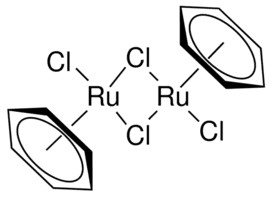
Benzeneruthenium(II) chloride dimer
Ru2(C6H6)2Cl4
Catalysis & Inorganic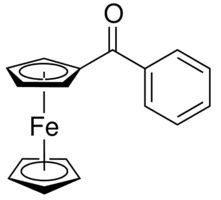
Benzoylferrocene
C17H14FeO
Catalysis & Inorganic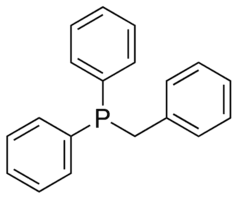
Benzyldiphenylphosphine
C6H5CH2P(C6H5)2
Catalysis & Inorganic
Beryllium
Be
Catalysis & Inorganic
Beryllium oxide
BeO
Catalysis & Inorganic![Bicyclo[2.2.1]hepta-2,5-diene-rhodium(I) chloride dimer — chemical structure, CAS 12257-42-0; Catalysis & Inorganic, fine chemical supplied by Tech Serve Solutions](/_next/image?url=https%3A%2F%2Fpub-f4d920c906024441a773a96f7098e551.r2.dev%2Fimages%2Fproducts%2F12257-42-0.png&w=3840&q=75)
Bicyclo[2.2.1]hepta-2,5-diene-rhodium(I) chloride dimer
Catalysis & Inorganic
![Bis[(10,11-η)-5-[(11bS)-dinaphtho[2,1-d:1′,2′-f][1,3,2]dioxaphosphepin-4-yl- κP4]-5H-dibenz[b,f]azepine]rhodium(I) tetrafluorobo — chemical structure, CAS 1228149-03-8; Catalysis & Inorganic, fine chemical supplied by Tech Serve Solutions](/_next/image?url=https%3A%2F%2Fpub-f4d920c906024441a773a96f7098e551.r2.dev%2Fimages%2Fproducts%2F1228149-03-8.png&w=3840&q=75)
Bis[(10,11-η)-5-[(11bS)-dinaphtho[2,1-d:1′,2′-f][1,3,2]dioxaphosphepin-4-yl- κP4]-5H-dibenz[b,f]azepine]rhodium(I) tetrafluorobo
1-d:1′
Catalysis & Inorganic![Bis[(2-dimethylamino)phenyl]amine nickel(II) chloride (C16H20ClN3Ni) — chemical structure, CAS 1033772-47-2; Catalysis & Inorganic, fine chemical supplied by Tech Serve Solutions](/_next/image?url=https%3A%2F%2Fpub-f4d920c906024441a773a96f7098e551.r2.dev%2Fimages%2Fproducts%2F1033772-47-2.png&w=3840&q=75)
Bis[(2-dimethylamino)phenyl]amine nickel(II) chloride
C16H20ClN3Ni
Catalysis & Inorganic▶ Explore more

Bis(cyclopentadienyl)cobalt(III) hexafluorophosphate
C10H10CoF6P
Catalysis & Inorganic
1-(4-Chlorophenyl)biguanide hydrochloride
ClC6H4NHC(NH)NHC(NH)NH2 · HCl
Chemical Synthesis
Bis(cyclopentadienyl)dimethylzirconium(IV)
Catalysis & Inorganic

1-(4-Chlorophenyl)ethanol
ClC6H4CH(CH3)OH
Chemical Synthesis