
2-Mesityl-2,5,6,7-tetrahydropyrrolo[2,1-c][1,2,4]triazol-4-ium chloride
2-Mesityl-2,5,6,7-tetrahydropyrrolo[2,1-c][1,2,4]triazol-4-ium chloride (CAS: 862893-81-0, C14H18ClN3) is a key N-heterocyclic carbene (NHC) precursor and catalyst. Supplied by Tech Serve Solutions with 97% purity, it is primarily utilised in organic synthesis for facilitating various catalytic transformations. Its unique structure enables its application in reactions ranging from hydroacylation to complex cyclisation processes, making it a valuable reagent for research and development in catalysis and chemical synthesis.
- IUPAC
- Bode Catalyst 3
- Synonyms
- 7-tetrahydropyrrolo[2,1-c][1,2,4]triazol-4-ium chloride
![2-Mesityl-2,5,6,7-tetrahydropyrrolo[2,1-c][1,2,4]triazol-4-ium chloride (C14H18ClN3) — chemical structure, CAS 862893-81-0; Chemistry, fine chemical supplied by Tech Serve Solutions](/_next/image?url=https%3A%2F%2Fpub-f4d920c906024441a773a96f7098e551.r2.dev%2Fimages%2Fproducts%2F862893-81-0.png&w=3840&q=75)
Intermolecular Hydroacylation of Cyclopropenes
This compound serves as a catalyst for the intermolecular hydroacylation of cyclopropenes, a crucial reaction for forming carbon-carbon bonds. It enables efficient addition across the strained cyclopropene ring.
Crossed Acyloin Condensations
It catalyses crossed acyloin condensation reactions, facilitating the formation of alpha-hydroxy ketones. This application is valuable in the synthesis of complex organic molecules.
Domino Reactions
The catalyst promotes domino ring-opening redox amidation Knoevenagel condensation reactions. This allows for the efficient construction of molecular complexity in a single synthetic operation.
Claisen Rearrangement
It can be employed to catalyse the Claisen rearrangement, a sigmatropic rearrangement that is fundamental in the synthesis of allyl vinyl ethers and related compounds.
NHC-Catalysed Cyclocondensations
As an N-heterocyclic carbene (NHC) precursor, it facilitates Lewis acid- and NHC-catalysed cyclocondensation reactions. This is important for building cyclic organic frameworks.
Bode Catalyst Applications
Recognised as a Bode catalyst, it is effective in catalysing enantioselective cyclisation reactions, enabling the stereocontrolled synthesis of chiral molecules.
| Empirical formula | C14H18ClN3 |
|---|---|
| Assay | 97% |
| Application | Catalyst for:• Intermolecular hydroacylation of cyclopropenes1• Crossed acyloin condensations2• Domino ring-opening redox amidation Knoevenagel condensation3• Claisen rearrangement4• Lewis acid- and N-heterocyclic carbene-catalyzed cyclocondensation reaction5• Bode catalyst for enantioselective cyclizations6 |
| Melting point | 200-205 °C |

Hazard statements
- H315Causes skin irritation
- H319Causes serious eye irritation
- H335May cause respiratory irritation
Precautionary statements
- P261Avoid breathing dust, fume, gas or vapours
- P305IF IN EYES
| Protective equipment | dust mask type N95 (US), Eyeshields, Gloves |
|---|---|
| Water hazard class (WGK, DE) | 3 |
| Hazard codes (EU) | Xi |
| Risk statements (R) | 36/37/38 |
| Safety statements (S) | 26 |
Hazard information is provided for guidance. Always consult the product Safety Data Sheet (SDS), available on request, before handling.
Documentation
Every batch ships with a Certificate of Analysis covering assay, identity and purity; the grade is confirmed against your enquiry. Safety Data Sheets and technical data sheets are available on request.
Supply & logistics
Samples for technical evaluation; bulk MOQ by grade and packaging. In-stock material ships in 7–10 working days, worldwide, with full export documentation.
What is 2-Mesityl-2,5,6,7-tetrahydropyrrolo[2,1-c][1,2,4]triazol-4-ium chloride used for?
+
This compound is primarily used as a catalyst and NHC precursor in organic synthesis for reactions such as intermolecular hydroacylation of cyclopropenes, crossed acyloin condensations, domino reactions, Claisen rearrangement, and enantioselective cyclisations.
What are the CAS number and formula for 2-Mesityl-2,5,6,7-tetrahydropyrrolo[2,1-c][1,2,4]triazol-4-ium chloride?
+
The CAS number is 862893-81-0 and the empirical formula is C14H18ClN3.
What grade and purity does Tech Serve Solutions supply?
+
Tech Serve Solutions supplies this chemical with a purity of 97%. We do not represent it as USP, BP, EP, or pharmacopoeia grade.
What are the safety considerations when handling this chemical?
+
This compound is classified with GHS07 (Warning) and may cause skin irritation (H315), serious eye irritation (H319), and respiratory irritation (H335). Appropriate personal protective equipment including a dust mask (type N95 US), eyeshields, and gloves should be worn. Ensure adequate ventilation.
How is 2-Mesityl-2,5,6,7-tetrahydropyrrolo[2,1-c][1,2,4]triazol-4-ium chloride packed and shipped?
+
This chemical is carefully packed and exported by Tech Serve Solutions in compliance with international shipping regulations for chemical products. Specific packaging details can be provided upon request.
How can I request a sample or quote?
+
To request a sample or a quotation for 2-Mesityl-2,5,6,7-tetrahydropyrrolo[2,1-c][1,2,4]triazol-4-ium chloride, please contact our sales team through the website or via direct email, providing your contact details and quantity requirements.
▶ Related products
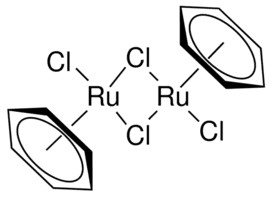
Benzeneruthenium(II) chloride dimer
Ru2(C6H6)2Cl4
Catalysis & Inorganic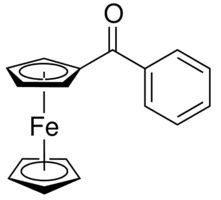
Benzoylferrocene
C17H14FeO
Catalysis & Inorganic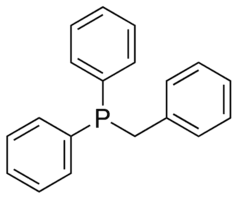
Benzyldiphenylphosphine
C6H5CH2P(C6H5)2
Catalysis & Inorganic
Beryllium
Be
Catalysis & Inorganic
Beryllium oxide
BeO
Catalysis & Inorganic![Bicyclo[2.2.1]hepta-2,5-diene-rhodium(I) chloride dimer — chemical structure, CAS 12257-42-0; Catalysis & Inorganic, fine chemical supplied by Tech Serve Solutions](/_next/image?url=https%3A%2F%2Fpub-f4d920c906024441a773a96f7098e551.r2.dev%2Fimages%2Fproducts%2F12257-42-0.png&w=3840&q=75)
Bicyclo[2.2.1]hepta-2,5-diene-rhodium(I) chloride dimer
Catalysis & Inorganic
![Bis[(10,11-η)-5-[(11bS)-dinaphtho[2,1-d:1′,2′-f][1,3,2]dioxaphosphepin-4-yl- κP4]-5H-dibenz[b,f]azepine]rhodium(I) tetrafluorobo — chemical structure, CAS 1228149-03-8; Catalysis & Inorganic, fine chemical supplied by Tech Serve Solutions](/_next/image?url=https%3A%2F%2Fpub-f4d920c906024441a773a96f7098e551.r2.dev%2Fimages%2Fproducts%2F1228149-03-8.png&w=3840&q=75)
Bis[(10,11-η)-5-[(11bS)-dinaphtho[2,1-d:1′,2′-f][1,3,2]dioxaphosphepin-4-yl- κP4]-5H-dibenz[b,f]azepine]rhodium(I) tetrafluorobo
1-d:1′
Catalysis & Inorganic![Bis[(2-dimethylamino)phenyl]amine nickel(II) chloride (C16H20ClN3Ni) — chemical structure, CAS 1033772-47-2; Catalysis & Inorganic, fine chemical supplied by Tech Serve Solutions](/_next/image?url=https%3A%2F%2Fpub-f4d920c906024441a773a96f7098e551.r2.dev%2Fimages%2Fproducts%2F1033772-47-2.png&w=3840&q=75)
Bis[(2-dimethylamino)phenyl]amine nickel(II) chloride
C16H20ClN3Ni
Catalysis & Inorganic▶ Explore more

Bis(cyclopentadienyl)cobalt(III) hexafluorophosphate
C10H10CoF6P
Catalysis & Inorganic
1-(4-Chlorophenyl)biguanide hydrochloride
ClC6H4NHC(NH)NHC(NH)NH2 · HCl
Chemical Synthesis
Bis(cyclopentadienyl)dimethylzirconium(IV)
Catalysis & Inorganic

1-(4-Chlorophenyl)ethanol
ClC6H4CH(CH3)OH
Chemical Synthesis