
(2-Biphenyl)di-1-adamantylphosphine
(2-Biphenyl)di-1-adamantylphosphine (CAS: 224311-55-1, Formula: C32H39P, MW: 454.63) is a specialised phosphine ligand. Its bulky adamantyl groups and biphenyl backbone provide unique steric and electronic properties. This compound is primarily employed as a ligand in palladium-catalyzed cross-coupling reactions, facilitating challenging synthetic transformations in organic chemistry and the development of pharmaceutical intermediates.
- IUPAC
- [1,1′-Biphenyl]-2-yldi[(3S,5S,7S)-1-adamantanyl]phosphine

Palladium-Catalyzed Cross-Coupling Reactions
This phosphine ligand is highly effective in various palladium-catalyzed cross-coupling reactions, such as Suzuki-Miyaura, Buchwald-Hartwig amination, and Negishi couplings. Its robust structure aids in stabilising catalytic intermediates and promoting high turnover numbers.
Catalysis in Organic Synthesis
Its application extends to facilitating complex C-C and C-N bond formations. The ligand's steric bulk can influence regioselectivity and enantioselectivity in certain transformations, making it valuable for constructing intricate molecular architectures.
Pharmaceutical Intermediate Synthesis
The compound serves as a key component in catalytic systems used for synthesising advanced pharmaceutical intermediates. It enables efficient routes to complex drug candidates by mediating challenging coupling steps.
| Molecular weight | 454.63 |
|---|---|
| Empirical formula | C32H39P |
| Assay | 97% |
| Application | Phosphine ligand for cross coupling. |
| Melting point | 220-225 °C |

Hazard statements
- H301Toxic if swallowed
- H315Causes skin irritation
- H319Causes serious eye irritation
Precautionary statements
- P301IF SWALLOWED
- P305IF IN EYES
| Transport (UN / ADR) | UN 2811 6.1 / PGIII |
|---|---|
| Water hazard class (WGK, DE) | 3 |
| Hazard codes (EU) | T |
| Risk statements (R) | 23/24/25-36/37/38 |
| Safety statements (S) | 36/37/39-45 |
Hazard information is provided for guidance. Always consult the product Safety Data Sheet (SDS), available on request, before handling.
Documentation
Every batch ships with a Certificate of Analysis covering assay, identity and purity; the grade is confirmed against your enquiry. Safety Data Sheets and technical data sheets are available on request.
Supply & logistics
Samples for technical evaluation; bulk MOQ by grade and packaging. In-stock material ships in 7–10 working days, worldwide, with full export documentation.
What is (2-Biphenyl)di-1-adamantylphosphine used for?
+
(2-Biphenyl)di-1-adamantylphosphine is primarily used as a specialised phosphine ligand in palladium-catalyzed cross-coupling reactions for organic synthesis and the preparation of pharmaceutical intermediates.
What is the CAS number and formula for (2-Biphenyl)di-1-adamantylphosphine?
+
The CAS number is 224311-55-1, and the empirical formula is C32H39P.
What grade and purity does Tech Serve Solutions supply?
+
Tech Serve Solutions supplies (2-Biphenyl)di-1-adamantylphosphine with an assay of 97%. This product is not represented as USP, BP, EP, or any other pharmacopoeia grade.
How should (2-Biphenyl)di-1-adamantylphosphine be handled?
+
This compound is classified as Danger. It is toxic if swallowed (H301) and causes skin (H315) and serious eye irritation (H319). Handle with appropriate personal protective equipment, including gloves, eye protection, and protective clothing, in a well-ventilated area. Refer to the safety data sheet for detailed handling and emergency procedures.
How is this chemical packed and exported?
+
Tech Serve Solutions professionally packages and exports chemicals globally, adhering to all relevant transportation regulations. For this product, it is shipped under UN 2811, Class 6.1, Packing Group III.
How can I request a quote or sample?
+
To request a quote or a sample of (2-Biphenyl)di-1-adamantylphosphine, please contact our sales team through the website or via email, providing your contact details and required quantity.
▶ Related products
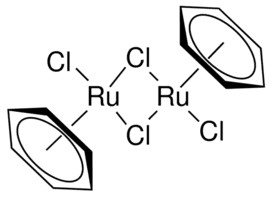
Benzeneruthenium(II) chloride dimer
Ru2(C6H6)2Cl4
Catalysis & Inorganic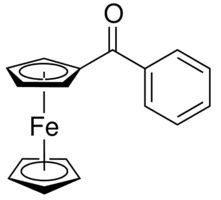
Benzoylferrocene
C17H14FeO
Catalysis & Inorganic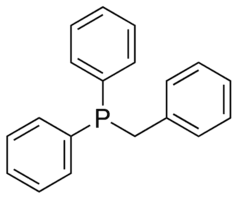
Benzyldiphenylphosphine
C6H5CH2P(C6H5)2
Catalysis & Inorganic
Beryllium
Be
Catalysis & Inorganic
Beryllium oxide
BeO
Catalysis & Inorganic![Bicyclo[2.2.1]hepta-2,5-diene-rhodium(I) chloride dimer — chemical structure, CAS 12257-42-0; Catalysis & Inorganic, fine chemical supplied by Tech Serve Solutions](/_next/image?url=https%3A%2F%2Fpub-f4d920c906024441a773a96f7098e551.r2.dev%2Fimages%2Fproducts%2F12257-42-0.png&w=3840&q=75)
Bicyclo[2.2.1]hepta-2,5-diene-rhodium(I) chloride dimer
Catalysis & Inorganic
![Bis[(10,11-η)-5-[(11bS)-dinaphtho[2,1-d:1′,2′-f][1,3,2]dioxaphosphepin-4-yl- κP4]-5H-dibenz[b,f]azepine]rhodium(I) tetrafluorobo — chemical structure, CAS 1228149-03-8; Catalysis & Inorganic, fine chemical supplied by Tech Serve Solutions](/_next/image?url=https%3A%2F%2Fpub-f4d920c906024441a773a96f7098e551.r2.dev%2Fimages%2Fproducts%2F1228149-03-8.png&w=3840&q=75)
Bis[(10,11-η)-5-[(11bS)-dinaphtho[2,1-d:1′,2′-f][1,3,2]dioxaphosphepin-4-yl- κP4]-5H-dibenz[b,f]azepine]rhodium(I) tetrafluorobo
1-d:1′
Catalysis & Inorganic![Bis[(2-dimethylamino)phenyl]amine nickel(II) chloride (C16H20ClN3Ni) — chemical structure, CAS 1033772-47-2; Catalysis & Inorganic, fine chemical supplied by Tech Serve Solutions](/_next/image?url=https%3A%2F%2Fpub-f4d920c906024441a773a96f7098e551.r2.dev%2Fimages%2Fproducts%2F1033772-47-2.png&w=3840&q=75)
Bis[(2-dimethylamino)phenyl]amine nickel(II) chloride
C16H20ClN3Ni
Catalysis & Inorganic▶ Explore more

Bis(cyclopentadienyl)cobalt(III) hexafluorophosphate
C10H10CoF6P
Catalysis & Inorganic
1-(4-Chlorophenyl)biguanide hydrochloride
ClC6H4NHC(NH)NHC(NH)NH2 · HCl
Chemical Synthesis
Bis(cyclopentadienyl)dimethylzirconium(IV)
Catalysis & Inorganic

1-(4-Chlorophenyl)ethanol
ClC6H4CH(CH3)OH
Chemical Synthesis