[1,3-Bis(diphenylphosphino)propane]dichloronickel(II)
[1,3-Bis(diphenylphosphino)propane]dichloronickel(II), CAS 15629-92-2, is a nickel(II) complex widely employed as a catalyst. Its structure features a nickel atom coordinated with chloride ligands and the bidentate phosphine ligand 1,3-bis(diphenylphosphino)propane (dppp). This compound is instrumental in various organic syntheses, particularly in cross-coupling reactions and polymerization processes, facilitating the formation of complex organic molecules.
- IUPAC
- (1,3-dppp)NiCl2,1,3-Bis(diphenylphosphino)propane nickel(II) chloride,Ni(dppp)Cl2
- Synonyms
- [(C6H5)2P(CH2)3P(C6H5)2]NiCl2(1,3-dppp)NiCl21,3-Bis(diphenylphosphino)propane nickel(II) chlorideNi(dppp)Cl2
![[1,3-Bis(diphenylphosphino)propane]dichloronickel(II) ([(C6H5)2P(CH2)3P(C6H5)2]NiCl2) — chemical structure, CAS 15629-92-2; Chemistry, fine chemical supplied by Tech Serve Solutions](/_next/image?url=https%3A%2F%2Fpub-f4d920c906024441a773a96f7098e551.r2.dev%2Fimages%2Fproducts%2F15629-92-2.png&w=3840&q=75)
Suzuki-Miyaura Cross-Coupling Reactions
This nickel complex serves as an effective catalyst for the Suzuki-Miyaura cross-coupling reaction. It facilitates the formation of carbon-carbon bonds between aryl halides and arylboronic acids, a crucial transformation in organic synthesis.
Polymerization Catalyst
It catalyses the polymerization of various monomers, including the synthesis of block-copolythiophenes and poly(3-alkoxythiophene)s. This enables the production of conjugated polymers with specific electronic properties.
Nozaki-Hiyama-Kishi Coupling
The compound is utilized in diastereoselective Nozaki-Hiyama-Kishi coupling reactions. Notably, it has been applied in the synthesis of complex natural products, such as the C1-C19 fragment of the macrolide antibiotic aplyronine A.
Solid State Metathesis Polycondensation
This nickel complex acts as a catalyst in solid-state metathesis polycondensation, a method for synthesizing polymers under solid-state conditions.
Transfer Condensation Polymerization
It is employed in transfer condensation polymerization, a process used for the synthesis of conjugated polymers.
| Molecular weight | 542.04 |
|---|---|
| Linear formula | [(C6H5)2P(CH2)3P(C6H5)2]NiCl2 |
| Application | Catalyst for:• Synthesis of block-copolythiophenes1• Suzuki-Miyaura cross-coupling reaction of aryl halides with arylboronic acids2• Solid state metathesis polycondensation3• Polymerization of poly(3-alkoxythiophene)s4• Diastereoselective Nozaki-Hiyama-Kishi coupling reactions of C1-C19 fragment of macrolide antibiotic aplyronine A5• Transfer condensation polymerization of conjugated polymers6 |
| Melting point | 213 °C (dec.)(lit.) |


Hazard statements
- H315Causes skin irritation
- H317May cause an allergic skin reaction
- H319Causes serious eye irritation
- H334May cause allergy or asthma symptoms if inhaled
- H335May cause respiratory irritation
- H350May cause cancer
Precautionary statements
- P201Obtain special instructions before use
- P261Avoid breathing dust, fume, gas or vapours
- P280Wear protective gloves, clothing and eye/face protection
- P305IF IN EYES
- P308IF exposed or concerned
| Protective equipment | Eyeshields, Faceshields, Gloves, type P2 (EN 143) respirator cartridges |
|---|---|
| Water hazard class (WGK, DE) | 3 |
| Hazard codes (EU) | T |
| Risk statements (R) | 49-36/37/38-42/43 |
| Safety statements (S) | 53-26-36/37/39-45 |
Hazard information is provided for guidance. Always consult the product Safety Data Sheet (SDS), available on request, before handling.
Documentation
Every batch ships with a Certificate of Analysis covering assay, identity and purity; the grade is confirmed against your enquiry. Safety Data Sheets and technical data sheets are available on request.
Supply & logistics
Samples for technical evaluation; bulk MOQ by grade and packaging. In-stock material ships in 7–10 working days, worldwide, with full export documentation.
What is [1,3-Bis(diphenylphosphino)propane]dichloronickel(II) used for?
+
[1,3-Bis(diphenylphosphino)propane]dichloronickel(II) is primarily used as a catalyst in various organic synthesis reactions, including Suzuki-Miyaura cross-coupling, polymerization of thiophenes, solid-state metathesis polycondensation, and Nozaki-Hiyama-Kishi coupling reactions.
What is the CAS number and formula for this compound?
+
The CAS number is 15629-92-2, and the linear formula is [(C6H5)2P(CH2)3P(C6H5)2]NiCl2.
What grade and purity does Tech Serve Solutions supply?
+
Tech Serve Solutions supplies this chemical for research and development purposes. The specific grade and purity are not specified as USP, BP, or EP. Please contact us for detailed specifications.
How should [1,3-Bis(diphenylphosphino)propane]dichloronickel(II) be handled?
+
This compound may cause skin irritation (H315), allergic skin reactions (H317), serious eye irritation (H319), respiratory irritation (H335), and may cause cancer by inhalation (H350). It is essential to use appropriate personal protective equipment, including eyeshields, face shields, gloves, and a P2 respirator, and to handle it in a well-ventilated area. Consult the Safety Data Sheet for comprehensive handling instructions.
How is this chemical exported and shipped?
+
Tech Serve Solutions is a specialist global supplier and exporter of fine chemicals, including [1,3-Bis(diphenylphosphino)propane]dichloronickel(II). We adhere to all international shipping regulations for hazardous materials to ensure safe and compliant delivery worldwide.
How can I request a sample or a quote for this chemical?
+
To request a sample or a quote for [1,3-Bis(diphenylphosphino)propane]dichloronickel(II), please visit the Tech Serve Solutions website or contact our sales department directly. Provide the product name and CAS number for prompt service.
▶ Related products
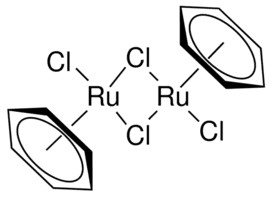
Benzeneruthenium(II) chloride dimer
Ru2(C6H6)2Cl4
Catalysis & Inorganic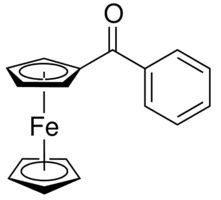
Benzoylferrocene
C17H14FeO
Catalysis & Inorganic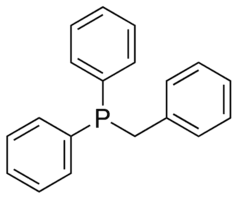
Benzyldiphenylphosphine
C6H5CH2P(C6H5)2
Catalysis & Inorganic
Beryllium
Be
Catalysis & Inorganic
Beryllium oxide
BeO
Catalysis & Inorganic![Bicyclo[2.2.1]hepta-2,5-diene-rhodium(I) chloride dimer — chemical structure, CAS 12257-42-0; Catalysis & Inorganic, fine chemical supplied by Tech Serve Solutions](/_next/image?url=https%3A%2F%2Fpub-f4d920c906024441a773a96f7098e551.r2.dev%2Fimages%2Fproducts%2F12257-42-0.png&w=3840&q=75)
Bicyclo[2.2.1]hepta-2,5-diene-rhodium(I) chloride dimer
Catalysis & Inorganic
![Bis[(10,11-η)-5-[(11bS)-dinaphtho[2,1-d:1′,2′-f][1,3,2]dioxaphosphepin-4-yl- κP4]-5H-dibenz[b,f]azepine]rhodium(I) tetrafluorobo — chemical structure, CAS 1228149-03-8; Catalysis & Inorganic, fine chemical supplied by Tech Serve Solutions](/_next/image?url=https%3A%2F%2Fpub-f4d920c906024441a773a96f7098e551.r2.dev%2Fimages%2Fproducts%2F1228149-03-8.png&w=3840&q=75)
Bis[(10,11-η)-5-[(11bS)-dinaphtho[2,1-d:1′,2′-f][1,3,2]dioxaphosphepin-4-yl- κP4]-5H-dibenz[b,f]azepine]rhodium(I) tetrafluorobo
1-d:1′
Catalysis & Inorganic![Bis[(2-dimethylamino)phenyl]amine nickel(II) chloride (C16H20ClN3Ni) — chemical structure, CAS 1033772-47-2; Catalysis & Inorganic, fine chemical supplied by Tech Serve Solutions](/_next/image?url=https%3A%2F%2Fpub-f4d920c906024441a773a96f7098e551.r2.dev%2Fimages%2Fproducts%2F1033772-47-2.png&w=3840&q=75)
Bis[(2-dimethylamino)phenyl]amine nickel(II) chloride
C16H20ClN3Ni
Catalysis & Inorganic