Bis[tris(4-(1H,1H,2H,2H-perfluorodecyl)phenyl)phosphine]palladium(II) dichloride
Bis[tris(4-(1H,1H,2H,2H-perfluorodecyl)phenyl)phosphine]palladium(II) dichloride (CAS 326475-46-1) is a fluorous-tagged homogeneous palladium(II) phosphine complex, empirical formula C96H48Cl2F102P2Pd and molecular weight 3378.52. The perfluoroalkyl ponytails give it high solubility in fluorous solvents, making it a recoverable pre-catalyst for Stille and Suzuki cross-couplings under Fluorous Biphase System (FBS) conditions. Tech Serve Solutions supplies it as a technical-grade research material, assay greater than or equal to 80% (AAS).
- IUPAC
- Bis[tris(4-(3,3,4,4,5,5,6,6,7,7,8,8,9,9,10,10,10-heptadecafluorodecyl)phenyl)phosphine]palladium(II) dichloride
- Synonyms
- Bis[tris(4-(1H,1H,2H,2H-perfluorodecyl)phenyl)phosphine]palladium(II) dichlorideBis[tris(4-(3,3,4,4,5,5,6,6,7,7,8,8,9,9,10,10,10-heptadecafluorodecyl)phenyl)phosphine]palladium(II) dichlorideC96H48Cl2F102P2Pdfluorous-tagged palladium(II) phosphine complexRf-tagged Pd catalystCAS 326475-46-1
![Bis[tris(4-(1H,1H,2H,2H-perfluorodecyl)phenyl)phosphine]palladium(II) dichloride (2H) — chemical structure, CAS 326475-46-1; Chemistry, fine chemical supplied by Tech Serve Solutions](/_next/image?url=https%3A%2F%2Fpub-f4d920c906024441a773a96f7098e551.r2.dev%2Fimages%2Fproducts%2F326475-46-1.png&w=3840&q=75)
Fluorous biphasic Suzuki coupling
Serves as a homogeneous palladium pre-catalyst for Suzuki-Miyaura carbon-carbon bond formation in Fluorous Biphase Systems. The fluorous ponytails allow the catalyst to partition into the fluorous phase for recovery and reuse.
Fluorous biphasic Stille coupling
Used to mediate Stille cross-coupling reactions under fluorous biphasic conditions. Its perfluoroalkyl tags support catalyst separation from organic products after reaction.
Fluorous synthesis and catalyst recycling
A representative Rf-tagged organometallic complex for fluorous-phase methodology, where temperature-dependent miscibility of fluorous and organic solvents enables homogeneous catalysis followed by simple phase separation.
Organometallic and methodology research
Employed in academic and process-development laboratories studying ligand design, homogeneous palladium catalysis and recyclable catalyst systems.
| Molecular weight | 3378.52 |
|---|---|
| Empirical formula | C96H48Cl2F102P2Pd |
| Assay | ≥80% (AAS) |
| Grade | technical |
| Application | Catalyst for Stille and Suzuki couplings in Fluorous Biphase Systems (FBS) |
| Melting point | 175-180 °C |
| Protective equipment | Eyeshields, Gloves, type N95 (US), type P1 (EN143) respirator filter |
|---|---|
| Water hazard class (WGK, DE) | 3 |
Hazard information is provided for guidance. Always consult the product Safety Data Sheet (SDS), available on request, before handling.
Documentation
Every batch ships with a Certificate of Analysis covering assay, identity and purity; the grade is confirmed against your enquiry. Safety Data Sheets and technical data sheets are available on request.
Supply & logistics
Samples for technical evaluation; bulk MOQ by grade and packaging. In-stock material ships in 7–10 working days, worldwide, with full export documentation.
What is Bis[tris(4-(1H,1H,2H,2H-perfluorodecyl)phenyl)phosphine]palladium(II) dichloride used for?
+
It is used as a fluorous-tagged homogeneous palladium(II) pre-catalyst for Stille and Suzuki cross-coupling reactions carried out in Fluorous Biphase Systems (FBS). The perfluoroalkyl ponytails on the phosphine ligands let the catalyst be recovered into a fluorous phase and reused, supporting research into recyclable catalysis and fluorous synthesis.
What is the CAS number and molecular formula of this palladium complex?
+
The CAS number is 326475-46-1. The empirical formula in Hill notation is C96H48Cl2F102P2Pd, with a molecular weight of 3378.52 g/mol. It is also named bis[tris(4-(3,3,4,4,5,5,6,6,7,7,8,8,9,9,10,10,10-heptadecafluorodecyl)phenyl)phosphine]palladium(II) dichloride.
What grade and purity does Tech Serve Solutions supply?
+
Tech Serve Solutions supplies this compound as a technical-grade research material with an assay of greater than or equal to 80% (determined by atomic absorption spectroscopy, AAS, on palladium). It is offered for research and synthesis use; we do not represent it as a USP, BP or EP pharmacopoeia grade. A certificate of analysis can be provided with each lot.
How should this material be handled and stored safely?
+
Handle with appropriate personal protective equipment: eye shields, gloves and a particulate respirator (type N95 in the US, type P1 to EN143). Use in a well-ventilated area and avoid generating dust. The substance carries a German Water Hazard Class (WGK) of 3, indicating it is severely hazardous to water, so prevent any release to drains, soil or watercourses. Always consult the current Safety Data Sheet before use.
What are the physical properties of this catalyst?
+
It is supplied as a solid with a reported melting point of 175-180 degrees Celsius. The molecular weight is 3378.52 g/mol. Its perfluoroalkyl substituents impart pronounced solubility in fluorous (perfluorinated) solvents.
How is this palladium complex packed, shipped and exported?
+
It is packed in inert, tightly sealed containers sized to the order and labelled in line with the applicable Safety Data Sheet, then shipped with full documentation. Given the WGK 3 water-hazard classification, packaging is selected to prevent leakage during transit. Tech Serve Solutions exports globally and can align packaging and paperwork with destination import requirements.
How do I request a sample or quote from Tech Serve Solutions?
+
Contact Tech Serve Solutions with the product name or CAS number 326475-46-1, your required quantity and destination, and our team will respond with availability, lead time and a quotation. Samples can be arranged subject to availability.
▶ Related products
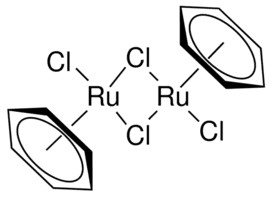
Benzeneruthenium(II) chloride dimer
Ru2(C6H6)2Cl4
Catalysis & Inorganic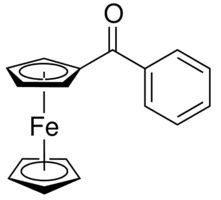
Benzoylferrocene
C17H14FeO
Catalysis & Inorganic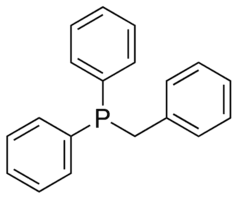
Benzyldiphenylphosphine
C6H5CH2P(C6H5)2
Catalysis & Inorganic
Beryllium
Be
Catalysis & Inorganic
Beryllium oxide
BeO
Catalysis & Inorganic![Bicyclo[2.2.1]hepta-2,5-diene-rhodium(I) chloride dimer — chemical structure, CAS 12257-42-0; Catalysis & Inorganic, fine chemical supplied by Tech Serve Solutions](/_next/image?url=https%3A%2F%2Fpub-f4d920c906024441a773a96f7098e551.r2.dev%2Fimages%2Fproducts%2F12257-42-0.png&w=3840&q=75)
Bicyclo[2.2.1]hepta-2,5-diene-rhodium(I) chloride dimer
Catalysis & Inorganic
![Bis[(10,11-η)-5-[(11bS)-dinaphtho[2,1-d:1′,2′-f][1,3,2]dioxaphosphepin-4-yl- κP4]-5H-dibenz[b,f]azepine]rhodium(I) tetrafluorobo — chemical structure, CAS 1228149-03-8; Catalysis & Inorganic, fine chemical supplied by Tech Serve Solutions](/_next/image?url=https%3A%2F%2Fpub-f4d920c906024441a773a96f7098e551.r2.dev%2Fimages%2Fproducts%2F1228149-03-8.png&w=3840&q=75)
Bis[(10,11-η)-5-[(11bS)-dinaphtho[2,1-d:1′,2′-f][1,3,2]dioxaphosphepin-4-yl- κP4]-5H-dibenz[b,f]azepine]rhodium(I) tetrafluorobo
1-d:1′
Catalysis & Inorganic![Bis[(2-dimethylamino)phenyl]amine nickel(II) chloride (C16H20ClN3Ni) — chemical structure, CAS 1033772-47-2; Catalysis & Inorganic, fine chemical supplied by Tech Serve Solutions](/_next/image?url=https%3A%2F%2Fpub-f4d920c906024441a773a96f7098e551.r2.dev%2Fimages%2Fproducts%2F1033772-47-2.png&w=3840&q=75)
Bis[(2-dimethylamino)phenyl]amine nickel(II) chloride
C16H20ClN3Ni
Catalysis & Inorganic