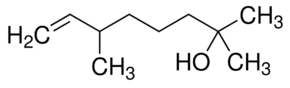
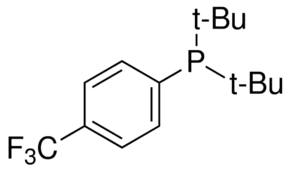
((4-Trifluoromethyl)phenyl)di-tert-butylphosphine
((4-Trifluoromethyl)phenyl)di-tert-butylphosphine (CAS: 1228182-34-0), with the molecular formula C15H22F3P and a molecular weight of 290.30 g/mol, is a phosphine compound utilised in chemical synthesis. This technical grade material, assaying at 85%, serves as a valuable ligand in catalytic processes. Its unique structure makes it an important reagent for researchers and industrial chemists seeking specific reactivity in complex organic transformations.
Ligand in Catalysis
This phosphine ligand is employed in homogeneous catalysis, particularly in transition metal-catalyzed reactions such as cross-coupling. Its bulky tert-butyl groups and electron-withdrawing trifluoromethylphenyl moiety influence the catalytic activity and selectivity.
Organic Synthesis Reagent
As a building block in organic synthesis, it can be used to introduce the (4-trifluoromethyl)phenyl)di-tert-butylphosphine functional group into more complex molecules. Its utility is found in the development of novel pharmaceutical intermediates and advanced materials.
Research and Development
Primarily used in academic and industrial R&D settings for exploring new synthetic methodologies and investigating reaction mechanisms. It offers unique steric and electronic properties beneficial for catalyst design.
| Molecular weight | 290.30 |
|---|---|
| Empirical formula | C15H22F3P |
| Assay | 85% |
| Grade | technical grade |
| Melting point | 34-39 °C |


Hazard statements
- H228Flammable solid
- H315Causes skin irritation
- H319Causes serious eye irritation
- H335May cause respiratory irritation
- H413May cause long-lasting harmful effects to aquatic life
Precautionary statements
- P210Keep away from heat, sparks and open flames. No smoking
- P261Avoid breathing dust, fume, gas or vapours
- P305IF IN EYES
| Flash point | 43 °C / 109.4 °F |
|---|---|
| Transport (UN / ADR) | UN 1325 4.1 / PGIII |
| Water hazard class (WGK, DE) | 3 |
| Hazard codes (EU) | F,Xi |
| Risk statements (R) | 11-36/37/38 |
| Safety statements (S) | 26 |
Hazard information is provided for guidance. Always consult the product Safety Data Sheet (SDS), available on request, before handling.
Documentation
Every batch ships with a Certificate of Analysis covering assay, identity and purity; the grade is confirmed against your enquiry. Safety Data Sheets and technical data sheets are available on request.
Supply & logistics
Samples for technical evaluation; bulk MOQ by grade and packaging. In-stock material ships in 7–10 working days, worldwide, with full export documentation.
What is ((4-Trifluoromethyl)phenyl)di-tert-butylphosphine used for?
+
This compound is primarily used as a phosphine ligand in catalysis and as a reagent in organic synthesis for research and development purposes.
What is the CAS number and formula for ((4-Trifluoromethyl)phenyl)di-tert-butylphosphine?
+
The CAS number is 1228182-34-0 and the empirical formula is C15H22F3P.
What grade and purity does Tech Serve Solutions supply?
+
Tech Serve Solutions supplies this compound as technical grade with an assay of 85%. We do not represent this product as USP, BP, or EP grade.
How should ((4-Trifluoromethyl)phenyl)di-tert-butylphosphine be handled?
+
This compound is flammable (H228) and can cause skin irritation (H315), serious eye irritation (H319), and respiratory irritation (H335). It is advised to keep away from heat, sparks, open flames, and hot surfaces, and avoid breathing dust/fume/gas/mist/vapours/spray. In case of eye contact, rinse cautiously with water for several minutes (P305 + P351 + P338).
How is ((4-Trifluoromethyl)phenyl)di-tert-butylphosphine packed and exported?
+
As a UN 1325 classified material (4.1/PGIII), it is packed and exported in compliance with international shipping regulations for hazardous goods.
How can I request a quote or sample?
+
Please contact our sales department via the website or direct inquiry to receive a quote or arrange for a sample of ((4-Trifluoromethyl)phenyl)di-tert-butylphosphine.
▶ Related products
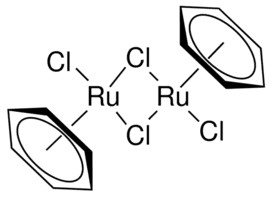
Benzeneruthenium(II) chloride dimer
Ru2(C6H6)2Cl4
Catalysis & Inorganic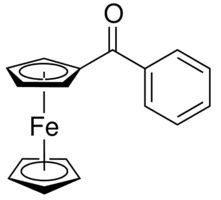
Benzoylferrocene
C17H14FeO
Catalysis & Inorganic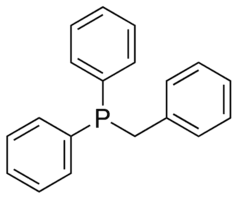
Benzyldiphenylphosphine
C6H5CH2P(C6H5)2
Catalysis & Inorganic
Beryllium
Be
Catalysis & Inorganic
Beryllium oxide
BeO
Catalysis & Inorganic![Bicyclo[2.2.1]hepta-2,5-diene-rhodium(I) chloride dimer — chemical structure, CAS 12257-42-0; Catalysis & Inorganic, fine chemical supplied by Tech Serve Solutions](/_next/image?url=https%3A%2F%2Fpub-f4d920c906024441a773a96f7098e551.r2.dev%2Fimages%2Fproducts%2F12257-42-0.png&w=3840&q=75)
Bicyclo[2.2.1]hepta-2,5-diene-rhodium(I) chloride dimer
Catalysis & Inorganic
![Bis[(10,11-η)-5-[(11bS)-dinaphtho[2,1-d:1′,2′-f][1,3,2]dioxaphosphepin-4-yl- κP4]-5H-dibenz[b,f]azepine]rhodium(I) tetrafluorobo — chemical structure, CAS 1228149-03-8; Catalysis & Inorganic, fine chemical supplied by Tech Serve Solutions](/_next/image?url=https%3A%2F%2Fpub-f4d920c906024441a773a96f7098e551.r2.dev%2Fimages%2Fproducts%2F1228149-03-8.png&w=3840&q=75)
Bis[(10,11-η)-5-[(11bS)-dinaphtho[2,1-d:1′,2′-f][1,3,2]dioxaphosphepin-4-yl- κP4]-5H-dibenz[b,f]azepine]rhodium(I) tetrafluorobo
1-d:1′
Catalysis & Inorganic![Bis[(2-dimethylamino)phenyl]amine nickel(II) chloride (C16H20ClN3Ni) — chemical structure, CAS 1033772-47-2; Catalysis & Inorganic, fine chemical supplied by Tech Serve Solutions](/_next/image?url=https%3A%2F%2Fpub-f4d920c906024441a773a96f7098e551.r2.dev%2Fimages%2Fproducts%2F1033772-47-2.png&w=3840&q=75)
Bis[(2-dimethylamino)phenyl]amine nickel(II) chloride
C16H20ClN3Ni
Catalysis & Inorganic