
Methyl pipecolinate hydrochloride
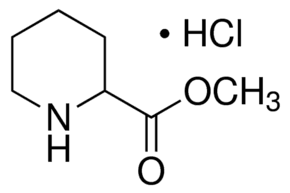
Methyl pipecolinate hydrochloride (CAS 32559-18-5) is the hydrochloride salt of methyl piperidine-2-carboxylate, with molecular formula C7H13NO2 · HCl and a molar mass of 179.64 g/mol. Also known as methyl 2-piperidinecarboxylate hydrochloride, it is a saturated heterocyclic building block used widely in chemical synthesis. Tech Serve Solutions supplies it as a research-grade reagent (assay 97%) for the preparation of pipecolic acid derivatives, kinase inhibitors and other fine-chemical intermediates.
- IUPAC
- Methyl 2-piperidinecarboxylate hydrochloride
- Synonyms
- Methyl pipecolinate hydrochlorideMethyl 2-piperidinecarboxylate hydrochlorideMethyl piperidine-2-carboxylate hydrochloridePipecolic acid methyl ester hydrochloride2-Piperidinecarboxylic acid methyl ester hydrochlorideDL-Methyl pipecolate hydrochloride
Pipecolic acid derivatives and linkers
Serves as a reactant in the synthesis of a pipecolic linker and related pipecolate scaffolds. The reactive methyl ester and secondary piperidine nitrogen offer convenient handles for amide coupling, alkylation and further functionalisation.
Pharmaceutical intermediate synthesis
Used as an intermediate in the preparation of antiviral agents and of Aurora and epidermal growth factor receptor (EGFR) kinase inhibitors. It functions strictly as a research and manufacturing building block, not as a finished drug substance.
Heterocyclic building block
As a C5 to C7 piperidine building block, it supports broader medicinal-chemistry and discovery programmes. It is also a reported reactant for accessing pyrrolidine derivatives via reduction of substituted pyrroles.
Synthetic methodology
Reported as a reactant in Petasis reactions and in decarbonylative radical cyclisation of alpha-amino selenoesters onto electrophilic alkenes, enabling carbon-carbon bond formation in complex molecule assembly.
| Molecular weight | 179.64 |
|---|---|
| Empirical formula | C7H13NO2 · HCl |
| Assay | 97% |
| Application | Reactant for synthesis of: A pipecolic linker1 Antiviral agents2 Aurora and epidermal growth factor receptor kinase inhibitor3 Pyrrolidine derivatives via reduction of substituted pyrroles4 Reactant for: Petasis reactions5 Decarbonylative radical cyclization of alpha-amino selenoesters upon electrophilic alkenes6 |
| Melting point | 205 °C (dec.)(lit.) |

Hazard statements
- H315Causes skin irritation
- H319Causes serious eye irritation
- H335May cause respiratory irritation
Precautionary statements
- P261Avoid breathing dust, fume, gas or vapours
- P305IF IN EYES
| Protective equipment | dust mask type N95 (US), Eyeshields, Gloves |
|---|---|
| Water hazard class (WGK, DE) | 3 |
| Hazard codes (EU) | Xi |
| Risk statements (R) | 36/37/38 |
| Safety statements (S) | 26-37/39 |
Hazard information is provided for guidance. Always consult the product Safety Data Sheet (SDS), available on request, before handling.
Documentation
Every batch ships with a Certificate of Analysis covering assay, identity and purity; the grade is confirmed against your enquiry. Safety Data Sheets and technical data sheets are available on request.
Supply & logistics
Samples for technical evaluation; bulk MOQ by grade and packaging. In-stock material ships in 7–10 working days, worldwide, with full export documentation.
What is Methyl pipecolinate hydrochloride used for?
+
It is used as a heterocyclic building block and intermediate in chemical synthesis. Documented uses include the preparation of a pipecolic linker, antiviral agents, Aurora and EGFR kinase inhibitors, and pyrrolidine derivatives, as well as serving as a reactant in Petasis reactions and decarbonylative radical cyclisations.
What is the CAS number and molecular formula of Methyl pipecolinate hydrochloride?
+
The CAS number is 32559-18-5 and the molecular formula is C7H13NO2 · HCl, giving a molecular weight of 179.64 g/mol. Its MDL number is MFCD00192316 and PubChem Substance ID is 24864365. It is also known as methyl 2-piperidinecarboxylate hydrochloride.
What grade and purity does Tech Serve Solutions supply?
+
Tech Serve Solutions supplies Methyl pipecolinate hydrochloride at a typical assay of 97% as a research and laboratory reagent grade material. We do not represent it as USP, BP or EP pharmacopoeia grade. A certificate of analysis is provided with each batch, and specifications can be confirmed on request.
What are the safety and handling requirements for Methyl pipecolinate hydrochloride?
+
It is classified under GHS07 with the signal word Warning and hazard statements H315 (causes skin irritation), H319 (causes serious eye irritation) and H335 (may cause respiratory irritation). Avoid breathing dust and avoid contact with skin and eyes; use an N95-type dust mask, eye shields and gloves, and handle in a well-ventilated area. The melting point is around 205 °C (with decomposition). Always consult the Safety Data Sheet before use.
How is Methyl pipecolinate hydrochloride packed, shipped and exported?
+
It is packed in clean, tightly closed containers appropriate to the order quantity, with secure labelling and full documentation. As a global supplier and exporter, Tech Serve Solutions arranges compliant international shipping with a certificate of analysis and Safety Data Sheet. Pack sizes and lead times are confirmed at the time of enquiry.
How do I request a sample or quote?
+
Contact Tech Serve Solutions with your required quantity, purity and destination, and our team will respond with availability, pricing and lead time. Samples can be arranged for qualified evaluation, subject to availability.
▶ Related products

4-Amino-2-chloropyridine
C5H5ClN2
Heterocyclic Building Blocks
4-Ethynyl-1-methyl-1H-pyrazole
C6H6N2
Heterocyclic Building Blocks
4-Hydroxyquinoline-3-carboxylic acid ethyl ester
C12H11NO3
Heterocyclic Building Blocks
4-isocyanatopyridine
C6H4N2O
Heterocyclic Building Blocks
5-Chloro-2,8-dimethylquinoline
Heterocyclic Building Blocks

5-Chloro-2-methylene-1,3,3-trimethylindoline
Heterocyclic Building Blocks

5-Chloro-2-thiophenecarbonitrile
Heterocyclic Building Blocks

5-ethynyl-1H-pyrazole
C5H4N2
Heterocyclic Building Blocks▶ Explore more
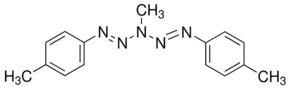
3-Methyl-1,5-di-p-tolyl-1,4-pentazadiene
Chemical Synthesis

3-Methyl-1,5-pentanediol
Chemical Synthesis
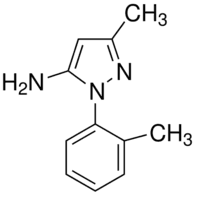
3-Methyl-1-(2-methylphenyl)-1H-pyrazol-5-amine
C11H13N3
Chemical Synthesis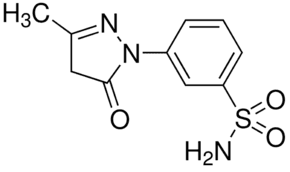
3-Methyl-1-(3′-sulfoamidophenyl)-5-pyrazolone
C10H11N3O3S
Chemical Synthesis