Acridine
Acridine (CAS: 260-94-6, C13H9N, MW: 179.22) is a fluorescent heterocyclic aromatic compound. Its fluorescence intensity, quantum yield, and decay time are solvent-dependent, often exhibiting moderate to strong fluorescence in aqueous solutions and weaker fluorescence in hydrocarbon solvents. It is primarily used as a fluorescent stain and in biochemical research due to its luminescent properties. Acridine finds applications in various fluorescent probes and detection methods.
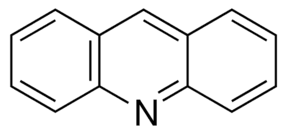
Fluorescent Staining and Probes
Acridine's inherent fluorescence makes it suitable for use as a fluorescent stain and in the development of fluorescent probes. Its fluorescence characteristics are modulated by the surrounding solvent environment.
Biochemical Research Reagent
As a BioReagent, Acridine is utilised in various biochemical applications. Its luminescent properties are of interest for detection and assay development in biological systems.
Luminescent Compound Applications
Acridine serves as a luminescent compound, with its emission properties (λex 360 nm; λem 417 nm in ethanol) being relevant for specific analytical and research purposes.
| Molecular weight | 179.22 |
|---|---|
| Empirical formula | C13H9N |
| Assay | 97% |
| Boiling point | 346 °C(lit.) |
| Solubility | dioxane: soluble0.1 g/mL, clearcarbon disulfide: solublediethyl ether: solubleethanol: solublehydrocarbons: soluble |
| Application | The fluorescence intensity, fluorescence quantum yield, time of decay, and lifetime are dependent upon the solvent. For example, the fluorescence intensity varies from being moderately strong in aqueous solution and very weak in hydrocarbon solvents. Additionally, the quantum yield has been demonstrated to increase with decreasing temperatures, for all solvent conditions1. |
| Suitability | suitable for fluorescence |
| Melting point | 107-110 °C(lit.) |

Hazard statements
- H302Harmful if swallowed
| Protective equipment | dust mask type N95 (US), Eyeshields, Gloves |
|---|---|
| Transport (UN / ADR) | UN 2713 6.1 / PGIII |
| Water hazard class (WGK, DE) | 3 |
| Hazard codes (EU) | Xn |
| Risk statements (R) | 22 |
| Safety statements (S) | 22-36 |
Hazard information is provided for guidance. Always consult the product Safety Data Sheet (SDS), available on request, before handling.
| Product Line | BioReagent |
|---|---|
| Absorption | λmax 392 nm |
| Fluorescence | λex 360 nm; λem 417 nm in ethanol |
Documentation
Every batch ships with a Certificate of Analysis covering assay, identity and purity; the grade is confirmed against your enquiry. Safety Data Sheets and technical data sheets are available on request.
Supply & logistics
Samples for technical evaluation; bulk MOQ by grade and packaging. In-stock material ships in 7–10 working days, worldwide, with full export documentation.
What is Acridine (CAS: 260-94-6) used for?
+
Acridine is primarily used as a fluorescent stain, in the development of fluorescent probes, and as a general biochemical research reagent due to its luminescent properties.
What is the CAS number and formula for Acridine?
+
The CAS number for Acridine is 260-94-6, and its empirical formula is C13H9N.
What grade and purity does Tech Serve Solutions supply?
+
Tech Serve Solutions supplies Acridine with an assay of 97%. We do not represent this product as USP, BP, or EP grade.
What are the safety precautions when handling Acridine?
+
Acridine is classified as harmful if swallowed (H302). When handling, it is recommended to use a dust mask (type N95 US), eyeshields, and gloves. Ensure adequate ventilation and avoid dust formation.
How is Acridine packed and exported by TSS?
+
Acridine is shipped under UN 2713, Class 6.1, Packing Group III. TSS is a specialist global supplier and exporter of fine chemicals.
How can I request a quote or sample of Acridine?
+
Please contact Tech Serve Solutions directly to request a quote or sample for Acridine.
▶ Related products
![(±)-(E)-4-Ethyl-2-[(E)-hydroxyimino]-5-nitro-3-hexenamide (C8H13N3O4) — chemical structure, CAS 138472-01-2; Biochemicals & Reagents, fine chemical supplied by Tech Serve Solutions](/_next/image?url=https%3A%2F%2Fpub-f4d920c906024441a773a96f7098e551.r2.dev%2Fimages%2Fproducts%2F138472-01-2.png&w=3840&q=75)
(±)-(E)-4-Ethyl-2-[(E)-hydroxyimino]-5-nitro-3-hexenamide
C8H13N3O4
Biochemicals & Reagents![(±)-(E)-4-Ethyl-2-[(Z)-hydroxyimino]-5-nitro-3-hexen-1-yl-nicotinamide (C14H18N4O4) — chemical structure, CAS 162626-99-5; Biochemicals & Reagents, fine chemical supplied by Tech Serve Solutions](/_next/image?url=https%3A%2F%2Fpub-f4d920c906024441a773a96f7098e551.r2.dev%2Fimages%2Fproducts%2F162626-99-5.png&w=3840&q=75)
(±)-(E)-4-Ethyl-2-[(Z)-hydroxyimino]-5-nitro-3-hexen-1-yl-nicotinamide
C14H18N4O4
Biochemicals & Reagents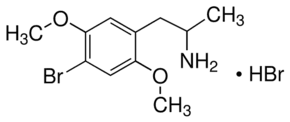
(±)-2,5-Dimethoxy-4-bromoamphetamine hydrobromide
Biochemicals & Reagents
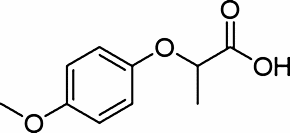
(±)-2-(p-Methoxyphenoxy)propionic acid
C10H12O4
Biochemicals & Reagents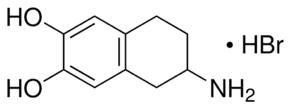
(±)-2-Amino-6,7-dihydroxy-1,2,3,4-tetrahydronaphthalene hydrobromide
C10H13NO2·HBr
Biochemicals & Reagents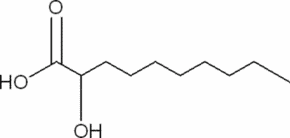
(±)-2-Hydroxydecanoic acid
C10H20O3
Biochemicals & Reagents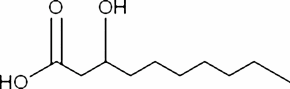
(±)-3-Hydroxydecanoic acid
C10H20O3
Biochemicals & Reagents
(±)-3-Hydroxyoctanoic acid
C8H16O3
Biochemicals & Reagents